Escalating Violence in Palestine Amid the Iran War
Analysis of the humanitarian crisis in Palestine, based on 'Palestine Under the Cover of the Iran War: Oppression and Ethnic Cleansing Escalate' | Arab Center Washington DC.
OPEN SOURCEThe ongoing Iran War has diverted global attention from the humanitarian crisis in Palestine, exacerbating the situation for its people. Experts discuss the escalation of violence in Gaza and the West Bank, highlighting the lack of effective peace initiatives and the increasing threat of settler violence.
The Board of Peace, established during the Trump administration, has failed to convene or produce meaningful outcomes, reflecting stagnation in peace efforts. Humanitarian aid to Gaza remains critically low, with Israel allowing only a fraction of the promised support.
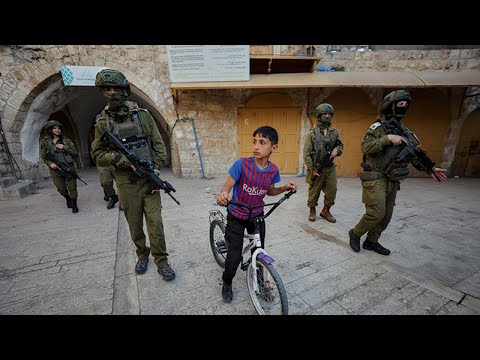
In the West Bank, Israeli settlers are increasingly armed and emboldened, leading to unprecedented levels of violence against Palestinians. The systematic targeting of essential infrastructure is contributing to rising poverty and food insecurity among Palestinian communities.
The situation for Palestinian women has deteriorated significantly, with a marked increase in sexual violence by Israeli soldiers. Reports indicate that this violence is often used as a tool of oppression, leading to a culture of fear and a lack of accountability.
The political landscape for Palestinians is fragmented, with skepticism about the electoral system's legitimacy. Right-wing tactics are framing electoral choices as a vote for extremism, complicating the dynamics of potential unity among Palestinian parties.
Activists emphasize the importance of grassroots movements and accountability in addressing violence against Palestinians. The disconnect between public opinion and U.S. policy regarding support for Israel is growing, with public sentiment shifting while policy remains largely unchanged.
- Highlight the urgent need for international attention to the humanitarian crisis in Palestine
- Emphasize the importance of grassroots movements and accountability in addressing violence
- Argue that military actions are necessary for national security and stability
- Claim that peace initiatives are hindered by Palestinian factions unwillingness to disarm
- Acknowledge the complexity of geopolitical dynamics influencing the conflict
- Recognize the historical context of violence and oppression in the region
- The webinar explores the consequences of the Iran War on Palestine, noting a diversion of global focus from Palestinian issues amid rising violence
- Experts will discuss the escalation of Israeli violence in Gaza, the status of ceasefire agreements, and the increasing threat posed by settler violence in the West Bank
- The Board of Peace, created during the Trump administration, has not convened or yielded significant outcomes, reflecting stagnation in peace efforts
- The panel features a range of experts, including journalists, lawyers, and analysts, who will share their perspectives on the current conditions for Palestinians in Gaza, the West Bank, and within Israel
- The Board of Peace, created during the Trump administration, has not convened or produced meaningful outcomes, leading to skepticism about its effectiveness
- Indonesias suspension from the Board of Peace underscores the contradiction of advocating for peace while conducting military actions against Gaza
- The Trump plan has not progressed, with Israel failing to fulfill its obligations while imposing strict conditions on Palestinians, including the release of Israeli captives
- Humanitarian aid from Israel to Gaza is significantly below the agreed minimum, with only 94 trucks allowed daily instead of the promised 600, amid ongoing military operations
- Israels proposal requires the complete disarmament of Hamas and other factions in Gaza, demanding the surrender of all weapons and detailed information about military infrastructure before any reconstruction can begin
details
details
details
- Miladynovs proposal to Hamas demands complete disarmament and verification before any Israeli withdrawal or reconstruction, which Hamas finds untrustworthy due to Israels history of unmet obligations
- Hamas rejected the disarmament proposal, advocating instead for a mutual cessation of hostilities and a political framework leading to Palestinian statehood
- The Palestinian stance aligns with international views, including those of Saudi Arabia and the UK, favoring a decommissioning process that follows peace agreements, similar to the Northern Ireland model
- Miladynovs insistence on disarmament as a precondition for peace has faced criticism as unrealistic, with reports indicating he may have sought to resume military action against Gaza following Hamass refusal
- Ongoing U.S. support for Miladynovs approach highlights a significant divergence from the more pragmatic Palestinian strategy, potentially increasing regional tensions
- The conflict in Gaza is being leveraged by Israel to escalate military and settler violence in the West Bank, driven by multiple strategic objectives beyond the Iran war
- Israeli settlers are increasingly armed with military-grade weapons and receiving official training, resulting in a surge of violence against Palestinians, including the display of Israeli flags on Palestinian properties
- There has been a notable rise in settler violence, with incidents occurring almost daily, contrasting sharply with previous patterns of less frequent violence
- Mass displacement is occurring in West Bank refugee camps, where the Israeli military is utilizing these areas as operational bases, complicating Palestinian resistance efforts
- The Palestinian Authority faces criticism for suppressing resistance rather than protecting Palestinians, contributing to an environment where both armed and unarmed resistance are nearly absent
details
- The West Bank situation has worsened, with armed Israeli settlers increasingly emboldened, leading to heightened violence against Palestinians
- Israeli policies now officially designate parts of the West Bank as Judea and Samaria, reminiscent of historical land dispossession tactics from 1948, potentially legitimizing further land grabs
- Ongoing violence has led to a near-total depopulation of refugee camps in the West Bank, severely restricting both armed and unarmed Palestinian resistance
- Israels chaotic strategy appears to use the Iran war as a cover for implementing aggressive tactics in Palestinian territories
- The violence has broader regional implications, reflecting historical patterns of mass displacement and prompting a need to reassess responses to the crisis
details
- Public opinion polls show that a significant majority of Jewish Israelis support military actions against Iran, while Palestinian citizens of Israel largely oppose such conflicts due to the negative consequences they face
- Palestinian women in Israel express heightened insecurity during wartime, primarily due to a lack of public shelters and the systemic violence they endure, which is intensified by the ongoing conflict
- The Israeli government has not effectively addressed organized crime in Palestinian communities, allowing it to escalate while simultaneously enacting laws that criminalize certain forms of dissent among Palestinians
- Recent legislative measures, including a death penalty law, disproportionately affect Palestinians, highlighting a trend of increasing legal and social oppression against this group
details
- Recent legislative measures in Israel, such as the establishment of military tribunals and laws imposing the death penalty on Palestinians, are designed to create a legal basis for actions that might otherwise be deemed unlawful
- Palestinian citizens of Israel, especially women, report increased feelings of insecurity due to inadequate public shelters and a lack of perceived protection during conflicts, reflecting systemic neglect and violence
- The Israeli government has escalated efforts to criminalize dissent, implementing laws that penalize media consumption and social media activity among Palestinians
- The political landscape is expected to remain stagnant in future elections, with Palestinian interests frequently sidelined, indicating a continuation of oppressive policies
- The current situation mirrors a historical trend of institutionalizing oppression against Palestinians, echoing strategies employed after the 1948 displacement, aimed at marginalizing and displacing these communities
- The Womens Center for Legal Aid and Counseling reports a significant rise in sexual violence against Palestinian women by Israeli soldiers since July 2023
- Testimonies indicate that sexual assaults often occur during home invasions, with women subjected to humiliating acts and physical violence in front of their families
- More than 75 women have reported incidents of sexual violence in Israeli detention centers, including cases of rape by both male and female soldiers, highlighting systemic abuse within the military
- The urgency of documenting these incidents has increased following the escalation of violence after October 7, 2023, with a notable rise in reported assaults across various regions
- Women at checkpoints, particularly in Hebron and Jerusalem, have also experienced sexual violence, often linked to looting, as soldiers exploit their vulnerability during searches
details
- Since July 2023, documentation of sexual violence against Palestinian women by Israeli soldiers has surged, with over 75 testimonies revealing systematic abuse during home invasions and detentions
- Reports indicate that sexual assaults, including rape, often occur in front of other detainees, reflecting a pattern of humiliation and violence exacerbated by the current political climate
- Sexual violence is reportedly used as a tool for forced displacement, prompting families to marry off daughters early to protect them, which has led to a decline in school attendance among girls
- Checkpoints present a particularly hazardous environment, with incidents of soldiers exposing themselves to schoolgirls and sexually assaulting women under the pretext of searches, fostering a culture of fear
- Armed settlers are also involved in sexual violence, with reports of harassment and assaults on Palestinian women, further jeopardizing the safety of these communities
- Israeli forces and settlers are reportedly employing sexual violence as a means of terror and oppression against Palestinian communities, aiming to instill humiliation and control
- Victims of sexual violence encounter significant stigma, which hinders their ability to report incidents, compounded by threats of retaliation against them and their families
- The pervasive culture of sexual violence is exacerbated by Israeli policies that some believe are intended to create fear and discourage the documentation of abuses
- Many Palestinians express a growing sense of hopelessness regarding international accountability, leading to hesitance in reporting incidents or seeking justice through international legal avenues
- Testimonies indicate severe abuses, including torture and sexual assault, often occurring in front of family members, underscoring the brutality faced by Palestinians
- Palestinians are subjected to severe intimidation from Israeli forces, including personalized threats and videos discouraging them from speaking out about their experiences with sexual violence
- Many Palestinians distrust international mechanisms for documenting abuses in Israeli detention centers, believing their stories will not be taken seriously or lead to accountability
- There is a growing willingness among Palestinians, particularly women, to share their experiences of sexual violence, reflecting a gradual shift towards community solidarity and support
- The political landscape among Palestinian citizens of Israel is divided, with varying opinions on electoral strategies in response to recent violence, raising questions about the effectiveness of a unified electoral list
details
- The Palestinian political landscape is fragmented, with varying opinions on upcoming elections influenced by past alliances and the positions of parties like the Islamic movement led by Mansoor Abbas
- Polling indicates that Palestinian parties in Israel might secure more seats by forming a unified list, as collaboration could boost voter turnout compared to competing separately
- Despite the potential advantages of unity, skepticism persists within the Palestinian community regarding the electoral systems legitimacy, with many feeling it fails to represent their interests
- Right-wing responses to the coalition of Palestinian parties have employed racist and fear-mongering tactics, framing electoral choices as a vote for extremism rather than legitimate representation
- The political dynamics are further complicated by the historical context of previous alliances, such as those involving former leaders, which are now less relevant in the current political climate
- The West Bank faces targeted destruction of essential infrastructure, including water and electricity, aimed at undermining Palestinian communities
- Israeli settlers are destroying water pumps that serve thousands of Palestinians, worsening access to vital resources
- Closures of schools and markets, along with restrictions on agricultural supplies, are significantly increasing poverty and food insecurity among Palestinians
- The situation is characterized by a gradual crisis rather than an imminent outbreak of violence, contradicting the pressure cooker metaphor
- The overarching strategy appears to focus on the slow eradication of Palestinian existence, leaving communities increasingly vulnerable and struggling to survive
details
- The West Bank is experiencing systematic targeting of essential infrastructure, such as water and electricity, leading to a gradual decline in Palestinian livelihoods
- Economic hardship is escalating for Palestinians, with rising poverty levels due to restricted access to vital resources and agricultural support
- Israeli strategies seem designed to compel the remaining Palestinian population to adapt to conditions that severely limit their rights and needs
- Regional actors like Qatar and Turkey have minimal influence on ceasefire negotiations, with Turkey urging Palestinian factions to seek concrete commitments from Israel before further talks
- European nations are largely absent from addressing the Gaza crisis, with some diplomats prioritizing relations with the Trump administration over humanitarian concerns
- European countries have largely disengaged from the Gaza situation, prioritizing other regional issues over humanitarian concerns
- Qatar and Turkeys influence on the conflict is limited by the ongoing Iran war, with Turkey advising Palestinian factions to seek concrete commitments from Israel before negotiations
- The UK and Germanys responses to the Gaza crisis have been inadequate, with the UK disbanding its task force on Gaza reconstruction
- The current geopolitical climate, particularly the support for Israel from the Trump administration, worsens the conditions for Palestinians, leaving them in a precarious situation
- Panelists express concern that the ongoing violence and oppression in Palestine are being overlooked, reflecting a historical pattern of neglect
- The Iran war has intensified the humanitarian crisis in Palestine, diverting global attention despite significant support for the Palestinian cause
- Activists stress the need for grassroots movements and direct actions, arguing that top-down approaches are ineffective in the current political climate
- There is a strong call for accountability in documenting violence against Palestinians, emphasizing the importance of identifying perpetrators to seek justice
- Speakers advocate for maintaining hope and resilience amidst despair, encouraging a focus on future possibilities rather than feelings of helplessness
- There is a growing disconnect between public opinion and U.S. policy regarding support for Israel, with public sentiment shifting while policy remains largely unchanged
- Experts indicate that a reduction in U.S. support for Israel may not significantly impact Israels aggressive actions, as current leadership seems indifferent to public opinion
- Concerns about the influence of AIPAC suggest it may be becoming a liability for politicians, hinting at a potential shift in political dynamics
- Historical examples, such as McCarthyism, illustrate that oppressive regimes often overreach, which can lead to their eventual downfall
- The Israeli governments response to negative media portrayals, like the Bingbeer incident, reveals a focus on public relations rather than genuine concern for actions taken
- The situation in Gaza is dire, with severe restrictions likened to a toxic concentration camp, leading to a state of ongoing suffering due to the denial of basic necessities
- Israeli military officials are cautious about escalating actions in Gaza, concerned that renewed offensives could provoke significant backlash and instability within Israel
- A movement in Europe is gaining momentum to ban products from Israeli settlements, with some countries already implementing measures, signaling a potential shift in trade relations with Israel
- The EUs association agreement with Israel, which offers preferential trade benefits, is facing scrutiny, and any modifications could have substantial economic repercussions for Israel, particularly influenced by key member states like Germany and Italy
- The critical role of advocacy and public discourse in shaping policy changes regarding Israel and Palestine, suggesting that sustained pressure could lead to more impactful actions
The assumption that the Iran War diverts attention from Palestinian issues overlooks the complexity of geopolitical dynamics and local factors influencing the conflict. Inference: The lack of engagement from the Board of Peace suggests a deeper stagnation in peace processes, raising questions about the effectiveness of international interventions and the motivations behind them.
This analysis is an original interpretation prepared by Art Argentum based on the transcript of the source video. The original video content remains the property of the respective YouTube channel. Art Argentum is not responsible for the accuracy or intent of the original material.