Geopolitic / Middle East
Lebanon-Israel Relations: Geagea's Perspective
Samir Geagea discusses the complex political landscape in Lebanon, emphasizing Hezbollah's significant influence over the government. He argues that Hezbollah operates as a parallel state, undermining the authority of the Lebanese government and complicating potential dialogue with Israel.
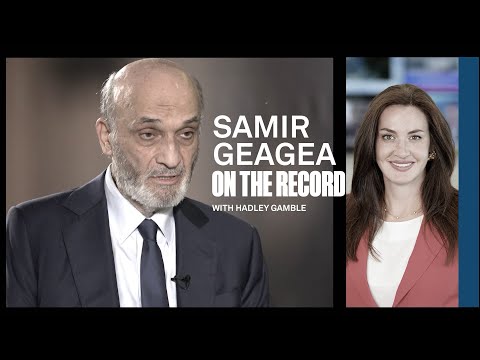
Source material: Samir Geagea calls for direct Lebanon–Israel talks
Summary
Samir Geagea discusses the complex political landscape in Lebanon, emphasizing Hezbollah's significant influence over the government. He argues that Hezbollah operates as a parallel state, undermining the authority of the Lebanese government and complicating potential dialogue with Israel.
Geagea highlights the government's attempts to disarm Hezbollah and implement reforms, which have largely been ineffective due to a lack of execution and support. He stresses the need for the Lebanese government to assert control over its territory to facilitate meaningful negotiations with Israel.
He advocates for direct negotiations with Israel to transition from a state of war to a more stable relationship, emphasizing the importance of securing Lebanon's borders. Geagea believes that effective governance is crucial for addressing Lebanon's ongoing challenges and restoring its historical identity.
Geagea expresses skepticism about the potential for military confrontation, noting that Lebanon lacks the financial resources to maintain a large army. He believes that internal sectarian violence is unlikely unless the state completely collapses.
Perspectives
short
Samir Geagea
- Advocates for direct negotiations between Lebanon and Israel to resolve ongoing conflicts
- Emphasizes the need for effective governance to address Lebanons critical situation
Hezbollah
- Undermines the authority of the Lebanese government, complicating dialogue with Israel
- Operates as a parallel state, obstructing governance and reforms
Neutral / Shared
- Some Lebanese citizens express confidence in their government despite skepticism about its capacity to enforce decisions
- Historical support from Gulf States has been contingent on effective governance in Lebanon
Metrics
other
20 billion dollars per year USD
cost of maintaining a large army for military confrontation
This highlights the financial impracticality of military engagement with Israel
you need a big army, a big army, which means at least at least 20 billion dollars per year
other
25 billion USD
Lebanon's total GDP
This indicates the limited financial resources available for military investment
all our GDP for the time being is 25 billion
loss
10 billion dollars USD
ongoing conflict losses
This figure underscores the urgency for negotiations to address Lebanon's economic crisis
we are dealing with 10 billion dollars still now, direct and direct losses from the war.
Key entities
Timeline highlights
00:00–05:00
Samir Geagea emphasizes the significant influence of Hezbollah on the Lebanese government, which undermines its authority and complicates potential dialogue with Israel. He argues that Hezbollah's dominance has transformed Lebanon from its historical image as the 'Switzerland of the Middle East' into a state struggling with governance issues.
- Samir Geagea highlights the internal strife in Lebanon, attributing it to Hezbollahs significant influence, which hampers the governments authority and complicates dialogue with Israel
- Hezbollah has functioned as a parallel state for four decades, obstructing the Lebanese governments ability to enforce decisions, including disarmament, despite international calls for action
- Efforts by the Lebanese government to limit Hezbollahs power through decrees have been ineffective, revealing deeper issues of governance and control within the country
- Geagea contrasts Lebanons historical image as the Switzerland of the Middle East with its current situation, which he believes is a result of Hezbollahs dominance and the absence of a functional state
- The challenge of disarming Hezbollah is further complicated by the entrenched deep state in Lebanon, which encompasses various security services and the judiciary, hindering decisive government action
05:00–10:00
Samir Geagea highlights Hezbollah's significant influence over the Lebanese government, which hampers its ability to engage in dialogue with Israel. He emphasizes the need for effective governance to address Lebanon's critical situation amidst ongoing challenges.
- Hezbollahs influence significantly undermines the Lebanese governments authority, complicating its ability to enforce decisions and engage in dialogue with Israel
- The governments attempts to disarm Hezbollah and implement reforms have been largely ineffective, lacking the necessary execution and support
- The upcoming meeting between the Lebanese president and the Israeli prime minister is seen as essential for addressing Lebanons critical situation, rather than a planned negotiation
- While some Lebanese citizens express confidence in their government, skepticism persists regarding its capacity to make effective decisions, especially concerning Hezbollah
- The presence of the Iranian ambassador in Lebanon underscores the governments challenges in asserting control and navigating complex diplomatic relations
10:00–15:00
Samir Geagea advocates for direct negotiations between Lebanon and Israel to resolve ongoing conflicts, emphasizing the need for effective governance. He warns that Hezbollah's influence complicates these discussions and undermines Lebanon's authority.
- Samir Geagea advocates for direct negotiations with Israel to resolve ongoing conflicts, emphasizing the need to move beyond temporary ceasefires
- He highlights Lebanons democratic identity and historical significance as key leverage points in negotiations, which are recognized positively by countries like France and the U.S
- Geagea cautions against military confrontation with Israel, noting that Lebanon lacks the financial resources to maintain a large army, which would require long-term investment
- He believes that internal sectarian violence is unlikely unless the state completely collapses, referencing the civil war of 1975 as a historical parallel
- The leader underscores the necessity of securing Lebanons borders with Israel and Syria to limit Hezbollahs influence in these regions
15:00–20:00
Samir Geagea advocates for direct negotiations between Lebanon and Israel to improve relations and stabilize borders. He highlights Hezbollah's influence as a significant barrier to effective governance and dialogue.
- Samir Geagea calls for direct negotiations between Lebanon and Israel to transition from a state of war to a more stable relationship
- He emphasizes the need for Lebanon to secure its borders, particularly against Hezbollahs influence, to create a conducive environment for negotiations
- Geagea points to historical examples where effective border control has minimized tensions with Israel, suggesting that similar conditions could lead to peace
- He expresses doubts about the United States impartiality as a mediator, yet acknowledges its essential role in the broader geopolitical landscape, especially concerning Iran
- According to Geagea, the ideal outcome would involve the Lebanese government establishing control over internal security, which could lead to border stabilization and economic recovery
20:00–25:00
Samir Geagea emphasizes the need for direct negotiations between Lebanon and Israel to address ongoing conflicts and stabilize borders. He warns that Hezbollah's influence significantly hampers effective governance and dialogue.
- The Lebanese Armed Forces are facing critical challenges regarding their leadership and effectiveness, which are sensitive internal matters
- A potential reduction in U.S. funding for the Lebanese Armed Forces could exacerbate Lebanons difficulties, highlighting the need for proactive stabilization measures
- Lebanons economic crisis is dire, with ongoing conflict losses estimated at $10 billion, underscoring the urgency for negotiations to address the countrys issues
- Gulf States, especially Saudi Arabia, have historically supported Lebanon but are now skeptical due to a perceived lack of progress in governance and reforms
- There is a belief that effective decision-making by the Lebanese government could encourage Gulf States to offer more support, given their historical ties to Lebanon
25:00–30:00
Samir Geagea advocates for direct negotiations between Lebanon and Israel to resolve border conflicts and emphasizes the need for a legitimate Lebanese state. He warns that Hezbollah's influence complicates governance and undermines Lebanon's authority in these discussions.
- Samir Geagea calls for direct negotiations between Lebanon and Israel to address border conflicts, stressing the need for a legitimate Lebanese state to lead these discussions
- He warns that Hezbollahs dominance in Lebanons political landscape complicates the situation
- Geagea emphasizes the necessity of international support for Lebanon, noting that past assistance from the U.S, Europe, and Gulf States has depended on effective governance
- He expresses concerns about the current state of the Lebanese armed forces and the implications of potential U.S. funding cuts, advocating for proactive measures to prevent further crises
- The leader of the Lebanese Forces acknowledges the historical support from Gulf States but highlights their recent reluctance due to a perceived lack of progress in Lebanon