Robert Llewellyn: From Comedy to Electric Vehicle Advocacy
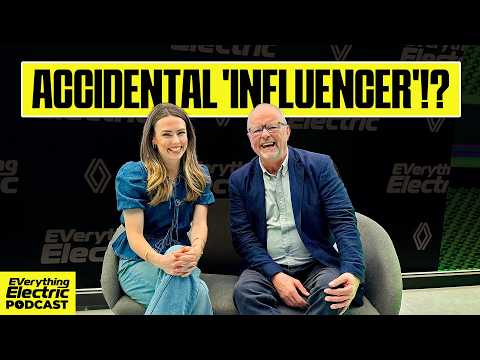
Analysis of Robert Llewellyn's career and impact on electric vehicles, based on 'From Red Dwarf to The EV Revolution' | Everything Electric Show.
OPEN SOURCERobert Llewellyn reflects on his diverse career spanning six decades, from comedy to electric vehicle advocacy. The podcast celebrates his 70th birthday and discusses his significant influence on British television and sustainability.
Llewellyn is best known for his role as Kryten in Red Dwarf and his work on Scrapheap Challenge, highlighting his evolution from fringe comedy to a key figure in the green revolution. He expresses discomfort with self-promotion, despite his significant influence on British television and the electric vehicle movement.
The episode delves into Llewellyn's varied experiences, discussing topics from bespoke shoemaking to sustainability, while engaging the audience with personal anecdotes. He shares his early fascination with engineering, sparked by observing construction projects during his childhood.
Llewellyn humorously recounts his expulsion from school due to rebellious acts, including graffiti that criticized the educational system, showcasing his nonconformist attitude. He reflects on his journey from bespoke shoemaking to becoming a prominent advocate for electric vehicles.
The conversation highlights the importance of humor in addressing serious topics, with Llewellyn emphasizing that it can make complex issues more accessible. He critiques the normalization of offensive humor in media during his youth, linking it to broader societal issues.
Despite the challenges and politicization of technological progress, Llewellyn remains optimistic, influenced by discussions with experts in energy and climate. He underscores the need for kindness and understanding in addressing societal issues.
- Highlights the importance of electric vehicles in combating climate change
- Emphasizes the need for public engagement and understanding of sustainability
- Questions the effectiveness of humor in addressing critical societal issues
- Concerns about trivializing important topics through comedic approaches
- Acknowledges the cultural significance of Red Dwarf and its impact on British television
- Recognizes the evolution of public perception regarding electric vehicles over time
- The podcast features an interview with Robert Llewellyn, celebrating his 70th birthday and reflecting on his diverse six-decade career in comedy, sci-fi, and electric vehicle advocacy
- Llewellyn is best known for his role as Kryten in Red Dwarf and his work on Scrapheap Challenge, highlighting his evolution from fringe comedy to a key figure in the green revolution
- He expresses discomfort with self-promotion, despite his significant influence on British television and the electric vehicle movement
- The episode delves into Llewellyns varied experiences, discussing topics from bespoke shoemaking to sustainability, while engaging the audience with personal anecdotes
details
- Robert Llewellyn discusses his early fascination with engineering, which was ignited by watching construction projects during his childhood, leading to a lifelong passion for physical structures and machines
- He shares a creative experience of building a geodesic dome from cardboard at school, reflecting his hands-on approach to engineering despite facing disciplinary challenges
- Llewellyn humorously recounts his expulsion from school due to rebellious acts, including graffiti that criticized the educational system, showcasing his nonconformist attitude
- The term Umarell is introduced, referring to older men who observe construction projects, which Llewellyn embraces as a family nickname, highlighting his ongoing connection to engineering
- Robert Llewellyn reflects on his varied career, which spans bespoke shoemaking, comedy, and his iconic role as Kryten in Red Dwarf
- He fondly recalls his time as a shoemaker, highlighting the craftsmanship he learned from mentors who were concentration camp survivors
- Llewellyns entry into comedy was unexpected, emerging from an alternative theatre group where he wrote sketches addressing masculinity and homophobia in a wartime context
- He humorously notes the irony of his headmaster praising his geodesic dome project after expelling him, illustrating the clash between his creative endeavors and academic discipline
- The conversation reveals Llewellyns initial lack of ambition for fame, as he preferred a non-traditional lifestyle focused on his craft over a conventional career
- Robert Llewellyn discusses his initial fear of performing live, which transformed into a passion for comedy after his first sketch performance
- He contrasts the excitement of engaging large audiences with the solitary nature of bespoke shoemaking, highlighting the unique privilege of captivating an audience
- Llewellyn reflects on his early influences in comedy and theatre, noting his connections with significant figures and a deliberate choice to avoid television during that period
- A key moment in his career occurred when he wrote a sketch that deeply resonated with audiences, marking a shift towards a focus on performance and comedy
- Robert Llewellyn reflects on his journey from a comedic play to embodying Kryten in Red Dwarf, noting the unique opportunity presented by his role as a robot created by a black woman
- He fondly recalls the camaraderie among the Red Dwarf cast, highlighting how quickly he was embraced despite being labeled the new boy for many years
- Llewellyn contrasts the backgrounds of Red Dwarf and Blackadder, pointing out that Red Dwarf was not tied to the Oxbridge elite that typically dominated the BBC, yet it attracted a larger audience
- He humorously claims that Red Dwarf is the most-watched show on BBC Two, even surpassing Top Gear, which he mentions in relation to its hosts reputation
- Robert Llewellyn emphasizes that while Red Dwarfs writers aimed for scientific accuracy, he did not see himself as the driving force behind that focus, as the show was largely scripted with little room for improvisation
- He notes that the pacing and structure of Red Dwarf are reminiscent of a play, contrasting with contemporary content that often favors quick, fragmented segments
- Reflecting on its cult status, Llewellyn attributes Red Dwarfs lasting appeal to its release in 1989, a time when it was not considered trendy or fashionable
- He shares a humorous story from filming Scrapheap Challenge, describing the demanding schedule and the unexpected comfort he found in lying on five-millimeter aggregate during long nights on set
- Robert Llewellyn notes that Scrapheap Challenge has significantly influenced many engineers in their career paths due to its innovative approach
- A memorable 2002 episode featured teams constructing aircraft with only period tools to honor the Wright brothers, highlighting creativity under constraints
- The British teams inventive use of a childrens deck chair and broomstick for control led to an unexpected flight success, showcasing the shows unique blend of humor and engineering
- Llewellyn discusses the production challenges of Scrapheap Challenge, including safety concerns and a chaotic environment, which added to the shows distinctive charm
details
- Robert Llewellyn recounts a memorable Scrapheap Challenge experience where a British team successfully constructed a makeshift aircraft using a childrens deckchair, showcasing creativity in engineering
- The conversation highlights Llewellyns transition from Scrapheap Challenge to the creation of Carpool, noting how filming in a car fosters genuine interactions
- Llewellyn reflects on the early challenges of filming, including sound issues and the innovative use of small cameras, which contributed to the development of the Fully Charged show
- The discussion explores the psychological dynamics of communication among men in a car, suggesting that the format encourages openness due to the absence of direct eye contact
details
- Robert Llewellyn discusses his transition from traditional media to independent content creation, highlighting how technological advancements have empowered individuals to produce their own shows
- He recounts his experience pitching the Fully Charged concept to the BBC, noting the networks initial lack of understanding of electric vehicles, which posed challenges for the shows development
- Llewellyn observes a significant shift in public perception and technology regarding electric vehicles since the introduction of models like the Nissan Leaf and Renault Zoe, reflecting a growing acceptance of electric mobility
- He shares a humorous story about a joking pitch for a solar-powered catering van show, illustrating the disconnect between innovative ideas and traditional broadcasting expectations in 2009
- The conversation reveals Llewellyns early belief that hydrogen would lead the future of transportation, emphasizing the unpredictability of technological advancements in the automotive sector
- Robert Llewellyn has written approximately 16 books across various genres, showcasing his enduring passion for writing
- He describes his writing process as a persistent compulsion, where ideas frequently interrupt his other activities
- His latest book, Ghost Camera, delves into innovations in electric vehicle technology and the scientists driving these advancements
- Despite the challenges and politicization of technological progress, Llewellyn remains optimistic, influenced by discussions with experts in energy and climate
- He highlights the valuable perspective gained from his 70 years of life, suggesting that while past eras faced challenges, current technological trends offer hope for the future
details
- Robert Llewellyn reflects on his childhood experiences with racism and homophobia, which shaped his values against such behaviors
- He critiques the normalization of offensive humor in media during his youth, linking it to broader societal issues rather than just political correctness
- His latest book features a janitor in a high-tech lab, illustrating the gap between scientific aspirations and real-world results
- The narrative maintains an optimistic outlook on technological progress, suggesting that humor can effectively engage audiences with serious subjects
- Llewellyn expresses concern about the challenge of balancing humor with the seriousness of scientific and social issues, fearing that jokes may diminish their importance
- Robert Llewellyn discusses his multifaceted career, which spans bespoke shoemaking, comedy, and his iconic role as Kryten in Red Dwarf
- The conversation highlights Red Dwarfs cultural significance, noting its viewership has even surpassed that of Top Gear
- Llewellyn shares amusing anecdotes, including a peculiar incident in the Mojave Desert and the challenges faced while producing the Carpool series
- The importance of humor in addressing serious topics is emphasized, with the idea that it can make complex issues more accessible
- Llewellyn expresses appreciation for the success of the Fully Charged show, which promotes electric vehicles and clean energy, and underscores the need for optimism in technological advancements
The discussion assumes that Llewellyn's influence is universally recognized, yet it overlooks the varying levels of public awareness regarding electric vehicles. Inference: The impact of his work on the broader EV movement may not be as significant as suggested, given the lack of quantifiable metrics. Additionally, the podcast does not address potential confounders, such as the role of other influencers in the green revolution.
This analysis is an original interpretation prepared by Art Argentum based on the transcript of the source video. The original video content remains the property of the respective YouTube channel. Art Argentum is not responsible for the accuracy or intent of the original material.