Business / Media
Iran-Israel Conflict Escalation
The United States and Israel have initiated coordinated military strikes on Iran, leading to significant retaliatory actions from Iran against multiple Gulf nations. This escalation has resulted in the deaths of key Iranian military leaders and a declaration from Iran that all U.S. and Israeli assets in the region are legitimate targets. The situation has raised global concerns about the potential for a major conflict.
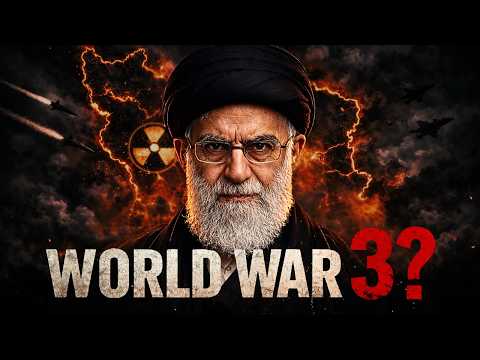
Source material: Iran declared WAR : Why did America Kill Iran's Supreme Leader?
Summary
The United States and Israel have initiated coordinated military strikes on Iran, leading to significant retaliatory actions from Iran against multiple Gulf nations. This escalation has resulted in the deaths of key Iranian military leaders and a declaration from Iran that all U.S. and Israeli assets in the region are legitimate targets. The situation has raised global concerns about the potential for a major conflict.
Iran is reportedly approaching weapons-grade uranium enrichment, prompting heightened alertness from countries like Israel and the United States. Historical precedents show that both nations have acted decisively against countries pursuing nuclear capabilities, as seen in Iraq and Syria. The fear is that if Iran develops a nuclear bomb, it could destabilize the entire region.
The strategic importance of the Strait of Hormuz, through which a significant portion of the world's oil supply passes, adds to the urgency of the situation. If Iran gains nuclear capabilities, it could threaten global oil supplies and use its power to exert influence over other nations. This potential for blackmail is a primary concern for the U.S. and its allies.
The Crown Prince of Saudi Arabia has indicated that if Iran acquires a nuclear weapon, Saudi Arabia would follow suit. This statement reflects the broader regional anxiety about nuclear proliferation and the potential for an arms race in the Middle East. The situation is further complicated by Iran's recent military actions against Gulf nations.
Perspectives
Analysis of the escalating conflict between Iran and Israel, with implications for regional and global security.
United States and Israel
- Launch coordinated strikes on Iran to prevent nuclear development
- Target Iranian military leaders to destabilize their command structure
- Act decisively against nations pursuing nuclear capabilities to maintain regional security
- Protect global oil supplies by countering Iranian influence in the Strait of Hormuz
- Support allies in the Gulf to deter Iranian aggression
Iran
- Launch retaliatory strikes against Gulf nations in response to U.S. and Israeli attacks
- Declare all U.S. and Israeli assets in the region as legitimate targets
- Pursue nuclear capabilities as a means of deterrence against perceived threats
- Utilize military alliances with regional proxies to counter U.S. influence
- Promise devastating operations in response to attacks on Iranian leadership
Neutral / Shared
- Highlight the strategic importance of the Strait of Hormuz for global oil trade
- Acknowledge the potential for a regional arms race if Iran develops nuclear weapons
- Recognize the historical context of military actions against nations pursuing nuclear capabilities
Metrics
deaths
Iran's Minister of Defense, Iran's head of military intelligence, the commander of Iran's army individuals
key Iranian military leaders killed
The loss of leadership may weaken Iran's military strategy.
Israel has successfully killed Iran's Minister of Defense, Iran's head of military intelligence, the commander of Iran's army.
military_bases_attacked
four major American military bases
targets of Iranian ballistic missile attacks
This indicates a significant escalation in military engagement.
ballistic missiles lit up the skies across the Middle East targeting four major American military bases.
countries_attacked
UAE, Qatar, Kuwait, Bahrain, and even Saudi Arabia countries
Gulf nations targeted by Iran's retaliation
This broadens the conflict beyond Iran and the U.S.
Iran has crossed all its limits to launch an attack on UAE, Qatar, Kuwait, Bahrain and even Saudi Arabia.
enrichment_level
approaching 90%
Iran's uranium enrichment level
This level indicates a significant step towards developing nuclear weapons.
the International Atomic Energy Agency believes that Iran has crossed 60% enriched uranium. And it is now approaching 90% which is weapons grade uranium.
nuclear_strike_time
eight minutes
time for Iran's ballistic missiles to reach Israel
This rapid strike capability heightens the threat perception for Israel.
Iran's ballistic missiles can reach Israel in just eight minutes.
other
if Iran gets a bomb, so will we
Saudi Arabia's response to Iran's nuclear ambitions
This indicates a potential arms race in the region.
the Crown Prince of Saudi Arabia has openly said that if Iran gets a bomb, so will we
other
Iran has attacked, UA, Saudi Arabia, Qatar, Kuwait and even Bahrain
Iran's military actions in the Gulf region
This escalation raises the risk of broader conflict.
Iran is attacked, UA, Saudi Arabia, Qatar, Kuwait and even Bahrain
Key entities
Timeline highlights
00:00–05:00
The United States and Israel have initiated coordinated military strikes on Iran, leading to significant retaliatory actions from Iran against multiple Gulf nations. This escalation has resulted in the deaths of key Iranian military leaders and a declaration from Iran that all U.S.
- The United States and Israel launched coordinated strikes on Iran, marking a significant escalation in military operations in the region. This included the deployment of fighter jets, missiles, and drones following a massive military buildup
- In retaliation, Iran launched attacks on multiple Gulf nations, including the UAE, Qatar, Kuwait, Bahrain, and Saudi Arabia, signaling a severe response to the strikes against it. Irans military actions included targeting luxury hotels in Palm Jumeirah and launching ballistic missiles at four major American military bases
- The situation escalated further with the reported deaths of key Iranian military leaders, including the Minister of Defense and the head of military intelligence. Iran has vowed to conduct a devastating operation in response to the attacks, declaring all U.S. and Israeli assets in the region as legitimate targets
05:00–10:00
The International Atomic Energy Agency has reported that Iran is approaching 90% enriched uranium, raising global concerns about its potential to develop a nuclear bomb. This situation has prompted heightened alertness from countries like Israel and the United States, which have historically acted decisively against nations pursuing nuclear capabilities.
- The International Atomic Energy Agency has reported that Iran is approaching 90% enriched uranium, raising global concerns about its potential to develop a nuclear bomb. This situation has prompted heightened alertness from countries like Israel and the United States, which have historically acted decisively against nations pursuing nuclear capabilities
- Irans Supreme Leader has labeled Israel a cancerous tumor that must be eradicated, indicating offensive intentions behind Irans nuclear ambitions. This poses a significant threat to Israel, which is geographically vulnerable to a nuclear strike
- Iran has established a network of support for militant groups like Hezbollah and Hamas, surrounding Israel and keeping it on high alert. This strategic positioning reinforces the urgency of preventing Iran from acquiring nuclear weapons
- The Strait of Hormuz is a critical maritime route for global oil supply, with 20% of the worlds daily crude oil passing through it. If Iran were to block this route, it could lead to skyrocketing oil prices and threaten the global economy
10:00–15:00
Iran has intensified military actions against American military sites and civilian areas in the Gulf region, raising regional tensions. The Crown Prince of Saudi Arabia has indicated that Saudi Arabia would pursue nuclear capabilities if Iran acquires a nuclear weapon.
- Iran has escalated military actions by attacking American military sites and civilian areas in the UAE, Saudi Arabia, Qatar, Kuwait, and Bahrain, raising tensions across the Middle East
- The Crown Prince of Saudi Arabia has indicated that if Iran acquires a nuclear weapon, Saudi Arabia will pursue one as well, reflecting concerns about a regional arms race
- The possibility of a united Middle Eastern alliance to counter Irans aggression is increasing, but intervention from Russia and China could escalate the conflict into a larger global war
- The speaker warns of the dire consequences of a potential nuclear war, emphasizing the need for a peaceful resolution to the ongoing tensions