Society / Social Change
Track social change, shifting values, public sentiment and cultural transformation through structured summaries built from curated sources.
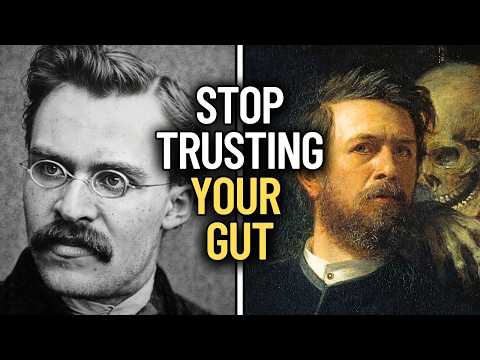
Why Your "Common Sense" Is Making You Stupid | Nietzsche
Topic
Conformity and Herd Morality
Key insights
- % of people will lie to fit in, prioritizing belonging over truth, as demonstrated in Solomon Ashs 1951 experiment
- The same experiment was repeated in 2023 with identical results, indicating a persistent human tendency to conform
- Friedrich Nietzsches concept of herd morality explains how individuals often inherit beliefs from their groups rather than think independently
- Nietzsche noted that rising above the herd is seen as a threat, leading to social elimination of those who question the narrative
- Fear of isolation drives individuals to conform, as being cast out historically meant death and loss of resources
- The brain prioritizes acceptance over truth, leading to self-policing and doubt among those who refuse to conform
Perspectives
Analysis of conformity and herd morality based on psychological experiments.
Conformity is detrimental to independent thought
- Highlights 75% of people lie to fit in, prioritizing belonging over truth
- Warns that herd morality, as described by Nietzsche, leads to inherited beliefs rather than independent thinking
- Claims fear of isolation drives individuals to conform, sacrificing truth for acceptance
- Argues that cognitive biases distort judgment, favoring group consensus over accuracy
- Proposes that social media algorithms amplify conformity, punishing dissenting voices
Conformity is a natural psychological response
- Acknowledges that 32% of participants conformed despite knowing the correct answer
- Notes that cognitive biases operate unconsciously, leading to systematic errors in thinking
- Points out that common sense often reflects group beliefs rather than objective truth
- Indicates that algorithmic visibility rewards conformity, reinforcing groupthink
Neutral / Shared
- Describes the persistence of conformity across decades, indicating a deep-rooted social dynamic
- Mentions that even one dissenting voice can significantly reduce conformity rates
Metrics
conformity_rate
75%
percentage of people who conformed in the experiment
This high rate indicates a significant societal tendency to prioritize group consensus over individual truth.
75% of people will lie to your face, even when they know the truth, just to fit in.
error_rate
33%
percentage of participants who conformed to the wrong answer
This highlights the significant influence of social pressure on decision-making.
33% error rate.
conformity_rate
32%
percentage of participants who conformed on most trials
Indicates a strong tendency towards conformity in group settings.
32% conformed on most trials.
financial_incentives_effect
25%
percentage of participants who still conformed despite financial incentives
Demonstrates the power of social dynamics over monetary motivation.
people still conformed to the group's wrong answer a quarter of the time.
cognitive_biases_count
over 180 types
number of identified cognitive biases
Highlights the complexity of human decision-making processes.
there are over 180 of them.
academic_papers_cited
22,000 papers
number of academic papers citing the work on cognitive biases
Indicates the foundational nature of this research in psychology.
over 22,000 academic papers have cited this research.
conformity_rate
32%
conformity rate before dissenting voice
Understanding the impact of dissent on conformity can inform strategies for fostering independent thought.
conformity. Dropped from 32% to 5%, one voice was enough to break the spell.
conformity_rate_after_dissent
5%
conformity rate after introducing dissenting voice
This statistic illustrates the power of dissent in challenging groupthink.
conformity. Dropped from 32% to 5%, one voice was enough to break the spell.
Key entities
Timeline highlights
00:00–05:00
The discussion centers on the psychological phenomenon of conformity, where individuals prioritize social acceptance over truth, as evidenced by Solomon Ash's experiments. This tendency is linked to Friedrich Nietzsche's concept of 'herd morality,' which suggests that people often inherit beliefs from their groups rather than think independently.
- % of people will lie to fit in, prioritizing belonging over truth, as demonstrated in Solomon Ashs 1951 experiment
- The same experiment was repeated in 2023 with identical results, indicating a persistent human tendency to conform
- Friedrich Nietzsches concept of herd morality explains how individuals often inherit beliefs from their groups rather than think independently
- Nietzsche noted that rising above the herd is seen as a threat, leading to social elimination of those who question the narrative
- Fear of isolation drives individuals to conform, as being cast out historically meant death and loss of resources
- The brain prioritizes acceptance over truth, leading to self-policing and doubt among those who refuse to conform
05:00–10:00
The discussion focuses on the psychological phenomenon of conformity, where individuals prioritize social acceptance over accuracy, as evidenced by a 33% error rate in a 2023 replication of Solomon Asch's experiments. Cognitive biases, such as confirmation bias and the bandwagon effect, contribute to this behavior, leading to systematic errors in thinking and a preference for group consensus over truth.
- % conformed on most trials, giving the wrong answer despite knowing the right one
- In a 2023 replication of the experiment, the error rate remained at 33%, even with financial incentives
- Participants conformed due to fear of ridicule and a desire to fit in, sacrificing accuracy for acceptance
- Cognitive biases, such as confirmation bias and the bandwagon effect, influence how people think and perceive truth
- Common sense is often based on common bias, leading to systematic errors in thinking
- The brain uses shortcuts for efficiency, but these shortcuts can lead to incorrect beliefs in the modern world
10:00–15:00
The discussion addresses the evolution of punishment for independent thought, highlighting how algorithmic invisibility leads to self-censorship and conformity. It emphasizes the pervasive nature of groupthink across various social settings and the psychological costs associated with independent thinking.
- The punishment for independent thought has evolved into algorithmic invisibility, leading individuals to self-censor and conform for validation
- Group think is pervasive across workplaces, universities, online communities, and friend groups, creating an illusion of consensus that punishes dissent
- Feeling isolated for independent thinking is not a sign of being wrong, but rather evidence of the herds immune response to protect conformity
- Even one dissenting voice can significantly reduce conformity, as shown in research where it dropped from 32% to 5% with just one differing opinion
- Intelligence is feared not for being incorrect, but for revealing uncomfortable truths that challenge the groups agreement
- The cost of independent thought includes loneliness and doubt, raising the question of whether one can handle being right alone