Politics / United States
Justifications for the Iraq War: A Critical Analysis
The 2003 Iraq War was initiated based on false claims of weapons of mass destruction, leading to military action without UN authorization. This conflict not only diminished international law but also severely damaged America's global credibility.
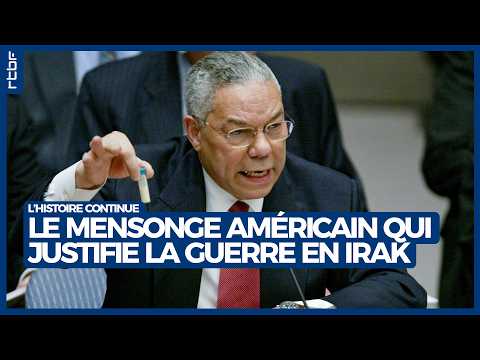
Source material: The American Lie That Justifies the War in Iraq - The Story Continues
Summary
The 2003 Iraq War was initiated based on false claims of weapons of mass destruction, leading to military action without UN authorization. This conflict not only diminished international law but also severely damaged America's global credibility.
Colin Powell's UN presentation aimed to justify the Iraq invasion by alleging that Saddam Hussein was concealing weapons of mass destruction, despite the absence of conclusive evidence. The U.S. administration's reliance on unverified claims raises questions about the decision-making processes in U.S. foreign policy.
The initial report from UN inspectors in Iraq found no evidence of prohibited weapons, raising doubts about the U.S. justification for the war. Despite the lack of findings, the U.S. continued to mobilize troops and sought support from allies, leading to significant divisions within Europe.
The U.S. invasion of Iraq marked a significant shift in international relations, highlighting the disregard for UN mandates and international law. Critics warn that bypassing international law could lead to a world where might prevails over legal norms, potentially empowering authoritarian regimes.
Perspectives
Analysis of the justifications for the Iraq War and their implications.
U.S. Justification for War
- Claims of weapons of mass destruction justified military action
- Allegations of Iraqs support for terrorism were used to rally support
Opposition to U.S. Actions
- Lack of evidence for weapons of mass destruction undermined the justification
- International community criticized the unilateral approach to military intervention
Neutral / Shared
- UN inspectors found no evidence of prohibited weapons in Iraq
Metrics
25,000 liters
estimated production capacity of Iraq's weapons
This figure illustrates the alleged scale of Iraq's weapons program that justified the invasion
the inspectors of the oil have estimated that Iraq had been able to produce 25,000 liters.
45 minutes
time claimed for Iraq's military readiness to use chemical and biological weapons
This claim was used to justify the urgency of military action against Iraq
that can be active in 45 minutes
Key entities
Timeline highlights
00:00–05:00
The 2003 Iraq War was initiated based on false claims of weapons of mass destruction, leading to military action without UN authorization. This conflict not only diminished international law but also severely damaged America's global credibility.
- The 2003 Iraq War was launched based on the false assertion of weapons of mass destruction, resulting in military action without UN Security Council authorization
- Colin Powells UN presentation, featuring a vial of anthrax, illustrated the misleading tactics used to justify the invasion, which was expected to be brief but extended for eight years
- This conflict not only contributed to a decline in international law but also eroded Americas credibility, leading to widespread public disillusionment with government narratives
- The discussion draws connections between the Iraq War and current conflicts, emphasizing how misinformation continues to influence public perception and policy, especially regarding Irans nuclear ambitions
- Louis Michel, Belgiums Foreign Minister during the war, experienced intense pressure for opposing the invasion, highlighting the resistance from nations like France and Germany
05:00–10:00
The discussion centers on the false claims made by the U.S. regarding weapons of mass destruction in Iraq, which were used to justify the invasion in 2003.
- Colin Powells February 5, 2003, UN presentation aimed to justify the Iraq invasion by alleging that Saddam Hussein was concealing weapons of mass destruction, despite the absence of conclusive evidence
- The U.S. administration, led by George W
- The decision to invade Iraq without UN Security Council approval marked a significant decline in international law and diminished Americas credibility on the global stage
- Initially expected to be a brief conflict, the Iraq War extended over eight years, resulting in widespread disillusionment and feelings of betrayal among the American public, especially veterans
- The narrative surrounding Iraqs alleged weapons of mass destruction mirrors contemporary issues, such as the Iranian nuclear program, indicating a recurring pattern of misinformation in U.S. foreign policy
10:00–15:00
The discussion highlights the false claims made by the U.S. regarding weapons of mass destruction in Iraq, which were used to justify the 2003 invasion.
- The U.S. faced significant challenges in persuading its European allies to support military action against Iraq, largely due to concerns about public opinion
- Despite pressure to act, the U.S. sought a UN mandate, emphasizing the need to substantiate claims of weapons of mass destruction in Iraq
- Intelligence reports, mainly from British sources, alleged that Iraq possessed chemical and biological weapons, but these claims lacked irrefutable evidence and included fabricated information
- The U.S. administration struggled to establish a credible connection between Iraq and terrorism, particularly regarding the 9/11 attacks, with some intelligence agents expressing doubts about these assertions
- As military tensions escalated, Iraq agreed to allow UN inspectors back into the country, a move interpreted as a tactical delay against impending military action
15:00–20:00
The discussion focuses on the false claims made by the U.S. regarding weapons of mass destruction in Iraq, which were used to justify the 2003 invasion.
- The initial report from UN inspectors in Iraq found no evidence of prohibited weapons, raising doubts about the U.S. justification for the war
- Despite the lack of findings, the U.S. continued to mobilize troops and sought support from allies, leading to significant divisions within Europe between pro-war and anti-war nations
- Belgiums Foreign Minister Louis Michel publicly questioned the existence of weapons of mass destruction, stressing the importance of concrete evidence before endorsing military action
- U.S. officials, including Donald Rumsfeld, framed opposing European nations as outdated in their views, exacerbating tensions over the impending conflict
- Colin Powells presentation to the UN aimed to influence global opinion, but faced strong counterarguments from figures like the French Foreign Minister, who advocated for peace and disarmament
20:00–25:00
The U.S. invasion of Iraq in 2003 was justified by false claims of weapons of mass destruction, leading to a prolonged conflict.
- The U.S. invasion of Iraq in 2003 was based on false claims of weapons of mass destruction, resulting in a conflict that lasted nearly nine years and caused civilian casualties estimated between 100,000 and 1 million
- The geopolitical dynamics of the time were marked by American exceptionalism, with U.S. officials exerting pressure on smaller nations like Belgium to gain support for the invasion, often using threats to coerce compliance
- Louis Michel, Belgiums foreign minister during the invasion, faced significant pressure from the U.S. and expressed his belief that the motivations for war were misleading, driven by a need for a target after the failure to capture Osama bin Laden
- This episode illustrates a broader trend of populism and disillusionment with political elites in the U.S, which resonates in contemporary politics, particularly with figures like Donald Trump who have also utilized misinformation to justify military actions
25:00–30:00
The discussion centers on the misleading justifications provided by the U.S. for the Iraq War, particularly the false claims of weapons of mass destruction.
- Colin Powells 2003 UN presentation, featuring a vial of anthrax, exemplified the misleading justifications for the Iraq War, which were based on false claims of weapons of mass destruction
- The unilateral military action against Iraq, initiated without UN Security Council approval, significantly undermined international law and Americas credibility, leading to widespread disillusionment
- Initially anticipated to be a brief conflict, the Iraq War extended over eight years, resulting in substantial civilian casualties and long-term geopolitical ramifications
- Belgium and other nations contrasted their multilateral approach with the U.S. narrative, emphasizing the importance of international inspections and diplomatic efforts
- The legacy of the Iraq War continues to shape current conflicts, with parallels drawn to the misinformation surrounding Irans nuclear program and ongoing geopolitical tensions