Politics / United States
Ramy Youssef's Comedy Evolution
Ramy Youssef's career has gained momentum with notable achievements, including an Oscar-nominated film and a Golden Globe-winning series, along with his latest comedy special 'In Love.' He observes a shift in his audience demographics, moving from a primarily Arab American viewership to a more diverse group that appreciates the cultural nuances of his work.
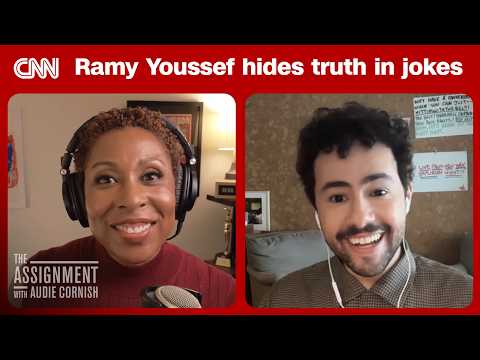
Source material: Ramy Youssef wants everyone in on the joke
Summary
Ramy Youssef's career has gained momentum with notable achievements, including an Oscar-nominated film and a Golden Globe-winning series, along with his latest comedy special 'In Love.' He observes a shift in his audience demographics, moving from a primarily Arab American viewership to a more diverse group that appreciates the cultural nuances of his work.
Youssef notes that the mainstream dialogue surrounding Middle Eastern issues has progressed, enabling him to tackle more complex topics without needing to provide extensive context. He compares his experience to that of Dave Chappelle, highlighting how a diverse audience can lead to more intricate humor and deeper contextual layers in comedy.
Ramy Youssef highlights a generational shift in comedy, where younger comedians no longer feel the need to explain cultural references, unlike earlier generations. He discusses the cultural privilege of his generation, allowing them to embrace their identities without changing their names, as exemplified by figures like Kumail Nanjiani.
Youssef critiques modern journalism for its shift from accountability to transient social media interactions, which has eroded public trust in news institutions. He points to the influence of corporate interests on both government and media, suggesting this has opened the door for figures like Joe Rogan to exploit public dissatisfaction without accountability.
Perspectives
short
Ramy Youssef's Perspective
- Emphasizes the evolution of comedy to include diverse audiences without needing extensive context
- Critiques the current state of journalism for lacking accountability and trust
Criticism of Comedy's Role
- Questions whether comedians can effectively replace traditional journalism
- Highlights the potential for misinterpretation of humor in diverse audiences
Neutral / Shared
- Acknowledges the generational shift in comedy and cultural identity
- Recognizes the complexities of navigating personal and societal expectations
Metrics
other
35 years
Ramy Youssef's age
His age highlights societal expectations regarding parenthood
It says 35. No kids.
Key entities
Timeline highlights
00:00–05:00
Ramy Youssef's career has seen significant growth, marked by an Oscar-nominated film and a Golden Globe-winning series. He discusses the evolution of his audience from primarily Arab American to a more diverse demographic that appreciates the cultural nuances in his comedy.
- Ramy Youssefs career has gained momentum with notable achievements, including an Oscar-nominated film and a Golden Globe-winning series, along with his latest comedy special In Love
- He observes a shift in his audience demographics, moving from a primarily Arab American viewership to a more diverse group that appreciates the cultural nuances of his work
- Youssef notes that the mainstream dialogue surrounding Middle Eastern issues has progressed, enabling him to tackle more complex topics without needing to provide extensive context
- He compares his experience to that of Dave Chappelle, highlighting how a diverse audience can lead to more intricate humor and deeper contextual layers in comedy
- Youssef embraces this evolution in audience understanding, as it allows him to delve into richer themes in his comedy without the need for preliminary explanations
05:00–10:00
Ramy Youssef discusses the evolution of comedy, emphasizing a generational shift where younger comedians no longer feel the need to explain cultural references. He reflects on the cultural privilege of his generation, allowing them to embrace their identities without altering their names.
- Ramy Youssef highlights a generational shift in comedy, where younger comedians no longer feel the need to explain cultural references, unlike earlier generations
- He discusses the cultural privilege of his generation, allowing them to embrace their identities without changing their names, as exemplified by figures like Kumail Nanjiani
- Youssef reflects on the challenges of being an anti-hero in comedy, facing criticism for not following traditional storytelling methods that appeal to mainstream audiences
- He views the election of Sarah Mondani as a cultural victory, acknowledging the complexities of being on the winning side after years of opposition
- Youssef contrasts comedy and news, arguing that while news is bound by strict guidelines, comedy offers the freedom to create unique narratives that engage audiences
10:00–15:00
Ramy Youssef discusses the evolution of comedy and its divergence from traditional journalism, emphasizing the freedom comedians have to create narratives without the constraints of accountability. He critiques the current state of journalism, highlighting the influence of corporate interests and the erosion of public trust.
- Ramy Youssef discusses the changing dynamics of comedy, highlighting how comedians now create their own narratives, contrasting with the rigid frameworks of traditional journalism
- He critiques modern journalism for its shift from accountability to transient social media interactions, which has eroded public trust in news institutions
- Youssef points to the influence of corporate interests on both government and media, suggesting this has opened the door for figures like Joe Rogan to exploit public dissatisfaction without accountability
- He reflects on the legacy of comedians like Jon Stewart, who merged humor with factual reporting, and questions whether comedians should take on the role of providing honest commentary in the absence of traditional news outlets
15:00–20:00
Ramy Youssef's comedy special, 'In Love,' explores his personal experiences, particularly his relationship with his parents and societal pressures regarding parenthood. He addresses the complexities of adult relationships and the unique challenges they present, especially for male comedians discussing vulnerability.
- Ramy Youssefs special, In Love, delves into his personal experiences, particularly his relationship with his parents and the societal pressures regarding parenthood
- He expresses the emotional weight of not having children at his age, feeling a responsibility to fulfill his parents desire to become grandparents
- Youssef highlights the complex dynamics of adult relationships with parents, noting that while they can offer support, they are not equals, which creates unique challenges
- The special seeks to broaden discussions on self-exploration and vulnerability, especially among male comedians who often avoid these themes
- His comedic approach combines dark or intense observations with a light-hearted delivery, using humor to address challenging topics
20:00–25:00
Ramy Youssef discusses the evolution of comedy and its role in addressing cultural issues, emphasizing the importance of creating a safe space for humor. He critiques the political implications of jokes, particularly in relation to identity and privilege.
- Ramy Youssef highlights the need for a safe space in comedy, comparing it to a basketball court where boundaries allow for thoughtful exploration without harm
- While he respects Dave Chappelle as a trailblazer in comedy, Youssef questions the intent behind Chappelles jokes and their potential political implications
- Youssef addresses the complexities of his identity as a Muslim in America, suggesting that discussions around privilege, particularly the term white, can be nuanced
- He believes humor has the power to bridge divides and foster conversations about sensitive topics by recognizing shared experiences and the absurdities of societal labels
25:00–30:00
Ramy Youssef discusses the evolution of comedy and its divergence from traditional journalism, highlighting the unique challenges faced by third culture kids. He emphasizes the importance of humor in addressing cultural issues while navigating the complexities of identity and privilege.
- Ramy Youssef explores the challenges of being a third culture kid, suggesting they often face unique expectations compared to others
- Ari Shapiro discusses how comedians from marginalized backgrounds, like Ramy, have evolved the narrative around foreign and sensitive topics through humor
- Ramys comedy tackles delicate issues such as cultural attire and polygamy, reflecting a significant shift in comedic expression over the last decade
- The dialogue examines the intersection of journalism and comedy, raising questions about the distinctions between serious news and entertainment in todays political landscape
- The upcoming podcast Engagement Party aims to delve into modern ideas and trends, offering a conversational take on topics that resonate with contemporary audiences