Politics / United States
America First and Immigration Policy
The 'America First' ideology has reshaped political discourse, resonating with voters disillusioned by traditional politicians. Recent legislative actions reveal divisions within the Republican Party regarding immigration policies, particularly concerning the Temporary Protected Status (TPS) for Haitian immigrants. Critics argue that TPS has evolved into a de facto permanent amnesty, complicating the immigration landscape and raising concerns about its impact on labor markets.
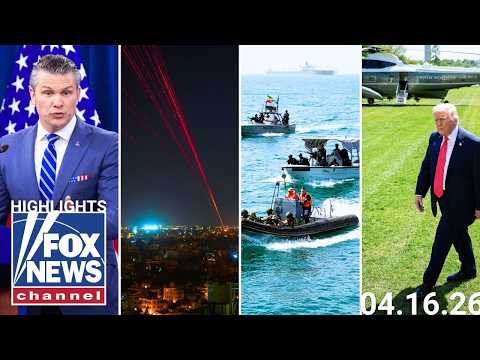
Source material: Fox News Highlights - April 16th, 2026
Summary
The 'America First' ideology has reshaped political discourse, resonating with voters disillusioned by traditional politicians. Recent legislative actions reveal divisions within the Republican Party regarding immigration policies, particularly concerning the Temporary Protected Status (TPS) for Haitian immigrants. Critics argue that TPS has evolved into a de facto permanent amnesty, complicating the immigration landscape and raising concerns about its impact on labor markets.
Reports of fraudulent asylum claims and local backlash against benefits for migrants highlight the contentious nature of immigration policy. The debate over TPS underscores the tension between humanitarian considerations and the economic implications for American workers. Advocates for extending TPS emphasize the contributions of immigrants to the economy, while opponents argue that it undermines the legal framework governing immigration.
Military strategies, such as the blockade against Iran, are presented as effective measures to curb Iranian influence and prevent nuclear proliferation. The U.S. military's global reach is showcased through the deployment of naval forces, emphasizing the importance of maintaining pressure on adversaries. However, the effectiveness of such strategies is questioned, as they may overlook the resilience of Iranian leadership and the complexities of regional dynamics.
Criticism is directed at the Catholic Church's leadership, particularly Pope Leo, for perceived corruption and a failure to address significant global challenges, including Iran's human rights violations. The expresses disillusionment with the Church, citing a lack of moral clarity in addressing radical Islam and the threat posed by a nuclear-armed Iran. This critique raises questions about the Church's credibility in global affairs.
Perspectives
Analysis of immigration policy and military strategy.
Pro-Immigration Policy
- Advocates for TPS argue it supports families and contributes to the economy
- Claims that returning immigrants to Haiti is not compassionate
- Highlights the role of immigrant workers in healthcare sectors
- Emphasizes the humanitarian aspect of extending TPS
- Points out the contributions of TPS recipients to local economies
Anti-Immigration Policy
- Argues that TPS has become a permanent amnesty rather than a temporary measure
- Critiques the economic impact of extending TPS on American workers
- Questions the validity of claims regarding labor shortages in healthcare
- Denounces the bipartisan support for TPS as a betrayal of American interests
- Highlights the need for stricter immigration policies to protect American jobs
Neutral / Shared
- Discusses the complexities of immigration policy and its implications
- Notes the ongoing debate over the effectiveness of military strategies against Iran
- Mentions the role of the Catholic Church in global moral discussions
Metrics
vote
224 to 2,204 votes
House vote on extending temporary protected status
This vote indicates significant bipartisan support for immigration policy changes.
the House voted 224 to 2,204 to extend what's called temporary protected status to 350,000 Haitians
population
350,000 individuals
Haitians living under temporary protected status
This number reflects the scale of the immigration issue at hand.
to extend what's called temporary protected status to 350,000 Haitians
wage
$29 USD
hourly wage for licensed practical and licensed vocational nurses
This wage level raises questions about the claimed labor shortage in healthcare.
$29 an hour for licensed practical and licensed vocational nurses
wage
$16 USD
hourly wage for home health aides
This low wage suggests a lack of competitive pay in the healthcare sector.
Only $16 an hour for home health aids
wage
$18 USD
hourly wage for nursing assistants
This wage indicates potential issues in attracting workers to the healthcare field.
$18, $19 an hour
other
more than 15,000 people
the size of the encampment at the southern border
This number highlights the scale of migration challenges faced at the border.
that encampment grew to more than 15,000 people.
other
more than 12,000 were released into the United States people
the number of migrants released after crossing the border
This indicates the volume of migrants entering the U.S. and the challenges in managing border security.
more than 12,000 were released into the United States.
trade
14 ships leaving Iranian ports ships
number of ships attempting to leave Iranian ports since blockade
This indicates the blockade's effectiveness in restricting Iranian trade.
Since blockade day, 14 ships leaving Iranian ports
Key entities
Timeline highlights
00:00–05:00
The 'America First' ideology has significantly influenced political discourse, appealing to voters frustrated with traditional politicians. Recent legislative actions highlight divisions within the Republican Party regarding immigration policies and the perceived labor shortage in healthcare.
- The America First ideology has transformed political discussions, resonating with voters disillusioned by conventional politicians, which aided Donald Trumps rise against established figures
- Recent House actions, like the vote to extend temporary protected status to Haitian immigrants, reveal a rift among Republicans, indicating a misunderstanding of prioritizing American interests
- Critics claim that extending immigrant protections is based on compassion, but this view neglects the legal standards governing such statuses, emphasizing the need to consider conditions in immigrants home countries
- The narrative of a healthcare labor shortage is contradicted by stagnant wages, suggesting that if a genuine shortage existed, employers would be more willing to increase pay
- The assertion that healthcare facilities must retain immigrant workers to solve staffing issues is questioned, as many of these workers lack voting rights, raising concerns about their political representation
- The current economic environment shows that corporate America prioritizes profit over fair wages, exacerbating staffing challenges and worker burnout in the healthcare sector
05:00–10:00
The Temporary Protected Status program has evolved into a de facto permanent amnesty for many migrants, particularly Haitians, raising concerns about its impact on migration patterns. The ongoing debate over immigration policy is complicated by reports of fraudulent asylum claims and local backlash against funding for benefits for migrants amidst budget constraints.
- The Temporary Protected Status program has shifted from a temporary humanitarian measure to a de facto permanent amnesty for many migrants, particularly Haitians, raising concerns about its long-term effects on migration patterns
- Reports of a surge in migrants at the southern border, with many allegedly planning fraudulent asylum claims, complicate the immigration policy debate and challenge the effectiveness of current border security measures
- Local governments are facing backlash over funding for benefits like gender transition surgeries for migrants, which is contentious in cities already dealing with budget constraints, highlighting the conflict between immigration support and fiscal responsibility
- Lobbying for high-skilled visa programs often obscures the issue of wage suppression for American workers, suggesting that industries may favor cheaper labor over fair wages, which undermines job opportunities for native citizens
- The discussion around high-skilled visas, such as the H1B program, frequently ignores the lack of stringent skill requirements and the negative impact on American workers, prompting calls for policy reevaluation to protect domestic employment
- The current political climate challenges lawmakers to choose between supporting American workers or catering to industries seeking lower labor costs, with significant implications for the midterm elections and the future of the labor market
10:00–15:00
Temporary Protected Status should prioritize American interests, emphasizing the need for policies that benefit U.S. citizens first.
- Temporary Protected Status should prioritize American interests, emphasizing the need for policies that benefit U.S. citizens first
- Irans economy suffers significantly due to a naval blockade, which is viewed as a more effective strategy than military intervention
- The U.S. Navy maintains control over maritime traffic in the region, demonstrating its military dominance with limited resources
- The blockade has drastically reduced Iranian trade, with reports showing no successful breaches, highlighting its effectiveness
- The advanced technology and weaponry on U.S. naval vessels underscore the military capabilities of the U.S
- The ongoing blockade and military presence signal to Iran that any challenges to U.S. authority will face strong resistance
15:00–20:00
The USS Gerald Ford has achieved the longest carrier deployment since the Soviet Union's collapse, showcasing the U.S. military's global reach.
- The USS Gerald Ford has completed the longest carrier deployment since the end of the Soviet Union, highlighting the extensive global reach of the U.S. military
- The U.S. military is actively targeting Iranian vessels and their supporters, reinforcing the enforcement of sanctions against Iran
- Irans economy has been severely impacted by the blockade, with estimates indicating a potential rebuilding cost exceeding a quarter trillion dollars and significant job losses affecting half of its workforce
- Intelligence gathering during the ceasefire has provided the U.S. with a tactical edge, enabling more precise targeting of Iranian military assets
- A potential diplomatic agreement with Iran depends on its willingness to abandon nuclear ambitions in exchange for relief from sanctions, which could significantly alter U.S.-Iran relations
- The Iranian regime is at a critical point, struggling to respond or recover due to ongoing sanctions and military pressure, which may shift regional power dynamics
20:00–25:00
The speaker has distanced themselves from the Catholic Church due to perceived corruption and a failure to address significant global challenges, particularly regarding Iran. Criticism is directed at Pope Leo for his alleged bias against President Trump and lack of condemnation for Iran's human rights violations.
- The speaker has distanced themselves from the Catholic Church due to perceived corruption, reflecting a wider disillusionment with organized religion
- Pope Leos recent remarks on U.S. military actions in Iran are viewed as politically motivated, contradicting biblical references to war
- The Popes lack of condemnation for Irans human rights violations raises concerns about his moral stance while criticizing the U.S
- The speaker believes it is both a moral duty and a practical necessity to prevent Iran from obtaining nuclear weapons, as it poses a threat to millions
- Criticism is aimed at the Pope for his alleged bias against President Trump, suggesting he should prioritize spiritual issues over political commentary
- The current leadership of the Catholic Church is seen as failing to address significant global challenges, particularly regarding Iran, which could impact future generations