Politics / United States
United States politics page with daily media monitoring across Reuters, AP, CNN, Fox News and The Washington Post, structured summaries of domestic political developments and a country-level press overview.
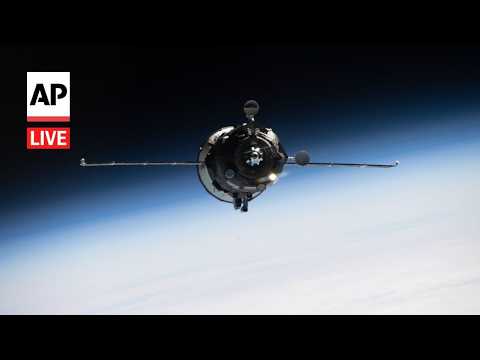
LIVE: Docking of Russia’s cargo spacecraft to International Space Station
Summary
The Progress 94 cargo spacecraft successfully docked with the International Space Station, delivering approximately 2.7 tons of essential supplies for the crew. The docking process was complicated by the failure of one of the two automated rendezvous antennas, necessitating manual control for the final approach.
Cosmonaut Sergey Kud-Sperchkov operated the backup TORU system to guide the spacecraft during docking. The operation involved a series of maneuvers, including a fly-around to align the docking probe with the Poisk module.
Despite the challenges posed by the antenna failure, all other systems on the Progress spacecraft functioned flawlessly during its transit. The flight control team in Houston monitored the approach and provided guidance to the crew aboard the ISS.
The successful manual docking underscores the importance of crew training and the effectiveness of backup systems in space operations. Following docking, leak checks will be conducted before the hatch is opened to allow unloading of supplies.
Perspectives
short
Support for Manual Control
- Highlights the successful manual docking of Progress 94 despite antenna failure
- Emphasizes the importance of crew training for handling unexpected situations
- Confirms that backup systems can effectively manage critical operations
Concerns About Automated Systems
- Questions the reliability of automated systems due to the antenna failure
- Raises concerns about the robustness of spacecraft design and operational assumptions
Neutral / Shared
- Notes that all other systems on the Progress spacecraft operated without issues
- Mentions the successful delivery of supplies as essential for ISS operations
Metrics
distance
8 kilometers
distance of the Progress spacecraft from the International Space Station
This distance indicates the proximity of the spacecraft for the upcoming docking procedure.
The progress is about 8 kilometers away from the International Space Station
approach_rate
8 full approach units
rate of approach of the Progress spacecraft
The approach rate is critical for timing the manual docking operation.
rate is 8 full approach
distance
7 kilometers
distance from the International Space Station
This distance is crucial for timing the docking procedure.
just a little over 7 kilometers away from the station
speed
7.5 meters per second
current approach speed of the Progress spacecraft
The speed is critical for ensuring a safe docking.
the rate of closure, which is currently 7.5 meters per second
speed
0.1 meters per second
speed at time of docking
A slow speed is necessary for a safe docking procedure.
traveling at a very slow rate of about one tenth of a meter per second
cargo_weight
2.7 tons
amount of supplies being delivered
The supplies are vital for the ISS crew's ongoing operations.
cargo, which again amounts to about 2.7 tons of food, fuel and supplies
distance
5 kilometers
distance from the International Space Station during approach
This distance indicates the spacecraft is nearing the docking phase.
the progress approaching a distance of 5 kilometers away from the International Space Station
speed
8 meters per second
speed as the spacecraft closes in
This speed requires careful monitoring to adjust for docking.
closing at a rate of just over 8 meters per second
Key entities
Timeline highlights
00:00–05:00
The Progress 94 cargo spacecraft is currently limited to one operational rendezvous antenna due to a deployment failure, necessitating a manual docking operation. Cosmonaut Sergey Kud-Sperchkov will control the docking process using the Toru system after a fly-around maneuver to align with the Poisk module.
- The Progress 94 cargo spacecraft is limited to one operational rendezvous antenna due to a deployment failure, requiring a manual docking operation that complicates the mission
- Russian flight controllers have repeatedly tried to deploy the folded antenna without success, prompting the crew to prepare for a backup manual docking using the Toru system
- To align its docking probe with the Poisk module, the spacecraft will perform a fly-around maneuver, which is essential for a successful docking despite the antenna issue
- Cosmonaut Sergey Kud-Sperchkov will manually control the docking process when transitioning from automated to manual mode, making his training and procedure review critical for success
- After docking, the forward docking probe will retract to secure the connection between the spacecraft and the station, allowing the crew to access the supplies onboard
- The crew on the International Space Station is busy with various tasks, including preparing for upcoming spacewalks, underscoring the need for timely resupply missions
05:00–10:00
The Progress spacecraft is currently approaching the International Space Station at a speed of 7.5 meters per second and is approximately 7 kilometers away. Due to a failure of one automated rendezvous antenna, manual control will be necessary for docking with the Poisk module.
- The Progress spacecraft is approximately 7 kilometers from the International Space Station, approaching at 7.5 meters per second, which is critical for a safe docking with the Poisk module
- As it nears the station, the spacecraft will reduce its speed to one-tenth of a meter per second to ensure a proper docking procedure and initiate the retraction of the docking probe
- Due to a failure of one automated rendezvous antenna, Sergei Kud-Svetkov will manually control the Progress using the backup Toru system, making his intervention essential for a successful docking
- The International Space Station crew is preparing to receive about 2.7 tons of supplies, including food and fuel, which are vital for their ongoing operations and research
- A fly-around maneuver will allow Russian flight controllers to verify the Progresss alignment with the Poisk module before switching to manual control, ensuring proper positioning for docking
- The Progress is currently 5 kilometers from the station, closing in at over 8 meters per second, necessitating careful monitoring to adjust its speed and trajectory for docking
10:00–15:00
The Progress spacecraft is approaching the International Space Station for docking, with all systems functioning well except for one failed automated rendezvous antenna. Flight director Diane Daley will assess the team's readiness for the manual docking operation using the TORU system.
- The Progress spacecraft and the International Space Station are in a synchronized orbit over South America, which is essential for the docking procedure
- Flight director Diane Daley will evaluate her teams readiness for the docking operation, a crucial step for ensuring a successful connection
- Despite one automated rendezvous antenna failing to deploy, the Progress spacecrafts other systems are functioning well, which is vital as it approaches docking
- Roscosmos is investigating the antenna failure to determine its cause, which is important for the safety of future missions
- The Progress spacecraft is scheduled to dock with the Poisk Module on the Russian segment of the International Space Station, enabling the transfer of essential supplies
- Due to the antenna failure, the flight team is relying on a backup manual docking system, underscoring the need for multiple operational strategies in space missions
15:00–20:00
The Progress spacecraft is currently two kilometers from the International Space Station, traveling at eight meters per second. Mid-course correction maneuvers have been completed to ensure accurate trajectory for a safe docking with the Poisk Module.
- The Progress spacecraft is two kilometers from the International Space Station, moving at eight meters per second, which is critical for docking with the Poisk Module to deliver supplies
- Mid-course correction maneuvers have been completed to ensure the spacecrafts trajectory is accurate, which is essential for a safe docking
- A final impulse burn is planned before the fly-around maneuver, crucial for maintaining alignment with the station during docking
- The flight team has activated the TORU system for manual control if needed, enhancing safety in case of automated system failures
- Testing of hand controllers for manual operation has shown successful results, preparing the operator for effective management of the docking process
- All systems are functioning properly with no major technical issues reported, ensuring timely supply delivery to the Expedition 74 crew
20:00–25:00
The Progress spacecraft is currently 800 meters from the International Space Station, approaching at a speed of 2.4 meters per second. Cosmonauts have confirmed the backup rendezvous system is operational, ensuring readiness for manual control during the docking process.
- The Progress spacecraft is now 800 meters from the International Space Station, approaching at a speed of 2.4 meters per second, which is vital for a successful docking
- Cosmonauts have confirmed the backup rendezvous system is operational, ensuring readiness for manual control during the docking process
- The fly-around maneuver will commence when the spacecraft is 400 meters away, essential for aligning the docking probe with the Poisk module
- Engineers are monitoring a deployment issue with one of the rendezvous antennas on the Progress, which could affect the docking
- The spacecraft is currently 360 meters from the station, moving at just under one meter per second to ensure precision for the final docking
- The Progress and the International Space Station are flying over the south Atlantic, emphasizing the missions operational scope and navigation needs
25:00–30:00
The Progress spacecraft is currently 340 meters from the International Space Station, preparing for a manual docking operation. The spacecraft is maintaining a closing rate of 0.55 meters per second as it approaches the final docking phase.
- The Progress spacecraft is currently 340 meters from the International Space Station, following an automated fly around process. This stage is crucial as it prepares for the final approach to docking
- Sergei Kudetsvichkov, the station commander, will manually control the Progress when the flight controllers signal the end of the station keeping period. This decision is vital for ensuring a safe and precise docking maneuver
- As the Progress approaches the 200-meter mark, it will enter a brief station keeping phase before final docking. This step is essential for aligning the spacecraft with the docking port on the Poisk module
- The spacecraft is maintaining a closing rate of 0.55 meters per second, indicating a steady approach. This consistent speed is important for a successful docking operation
- The Progress is currently executing a flawless fly around, with its range now at approximately 200 meters. This successful maneuver is critical for the upcoming docking sequence
- The trajectory of the Progress will take it across significant geographical landmarks, including the Sahara Desert and the Mediterranean. Understanding this path helps in monitoring the spacecrafts approach and ensuring safety