Politics / United Kingdom
Trump's blockade of the Strait of Hormuz
Donald Trump has initiated a blockade on Iranian shipping, aiming to economically isolate Iran and force negotiations regarding its nuclear program. This strategy is perceived as a gamble that could exacerbate the global energy crisis and escalate military tensions in the region. Observers note that the blockade's enforcement will target all ships, regardless of their origin, which complicates diplomatic relations with allies and partners.
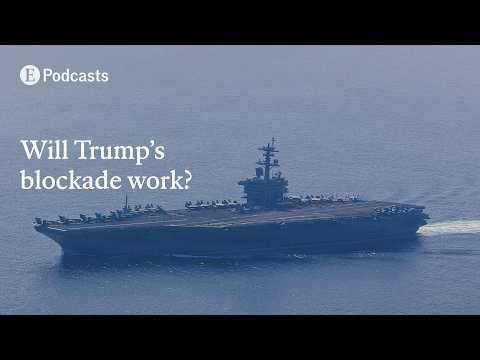
Source material: Donald Trump’s blockade of the Strait of Hormuz is a dangerous gamble | The Economist
Summary
Donald Trump has initiated a blockade on Iranian shipping, aiming to economically isolate Iran and force negotiations regarding its nuclear program. This strategy is perceived as a gamble that could exacerbate the global energy crisis and escalate military tensions in the region. Observers note that the blockade's enforcement will target all ships, regardless of their origin, which complicates diplomatic relations with allies and partners.
The blockade's effectiveness is questioned, as Iran has historically demonstrated resilience to economic sanctions. Analysts argue that while the blockade may disrupt Iranian oil exports, it could also provoke Iran to retaliate against neutral shipping, further destabilizing energy markets. The potential for increased military escalation raises concerns about the broader implications of this strategy.
If the blockade succeeds in crippling Iran's economy, it may lead to high inflation and a currency crisis, potentially forcing Iran back to the negotiating table. However, skepticism remains regarding whether the U.S. can maintain pressure without triggering significant backlash or military conflict. The upcoming midterm elections in the U.S. may influence the administration's ability to sustain this approach.
Perspectives
short
Supporters of the blockade
- Argue that economic strangulation will force Iran to negotiate
- Claim that the blockade will limit Irans access to foreign currency
- Highlight the potential for high inflation in Iran as a result of the blockade
- Assert that the blockade will disrupt Iranian oil exports significantly
Critics of the blockade
- Warn that Iran has historically survived economic sanctions
- Question the blockades ability to bring Iran to its knees
- Highlight the diplomatic challenges posed by affecting allied shipping
- Doubt the U.S. can maintain pressure without significant backlash
Neutral / Shared
- Acknowledge that the blockade targets all ships, complicating international relations
- Recognize that the blockades enforcement is based on international law
Metrics
oil_exports
400,000 barrels per day units
Iran's oil exports during previous sanctions
This figure indicates Iran's capacity to withstand economic pressure.
Iran's oil exports dipped well below, I think it was 400,000 barrels per day.
Key entities
Timeline highlights
00:00–05:00
Donald Trump is implementing a blockade on Iranian shipping to economically isolate Iran, aiming to force negotiations over its nuclear program. This strategy risks exacerbating the global energy crisis and escalating military tensions in the region.
- Donald Trump aims to economically isolate Iran, believing this approach will succeed where military efforts have failed. This strategy carries risks, potentially worsening the global energy crisis and escalating military tensions
- The U.S. intends to enforce a blockade on all vessels associated with Iranian ports, irrespective of their origin
- The blockade seeks to sever Irans economic lifeline, potentially forcing the regime into negotiations over its nuclear program. However, Iran has previously endured similar economic pressures, raising doubts about the strategys effectiveness
- Irans capacity to withstand prolonged economic hardship raises concerns about the blockades effects on energy markets. Retaliation against neutral shipping could disrupt Gulf oil supplies and lead to significant price hikes
- Potential Iranian attacks on energy facilities could further tighten oil markets, with predictions indicating Brent crude prices might reach $150 a barrel. This scenario could catch traders off guard, reversing recent market stability
- The evolving situation underscores the fragile balance of power in the region, with the risk of broader conflict becoming increasingly apparent
05:00–10:00
The U.S. blockade aims to economically isolate Iran by limiting its access to foreign currency through restrictions on shipping.
- The U.S. blockade targets Iranian shipping to limit its access to foreign currency, aiming to economically isolate the country
- The Pentagons blockade rules apply to all vessels, including those from allied nations, which may strain U.S. diplomatic relations
- Iran may retaliate against neutral shipping in response to the blockade, potentially causing significant disruptions in global oil supply. Such actions could drive oil prices up to $150 a barrel
- The effectiveness of the blockade is uncertain, as Iran has previously endured similar economic pressures. The regimes resilience adds to doubts about the blockades potential impact on its economy and military actions
- Iran believes it can withstand the U.S. blockade, especially with the upcoming midterm elections in the U.S
- If the blockade fails to significantly weaken Iran, it could lead to renewed conflict in the region. The situation remains volatile, with a high risk of further escalation