Politics / United Kingdom
Iran's Nuclear Ambitions and U.S. Negotiations
Iran is perceived to have a significant advantage in negotiations with the U.S. regarding its nuclear program and the reopening of the Strait of Hormuz. The U.S. has shifted its focus from Iran's nuclear capabilities to the strategic management of the Strait, indicating a weakened negotiating position. Iran's existential stakes in these negotiations may compel it to escalate its nuclear ambitions if it perceives insufficient concessions from the U.S.
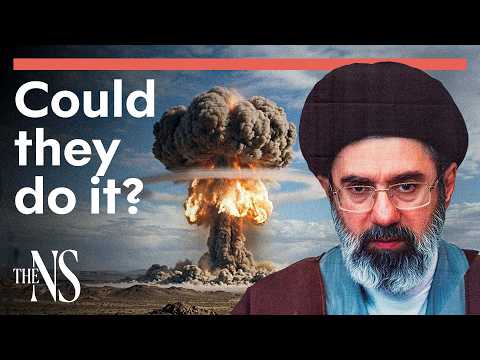
Source material: Iran will detonate nuclear bomb - "it's a 50/50 chance" | Iran war | New Statesman
Summary
Iran is perceived to have a significant advantage in negotiations with the U.S. regarding its nuclear program and the reopening of the Strait of Hormuz. The U.S. has shifted its focus from Iran's nuclear capabilities to the strategic management of the Strait, indicating a weakened negotiating position. Iran's existential stakes in these negotiations may compel it to escalate its nuclear ambitions if it perceives insufficient concessions from the U.S.
The prolonged closure of the Strait of Hormuz poses risks for Iran, as Gulf nations may seek alternative crude transport routes, potentially diminishing Iran's leverage. Iran's demands in negotiations center around its right to enrich uranium and security guarantees, contrasting sharply with the U.S.'s previous maximalist demands. The likelihood of reaching a favorable agreement for the U.S. appears low, given the current geopolitical landscape.
Iran's stockpile of highly enriched uranium remains a significant concern, as it complicates international negotiations and poses risks for regional security. The absence of verification measures following the collapse of the JCPOA raises alarms about undisclosed stockpiles and the potential for Iran to accelerate its nuclear program. Military strikes have damaged Iran's nuclear infrastructure, but key components remain intact and unmonitored.
Recent military actions have not fully dismantled Iran's nuclear capabilities, as the country retains the expertise and infrastructure necessary to pursue nuclear weapons. The new leadership in Iran may prioritize nuclear armament, potentially leading to a rapid development of nuclear capabilities. This shift raises concerns about an arms race in the region, as neighboring countries may feel compelled to pursue their own nuclear deterrents.
Perspectives
Analysis of Iran's nuclear ambitions and U.S. negotiation strategies.
Pro-Iran Negotiation Strategy
- Claims Iran has significant leverage in negotiations due to existential stakes
- Highlights Irans demands focus on security and enrichment rights
- Warns that prolonged closure of the Strait of Hormuz risks Irans negotiating position
- Argues that military strikes have not fully dismantled Irans nuclear capabilities
U.S. Position and Concerns
- Argues U.S. negotiating position has weakened since the collapse of the JCPOA
- Claims U.S. focus has shifted from nuclear capabilities to Strait management
- Highlights risks of Irans stockpile of highly enriched uranium for regional security
- Questions the credibility of U.S. as a security guarantor following inconsistent policies
Neutral / Shared
- Notes the complexity of Irans nuclear program and the potential for undisclosed stockpiles
- Acknowledges the challenges in assessing the full extent of Irans nuclear capabilities
Metrics
other
50-50 chance %
likelihood of Iran detonating a nuclear weapon
This probability indicates a significant risk to regional and global security.
I think there's a 50-50 chance that Iran will detonate a nuclear weapon within the next three years.
other
$2 million payment USD
Iran's demand for crude carriers
This demand could significantly impact global oil transport costs.
it wants a $2 million payment for every crude carrier going through the straight.
nuclear_capability
days away from producing enough highly enriched uranium for a bomb days
Iran's nuclear advancement
This poses serious international security concerns.
Iran is days away from having insufficient highly enriched uranium for a bomb.
stockpile
most of Iran's highly enriched uranium is believed to be stored
Iran's nuclear stockpile location
This indicates a significant challenge for monitoring and verification.
most of Iran's highly enriched uranium is believed to be stored
probability
50-50 %
likelihood of Iran detonating a nuclear weapon within three years
This highlights the significant risk of nuclear proliferation in the region.
I think there's a 50-50 challenge that Iran will detonate in nuclear weapon within the next three years
nuclear_capability
within a year or two years
timeframe for Iran to develop a nuclear bomb if unopposed
This timeline indicates an urgent need for international diplomatic efforts.
if it was just left alone, it could have the bomb within a year or two.
nuclear_capability
less than a year years
timeframe for a crash program to develop a nuclear bomb
A rapid development timeline poses significant risks for regional stability.
I think a crash program could get the bomb in less than a year.
other
the US intelligence community assessed Iran was complying with that agreement
Iran's compliance with the JCPOA
This indicates that Iran was adhering to the terms of the agreement, challenging the narrative of non-compliance.
the US intelligence community assessed Iran was complying with that agreement
Key entities
Timeline highlights
00:00–05:00
Iran is perceived to have a significant advantage in negotiations with the U.S. regarding its nuclear program and the reopening of the Strait of Hormuz.
- Iran may detonate a nuclear weapon within three years, raising alarms about regional and global security during U.S.-Iran negotiations
- The U.S. prioritizes Irans nuclear program in talks, while Iran focuses on its security concerns, highlighting their differing agendas
- Irans readiness to resume conflict if negotiations falter suggests they may have the upper hand in discussions with the U.S
- The U.S. has shifted its attention from Irans nuclear ambitions to the reopening of the Strait of Hormuz, influenced by the ongoing war
- Iran seeks financial compensation for oil transport through the Strait of Hormuz, complicating U.S. negotiation strategies
- Negotiations are largely taking place on Irans terms, as they have shown the capability to close the Strait of Hormuz, while the U.S. struggles to reopen it
05:00–10:00
Iran's prolonged closure of the Strait of Hormuz risks its negotiating leverage as Gulf nations may seek alternative crude transport routes. The U.S.
- Iran risks losing its negotiating leverage if it maintains a prolonged closure of the Strait of Hormuz, as Gulf nations may explore alternative routes for crude transport, potentially harming Irans economic position
- The U.S. has historically pushed for a significant reduction in Irans nuclear program, but Iran now demands acknowledgment of its right to enrich uranium, indicating a possible deadlock in negotiations
- The Trump administrations more aggressive stance on Irans nuclear program contrasts with Obamas approach, suggesting that any future agreement may be less favorable for the U.S
- Irans rapid advancement in nuclear capabilities means it is now reportedly just days away from producing enough highly enriched uranium for a bomb, raising serious international security concerns
- The absence of verification measures in Iran today poses a greater risk than during the JCPOA, as there are currently no inspectors monitoring its nuclear activities, increasing the chance of undisclosed facilities
- If a new agreement is reached, it is likely to be less comprehensive than the JCPOA, which could create a more precarious situation due to the previous deals complexity and public misunderstanding of its benefits
10:00–15:00
Iran's stockpile of highly enriched uranium poses significant risks for regional security and complicates international negotiations. The likelihood of a new agreement resembling the previous JCPOA is low, with concerns over the monitoring of Iran's nuclear capabilities.
- Irans large stockpile of highly enriched uranium brings it dangerously close to nuclear weapon development, raising serious regional security concerns
- The chances of a new agreement with Iran are low, and any potential deal is likely to lack the stringent limits and verification measures of the previous JCPOA
- Irans nuclear materials are reportedly stored in deep tunnels in Isfahan, complicating U.S. and Israeli efforts to monitor and target these capabilities
- Iran has fortified tunnel entrances to protect its nuclear program from airstrikes, allowing it to potentially use its nuclear materials without detection
- Conflicting reports on the quantity of highly enriched uranium at Isfahan create uncertainty, complicating international assessments of Irans nuclear threat
- Irans ongoing nuclear advancements and the presence of unmonitored materials pose significant challenges to global non-proliferation efforts
15:00–20:00
Recent military strikes have damaged Iran's nuclear program, but key components remain unmonitored, allowing for potential reconstitution. Iran retains the expertise and infrastructure to pursue nuclear weapons, complicating military responses from the U.S.
- Recent military strikes have damaged Irans nuclear program but key components remain unmonitored, allowing for potential reconstitution
- Iran has a significant stockpile of centrifuge parts that were not targeted, which are essential for any future nuclear capability rebuilding
- Despite setbacks, Iran retains the expertise and infrastructure to pursue nuclear weapons, complicating military responses from the US or Israel
- The timeline for Iran to develop a nuclear weapon could be shorter than expected, with the possibility of detonation within one to two years if political conditions favor rapid development
- The decision to pursue nuclear weapons is largely political, influenced by historical events, allowing Iran to maintain the capability to build a bomb without fully committing
- There is a considerable risk that Iran may accelerate its nuclear program if it perceives a favorable political climate, highlighting the need for urgent diplomatic engagement
20:00–25:00
Iran's new leadership may prioritize nuclear armament, potentially accelerating their pursuit of nuclear capabilities. This shift raises concerns about regional security and the possibility of an arms race among neighboring countries.
- Irans new leadership may prioritize nuclear armament, a shift from previous hesitance. This change could accelerate their pursuit of nuclear capabilities
- If unopposed, Iran could develop a nuclear bomb within one to two years. The challenge lies in achieving this without provoking military retaliation
- Irans motivation for acquiring nuclear weapons is to deter future military threats, as evidenced by the fates of leaders like Saddam Hussein and Muammar Gaddafi
- The Iranian regime believes that nuclear weapons would shield them from external aggression, a view shaped by recent military conflicts
- Irans nuclear ambitions could spark a regional arms race, prompting countries like Saudi Arabia, Egypt, and Turkey to seek their own nuclear capabilities
- Debates are ongoing in regions like East Asia and Europe regarding the potential for allied nations to develop nuclear arsenals, highlighting concerns about proliferation and international stability
25:00–30:00
The credibility of the U.S. as a security provider is significantly undermined, leading allies to consider developing their own nuclear arsenals.
- The credibility of the U.S. as a security provider is undermined, leading allies to consider developing their own nuclear arsenals for protection
- U.S. actions have weakened its negotiating power regarding non-proliferation agreements with Iran
- Despite U.S. intelligence confirming Irans compliance with the JCPOA, the U.S
- The U.S. has compromised its negotiating stance by attacking Iran during ongoing discussions
- The shift in U.S. administration resulted in a complete abandonment of the previous nuclear agreement, revealing systemic issues in U.S
- This situation poses a broader proliferation risk, as allies may feel pressured to pursue their own nuclear capabilities, potentially igniting an arms race in regions like the Middle East and East Asia