Politics / United Kingdom
U.S.-Iran-Israel Relations
The ongoing crisis involving Iran has escalated significantly, with the U.S. military engaging in major operations. President Trump's announcement of the Supreme Leader's death marks a pivotal moment in the conflict, raising questions about the future of U.S.-Iran negotiations. The ceasefire between the U.S., Iran, and Israel is precarious, with Trump indicating a preference for a deal while also expressing reluctance to extend the ceasefire.
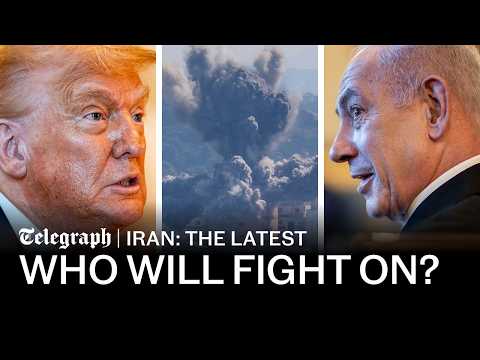
Source material: Trump vs Netanyahu: will Israel continue fighting if America pulls out?
Summary
The ongoing crisis involving Iran has escalated significantly, with the U.S. military engaging in major operations. President Trump's announcement of the Supreme Leader's death marks a pivotal moment in the conflict, raising questions about the future of U.S.-Iran negotiations. The ceasefire between the U.S., Iran, and Israel is precarious, with Trump indicating a preference for a deal while also expressing reluctance to extend the ceasefire.
The geopolitical landscape remains complex, particularly with the Israel-Hezbollah conflict continuing independently of U.S.-Iran negotiations. Recent satellite imagery suggests Iran is using the ceasefire to bolster its military capabilities, raising concerns about the potential for renewed hostilities. Diplomatic efforts between Israel and Lebanon have resumed, but the situation remains volatile, with ongoing military actions complicating peace prospects.
China's oil imports from the Gulf are largely unaffected by U.S. sanctions, but the broader implications of the conflict on global energy markets are significant. The potential for a U.S.-Iran peace agreement does not guarantee stability in the region, as the entrenched Israel-Hezbollah conflict persists. The humanitarian crisis in Lebanon exacerbates the need for urgent diplomatic solutions.
The initiation of the war against Iran involved a coordinated effort between the U.S. and Israel, with both nations underestimating Iran's resilience and military capabilities. Intelligence failures have led to operational miscalculations, complicating the conflict's management. Israel's war goals differ significantly from U.S. priorities, highlighting the complexities of their alliance.
Perspectives
Analysis of U.S.-Iran-Israel relations amidst ongoing conflicts.
U.S. and Israel
- Initiate major military operations in Iran
- Announce the death of Irans Supreme Leader as a pivotal moment
- Express reluctance to extend the ceasefire despite a preference for a deal
- Coordinate efforts against Iran while managing the Israel-Hezbollah conflict
- Underestimate Irans military resilience and capabilities
- Pursue diplomatic negotiations with Lebanon while addressing Hezbollah
Iran and Hezbollah
- Utilize ceasefire to enhance military capabilities
- Maintain a commitment to nuclear ambitions despite international pressure
- View nuclear capability as essential for national security
- Resist U.S. and Israeli military actions through strategic resilience
- Engage in military actions against Israel while navigating internal political dynamics
Neutral / Shared
- Highlight the humanitarian crisis in Lebanon as a complicating factor
- Acknowledge the complexities of U.S.-Iran negotiations
- Recognize the impact of global energy markets on regional stability
Metrics
ceasefire_duration
14-day ceasefire days
duration of the ceasefire agreement
The limited timeframe increases pressure for negotiations.
it was only ever a 14-day ceasefire.
nuclear_enrichment_status
Iran is not enriching uranium anyway units
current status of Iran's uranium enrichment
This status could influence negotiation dynamics.
Iran is not enriching uranium anyway.
casualties
over 2,000 people
estimated deaths since military operations began
This figure highlights the severe human cost of the ongoing conflict.
It's estimated that over 2,000 people have been killed and a million displaced since Israel military operations in Lebanon against Hezbollah, began on 2 March.
displacements
a million people
estimated displacements due to the conflict
The scale of displacement underscores the urgent need for humanitarian intervention.
It's estimated that over 2,000 people have been killed and a million displaced since Israel military operations in Lebanon against Hezbollah, began on 2 March.
rocket_attacks
about 20 rockets
number of rockets launched by Hezbollah
This indicates the ongoing hostilities and the potential for escalation.
Hezbollah launched a barrage of about 20 rockets from Lebanon, according to Israel's Channel 12.
oil_imports
about 6 million barrels a day barrels
China's total oil imports from the Gulf region
This figure highlights China's reliance on Gulf oil despite geopolitical tensions.
China imports about 6 million barrels a day of oil from the Gulf region in normal times.
non_iranian_oil_imports
about 4.5 million barrels
China's oil imports from non-Iranian sources
This indicates that the majority of China's oil supply is insulated from US sanctions.
probably about 4.5 million barrels come from countries that are not Iran.
military_action
the Iranian regime would roll over
Israeli assessment of Iranian military capacity
This reflects a significant underestimation of Iran's capabilities.
the Iranian regime would roll over, that they would be too weak to close the straight up all mues
Key entities
Timeline highlights
00:00–05:00
The U.S. military has initiated major operations in Iran, coinciding with President Trump's announcement of the Supreme Leader's death.
- The crisis has escalated, with the U.S. military launching significant operations in Iran
- Trumps announcement of Irans Supreme Leaders death could alter the wars trajectory, prompting the Pentagon to consider reopening vital maritime routes
- Negotiations between the U.S. and Iran may resume, but Trump is hesitant to extend the ceasefire
- Vice President J.D. Vance proposed a grand bargain that offers economic incentives to Iran for nuclear disarmament
- David Blair noted that the success of negotiations depends on Irans willingness to abandon its nuclear goals, which they have historically resisted
- There is a notable divergence between U.S. and Israeli military objectives, with Netanyahu advocating for a strategy focused on fundamentally weakening Iran
05:00–10:00
The geopolitical situation remains complex, with the potential for continued conflict between Israel and Hezbollah despite a peace agreement between the US and Iran. The humanitarian crisis in Lebanon is severe, necessitating urgent diplomatic efforts.
- The conflict between Israel and Hezbollah may continue even if the US and Iran reach a peace agreement, highlighting the complexity of the geopolitical situation
- The current ceasefire has potentially allowed Iran to enhance its military capabilities, as evidence suggests they are clearing missile bases, raising concerns about a possible arsenal rebuild
- Negotiations between Israel and Lebanon have resumed after decades, but Hezbollahs unwillingness to comply with agreements complicates the prospects for lasting peace
- The humanitarian crisis in Lebanon is dire, with significant casualties and displacements, emphasizing the urgent need for effective diplomatic interventions
- Criticism of Trumps administration centers on its management of international alliances, particularly NATOs role, which may prompt a reassessment of US foreign policy
- Experts suggest that a direct military clash between the US and China over Middle Eastern oil is unlikely, with the US blockade primarily targeting Iranian interests
10:00–15:00
China's oil imports from the Gulf are largely unaffected by the US embargo, with approximately 4.5 million barrels coming from non-Iranian sources. The future of US-Iran peace talks remains uncertain, with a ceasefire extension being the most likely outcome amidst ongoing geopolitical tensions.
- Chinas oil imports from the Gulf remain stable despite the US embargo, as most of its supply comes from non-Iranian sources, allowing China to navigate geopolitical tensions effectively
- Ukraines strikes on Russian oil export facilities hinder Russias ability to attract new customers, damaging its financial stability in the oil sector amid ongoing conflict
- The future of US-Iran peace talks is uncertain, with a ceasefire extension being the most probable outcome, but unresolved issues could reignite conflict
- David Blair notes that the current crisis has escalated beyond the control of individual leaders like Trump and Netanyahu, underscoring the complexities of achieving lasting peace
- The discussion adds to doubts about Netanyahus potential preference for a failed ceasefire, highlighting concerns over the alignment of US and Israeli military objectives
- Sima Shine indicates that the US and Israel had anticipated a coordinated attack on Iran, suggesting pre-war preparations were in place
15:00–20:00
The initiation of the war involved a coordinated effort between the U.S. and Israel, with both nations prepared for conflict against Iran.
- The unexpected initiation of the war was linked to the tactics used against key Iranian leaders, revealing a level of readiness from both sides. While Iran anticipated conflict, the execution of the attacks was surprising
- Israels role in the conflict with Iran is characterized as a collaborative effort with the United States, complicating the narrative of the war. This partnership reflects shared strategic objectives against Iran
- Reports indicate that Netanyahu pushed for military action against Iran, believing the regime would lack the capacity to retaliate effectively. This adds to doubts about the underlying motivations for U.S
- Trumps decision to engage in military action appears influenced by his own strategic goals, not just Israeli interests. This highlights the multifaceted nature of international relations affecting military decisions
- Netanyahus longstanding focus on Iran provided him an opportunity to advocate for military action during a time of strong U.S. support for Iranian demonstrators
- Concerns have been raised about the rationale for the war, particularly regarding arguments presented in a PowerPoint format. This suggests potential weaknesses in the justification for military engagement, impacting future U.S.-Iran relations
20:00–25:00
Iran's resilience and military capabilities were significantly underestimated, leading to operational failures in conflict management. Israel's intelligence, despite its depth, failed to accurately assess Iran's resolve and strategic intentions.
- Irans resilience and response capabilities were significantly underestimated, resulting in operational failures in the conflict management
- Despite Irans public threats to close strategic waterways, military planning did not adequately account for these potential actions, which are crucial for regional control
- Israels intelligence community has extensive knowledge of Iran, yet this did not lead to accurate assessments of Irans resolve, indicating a critical failure in understanding the regime
- Overconfidence in intelligence capabilities may have led Israel to believe the war would be easily won, which could have severe consequences for the ongoing conflict
- The Iranian regimes determination to survive, even under significant hardships, complicates military strategies aimed at destabilizing it
- Netanyahus leadership has faced criticism due to Israels unmet war objectives, which could impact the countrys strategic position in the region
25:00–30:00
The United States is focused on broader global issues, which diminishes the urgency of Israel's security concerns regarding Iran's ballistic threats. Military disarmament of Iran's nuclear capabilities is unlikely, making diplomatic negotiations the only feasible option.
- The United States prioritizes broader global issues over the ballistic threats Israel faces, underscoring the critical nature of Israels security challenges
- Achieving military objectives against Iran is highly difficult, with the potential for escalation into a larger conflict that could destabilize the region
- Irans unwavering commitment to its regime complicates military efforts to dismantle its nuclear capabilities, as it is willing to endure significant sacrifices
- The most effective way to halt Irans nuclear program would be through its voluntary abandonment, but this outcome appears unlikely in the current context
- Israels successful military strikes on nuclear facilities in Iraq and Syria were due to the unique nature of those programs, unlike Irans extensive nuclear infrastructure
- If Iran refuses to abandon its nuclear ambitions, military disarmament will be extremely challenging, making diplomatic negotiations the only viable option