Politics / United Kingdom
United Kingdom politics page with daily media monitoring across BBC News, The Telegraph, The Economist and The Times, structured summaries of domestic political developments and a country-level press overview.
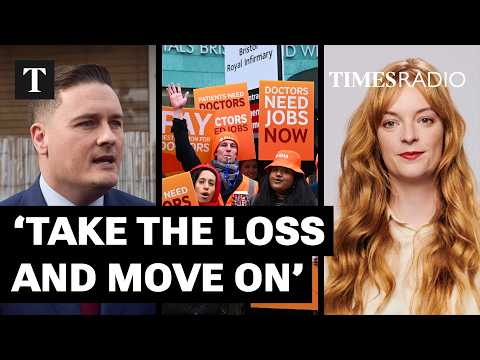
Resident Doctors Must Accept Everyone Is Struggling, Not Just Them | Charlotte Ivers
Summary
Resident doctors face significant challenges, including stagnant salaries and increasing workloads, which impact patient care. Strikes by these doctors are seen as a strategic miscalculation that may erode public goodwill towards NHS workers. The financial burden of these strikes raises concerns about the sustainability of the healthcare system and the potential for long-term consequences.
Younger generations are increasingly disillusioned with the opportunities available to them compared to those of their parents. This disconnect could lead to societal unrest, as many feel their birthrights to stable jobs and good salaries are being eroded. The historical context of economic growth and societal expectations plays a crucial role in shaping these sentiments.
The discussion also touches on the implications of technological advancements, particularly AI, on job markets. Proposals for a four-day workweek without salary reductions highlight the need for companies to share efficiency gains with employees. However, skepticism remains regarding the willingness of corporations to adopt such changes.
Political dynamics are explored through the lens of international relations, particularly the ties between Hungary's leadership and the MAGA movement in the U.S. The complexities of these relationships reveal the challenges of aligning political ideologies across different contexts.
Perspectives
short
Support for Resident Doctors' Struggles
- Argues that resident doctors should not strike over stagnant salaries
- Highlights the need for solidarity among professionals facing financial struggles
- Emphasizes the broader economic challenges affecting various sectors
Criticism of Resident Doctors' Actions
- Questions the effectiveness of strikes in improving working conditions
- Denies that doctors are in a uniquely disadvantaged position compared to other professions
- Accuses doctors of punishing patients through their actions
- Rejects the notion that public goodwill can be indefinitely relied upon
Neutral / Shared
- Discusses the historical context of economic growth and societal expectations
- Explores the implications of AI on job markets and work structures
- Critiques the moral implications of true crime entertainment
Metrics
other
five or six governments
governments being punished for healthcare issues
This indicates a prolonged systemic failure in healthcare governance.
They are now punishing maybe five or six governments later than the government that caused this problem for them.
other
two generations
generations feeling disconnected from their parents' opportunities
This highlights a significant intergenerational gap in economic expectations.
you sort of have several generations now or kind of a generation, two generations really of people who are looking at the lives that their parents lived
other
250 years
duration of economic growth before stagnation
This timeframe illustrates the unprecedented nature of recent economic progress.
basically shows that economic growth flatlined until the end of the 18th century, then it goes sharply up for 250 years
total_cost
more than £3 billion GBP
total cost of the strikes since 2023
The cumulative financial impact raises concerns about the sustainability of NHS services.
the cost of these strikes since 2023 has been more than £3 billion
other
four-day workweek
Sam Altman's proposal for work structure
This could significantly impact employee morale and productivity.
Sam Altman is calling on companies to introduce a four day week with no loss in pay
other
13 page blueprint
Document outlining policy suggestions
It provides a framework for adapting to technological changes.
His advice is all written out in a 13 page blueprint published by his company
other
three hour weeks
Keynes' vision of future work hours
It highlights historical perspectives on efficiency and leisure.
he talks about the idea that his grandchildren to the people alive now would be working three hour weeks
Key entities
Timeline highlights
00:00–05:00
The struggles of resident doctors are impacting patients and the healthcare system, highlighting systemic issues that need addressing. Younger generations feel disconnected from the opportunities their parents had, which could lead to societal unrest if not resolved.
- Resident doctors struggles may negatively impact patients and the healthcare system, indicating a need to address broader systemic issues
- Younger generations feel a disconnect between their opportunities and those of their parents, which could lead to societal unrest if not addressed
- The influx of overqualified graduates in a saturated job market poses risks, especially for young men, potentially leading to societal disengagement
- Many perceive they are living in a post-golden age marked by economic decline, which can distort political and cultural dynamics
- The 1990s, often idealized, were fraught with violence and economic challenges, complicating the understanding of todays socio-political landscape
- Addressing the gap between expectations and reality for younger generations is crucial to prevent a widening divide that threatens societal cohesion
05:00–10:00
The strikes by resident doctors are perceived as a strategic error that may undermine public support for NHS workers. Financial concerns among doctors, coupled with the estimated £50 million daily cost of the strikes, are raising alarms about the impact on patient care and future negotiations.
- The strikes by resident doctors are viewed as a strategic error that could put pressure on public support for NHS workers, which is essential for future negotiations
- Many doctors feel their salaries are not keeping up with inflation, leading to concerns about financial stability while they prioritize public service
- The health secretary estimates the strikes are costing the NHS £50 million daily, impacting both the budget and the quality of patient care
- Public sentiment is increasingly turning against the strikes, which may weaken doctors negotiating power for better pay and working conditions
- Nostalgia for the 1990s is complicating discussions about current economic challenges, as it suggests a decline in societal progress
- The strikes highlight broader societal issues, particularly the difficulties younger generations face in achieving the stability their parents had, which could lead to social unrest
10:00–15:00
Sam Altman advocates for a four-day workweek without salary reductions, suggesting that companies should share efficiency gains from AI with employees. This proposal reflects a broader need to reassess work structures in light of technological advancements.
- Sam Altman, CEO of OpenAI, proposes a four-day workweek without salary reductions, advocating for companies to share the efficiency gains from AI with their employees. This vision aims to enhance work-life balance amid technological advancements
- Altmans suggestions are part of a comprehensive plan for policymakers to adapt to the evolving landscape shaped by AI. This indicates a potential need for significant changes in traditional work structures as AI takes on more responsibilities
- The idea of a shorter workweek connects to historical efficiency concepts, such as those from economist John Maynard Keynes, suggesting a future where increased leisure time does not compromise productivity
- Critics may view Altmans optimism as unrealistic, questioning whether companies will actually distribute profits gained from AI advancements. This skepticism underscores the conflict between technological progress and corporate profit interests
- The conversation about a four-day workweek raises critical issues regarding labor rights and the future of work in an automated environment. It highlights the necessity to reassess work organization and compensation in light of technological changes
- Altmans vision prompts a reevaluation of existing work dynamics, potentially fostering a fairer distribution of AI benefits. This shift could significantly impact workforce morale and overall societal well-being
15:00–20:00
Charlotte Ivers argues that resident doctors should not strike over stagnant salaries, emphasizing the need for solidarity among professionals facing financial struggles. This perspective highlights the broader economic challenges affecting various sectors.
- Charlotte Ivers argues that resident doctors should not strike over stagnant salaries, as many others are also facing financial struggles. This perspective emphasizes the need for solidarity among professionals during challenging economic times
20:00–25:00
Chatbots provide a more centrist and expert-led perspective on politics compared to social media, which often features angry and misleading content. Charlotte Ivers critiques the moral implications of true crime entertainment, emphasizing the need for narratives that reveal systemic issues within institutions.
- Chatbots provide a more centrist and expert-led perspective on politics compared to social media, which often features angry and misleading content. This distinction highlights the potential value of AI in delivering informed analysis
- Charlotte Ivers critiques the moral implications of true crime entertainment, arguing that it often exploits the worst experiences of individuals for viewer engagement. She emphasizes that true crime narratives can be valuable when they reveal systemic issues within institutions
- Ivers discusses two true crime documentaries, noting that one focuses on a well-known robbery while the other explores a potential serial killer case. The latter documentary illustrates how institutional failures can lead to the victimization of whistleblowers
- The conversation reveals a growing concern about the ethical dimensions of true crime storytelling, particularly when it prioritizes entertainment over the dignity of victims. This adds to doubts about the responsibilities of media creators in portraying sensitive subjects
- Ivers suggests that the most impactful true crime stories are those that expose flaws in societal structures and institutional responses. This perspective encourages a deeper examination of how such narratives can inform public discourse
- The segment concludes with a recognition of the complexities surrounding true crime as a genre, balancing fascination with ethical considerations. This ongoing dialogue is essential for understanding the broader implications of media consumption