Politics / United Kingdom
United Kingdom politics page with daily media monitoring across BBC News, The Telegraph, The Economist and The Times, structured summaries of domestic political developments and a country-level press overview.
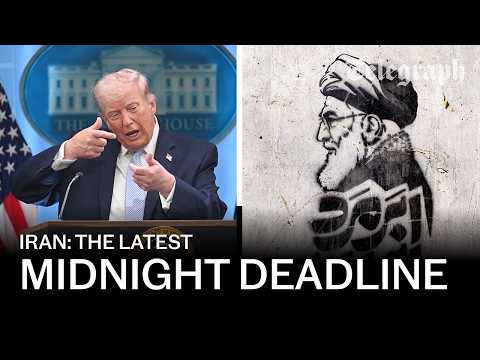
Trump's Iran deal deadline: ‘A whole civilisation will die tonight’
Summary
Tensions between the U.S. and Iran have escalated significantly, with President Trump issuing severe threats to destroy Iran's infrastructure if a deal is not reached. The Iranian regime, facing military pressure, remains defiant, emphasizing its unwillingness to back down despite the risks involved. Recent military operations have reportedly resulted in the death of Iran's Supreme Leader, further complicating the geopolitical landscape.
Iranian state media is actively shaping narratives around military events to bolster domestic support and intimidate adversaries. The downing of an American military plane highlights Iran's military capabilities and raises concerns about U.S.-Iran relations. The conflict has led to significant casualties and humanitarian crises, particularly in Lebanon and the Gulf region.
Iranian drone strikes have caused extensive damage to Gulf energy infrastructure, affecting civilian access to essential resources like drinking water. The UK's military response has intensified, with increased deployments to protect regional interests amid ongoing tensions. The cycle of retaliatory actions suggests that military interventions may exacerbate the conflict rather than resolve it.
Trump's threats to destroy Iran's critical infrastructure raise concerns about potential humanitarian crises if civilian areas are targeted. Iran's rejection of a temporary ceasefire reflects deep skepticism towards U.S. intentions, complicating peace negotiations. The ongoing military campaign in Lebanon is exacerbating sectarian tensions, particularly between Christians and Shiites.
Perspectives
Analysis of escalating U.S.-Iran tensions and the humanitarian implications of military actions.
U.S. Position
- Issues severe threats to Iran, warning of complete destruction of infrastructure
- Claims that military action is necessary to compel compliance from Iran
- Seeks to leverage control over the Strait of Hormuz to ease energy market pressures
- Emphasizes the need for a decisive military response to Iranian aggression
- Considers Iranian military capabilities a significant threat to regional stability
Iranian Position
- Rejects U.S. threats and emphasizes resilience against external pressure
- Calls for guarantees against future attacks as a condition for negotiations
- Utilizes state media to shape narratives and bolster domestic support
- Mobilizes public sentiment to resist U.S. aggression and maintain regime stability
- Highlights the humanitarian impact of U.S. military actions on civilians
Neutral / Shared
- Reports indicate significant casualties and humanitarian crises resulting from the conflict
- Military operations have led to increased tensions and retaliatory actions from both sides
- Chinas involvement in supporting Iran complicates the geopolitical landscape
Metrics
casualties
at least 2,000 people
total death toll in Iran due to the conflict
This figure underscores the severe humanitarian impact of the ongoing military actions.
the death toll now is at least 2,000 people, according to the Iranian health ministry.
civilian_deaths
240 women and 212 children people
specific civilian casualties reported
The high number of civilian casualties raises concerns about the humanitarian implications of military operations.
that includes 240 women and 212 children.
military_operations
major combat operations in Iran operations
U.S. military engagement in Iran
This indicates a significant escalation in U.S. military involvement in the region.
the United States military began major combat operations in Iran.
bridge_damage
caused around 13 deaths people
deaths resulting from the bombing of a major bridge
The destruction of infrastructure has direct consequences on civilian safety and mobility.
caused around 13 deaths according to local authorities.
military_capabilities
five people were killed during the rescue operations people
casualties during military operations
This highlights the human cost of military engagements and the potential for escalating conflict.
I saw some reporting that suggested five people were killed during the rescue operations.
military_capabilities
Iran is firing less, a smaller number every day of missiles, but they are getting more precise
effectiveness of missile attacks
Increased precision in attacks could lead to more significant damage and escalation in the region.
Iran is firing less, a smaller number every day of missiles, but they are getting more precise.
loss
significant material losses USD
damage to energy infrastructure
This impacts energy supply and prices globally.
It's led to fires and what the company itself has described as, quote, significant material losses.
supply
40 percent of the UK's imported jet fuel %
oil refinery supply
Disruption affects aviation and logistics in the UK.
an oil refinery that supplies 40 percent of the UK's imported jet fuel.
Key entities
Timeline highlights
00:00–05:00
The U.S. military has intensified operations in Iran, reportedly resulting in the death of the Supreme Leader and escalating tensions.
- President Trump has issued severe threats to Iran, warning of destruction if a deal is not reached, which heightens fears of widespread devastation
- The U.S. military has launched significant operations in Iran, reportedly resulting in the death of the Supreme Leader
- Failed peace negotiations have left the conflict unresolved, indicating both Iran and the U.S. may be gearing up for a long-term confrontation
- Israel has escalated military actions, threatening to target vital infrastructure in Iran, potentially worsening the humanitarian crisis amid an internet blackout
- The conflict has led to a dramatic increase in casualties in Iran, with thousands dead, including many civilians, underscoring the urgent need for international intervention
- Conflicting reports about U.S. military operations and the status of airmen are complicating the narrative surrounding the conflict
05:00–10:00
Iranian state media is actively shaping narratives around military events to bolster domestic support and intimidate adversaries. The downing of an American military plane underscores Iran's military capabilities and raises concerns about U.S.-Iran relations.
- Iranian state media is crafting narratives around military events to strengthen domestic support and intimidate opponents, manipulating perceptions of success and suffering among the public and foreign observers
- The downing of an American military plane highlights Irans military capabilities, potentially impacting U.S.-Iran relations and raising concerns about the capture of U.S. personnel
- The U.S. militarys rescue of its airmen provides temporary relief but raises doubts about the effectiveness of Irans air defense systems
- Irans reaction to the downed plane includes mobilizing the public against foreign threats, which could enhance the regimes position by framing the conflict as a national struggle
- Irans missile and drone attacks are becoming more precise, targeting energy assets in the Gulf, which threatens regional stability and has wider implications for global energy security
- The ongoing military actions are creating a complex environment where both Iran and the U.S. are vying for dominance, with the potential for further escalation
10:00–15:00
Iranian drone strikes have significantly damaged Gulf energy infrastructure, disrupting civilian access to drinking water. The UK's military response has escalated, with increased deployments to protect regional interests amid ongoing tensions.
- Iranian drone strikes on Gulf energy infrastructure have caused significant damage, disrupting civilian access to drinking water and prompting the UK to bolster its military presence in the region
- The UKs Royal Air Force has intercepted several Iranian drones, indicating a growing international military response that could complicate the conflict further
- Saudi Arabia has closed a vital bridge due to threats of imminent attacks, revealing the increasing vulnerability of regional infrastructure amid ongoing missile strikes on its facilities
- Irans focus on targeting energy assets is driving up global energy prices, showcasing its ability to inflict substantial economic damage with limited military resources
- The conflict is characterized by a cycle of retaliatory actions, complicating diplomatic efforts and escalating tensions among involved parties
- Negotiations for safe passage through the Strait of Hormuz are ongoing, with some vessels allowed to transit, highlighting Irans strategic leverage over this critical shipping route
15:00–20:00
The Iranian oil and gas crisis is escalating, potentially surpassing the severity of past crises from the 1970s and 2002. Israeli attacks in Lebanon have resulted in over 1,400 casualties, indicating a worsening humanitarian crisis.
- The Iranian oil and gas crisis is intensifying, potentially exceeding the severity of past crises from the 1970s and 2002, which could disrupt global energy markets and international relations
- An American journalist has been kidnapped in Iraq, highlighting the persistent risks faced by civilians and media personnel in conflict zones
- Journalists in Iraq and the Gulf are facing increasing dangers and severe restrictions, complicating independent reporting and raising concerns about accurate information dissemination
- Israeli attacks in Lebanon have resulted in over 1,400 casualties, surpassing the death toll from the 2006 war and indicating a worsening humanitarian crisis
- Mass demolitions from Israeli airstrikes in southern Lebanon are reminiscent of tactics used in Gaza, likely heightening sectarian tensions and destabilizing the region
- The ongoing violence is causing significant civilian displacement and loss of life, raising urgent questions about Lebanons future stability and the broader Middle East
20:00–25:00
The military campaign in Lebanon is exacerbating sectarian tensions, particularly between Christians and Shiites, raising the risk of civil unrest. Recent Israeli airstrikes and Iranian missile attacks have resulted in significant casualties, highlighting the growing human toll of the conflict.
- The military campaign in Lebanon is increasing sectarian tensions, especially between Christians and Shiites, which could lead to civil unrest as views on innocence and guilt become more divided
- An Israeli airstrike has killed a key official from the Lebanese Forces party and his wife, escalating hostilities and complicating humanitarian efforts in the region
- An Iranian missile strike on a residential area in Haifa has resulted in multiple casualties, including the first Filipino victim, highlighting the conflicts growing human toll across various communities
- A gunfight near the Israeli consulate in Istanbul has raised alarms about Turkeys role in the regional conflict, prompting an investigation that may hinder its mediation efforts between the US and Iran
- North Korea appears to be distancing itself from Iran, indicating a potential shift in alliances that could change the geopolitical dynamics involving Iran and its allies
- The Pentagon is facing instability due to leadership changes, which could significantly affect military strategies regarding the conflict with Iran and raise uncertainties about US involvement
25:00–30:00
Donald Trump has issued a threat to destroy Iran's infrastructure if a deal is not reached, which raises concerns about potential devastation. Iran has rejected any agreement without guarantees against future attacks, complicating peace negotiations.
- Donald Trump has threatened to destroy Irans infrastructure by midnight if a deal is not reached, raising fears of widespread devastation and casualties
- Iran has firmly rejected any agreement without assurances against future attacks, underscoring the significant mistrust that complicates peace talks
- Tehran is calling for civilian participation to safeguard essential infrastructure, aiming to rally public support against U.S. threats
- Irans ten-point peace proposal seeks a permanent end to hostilities, indicating a preference for a lasting resolution over temporary ceasefires
- Diplomatic efforts are unlikely to succeed as both the U.S. and Iran perceive themselves as winning, which hinders potential compromises
- The ongoing energy market crisis is intensifying the situation, posing serious risks to both the U.S. and global economies