Politics / Saudiarabia
Pluralistic review of domestic politics through national press, media commentary and public debate across diverse political perspectives. Topic: Saudiarabia. Updated briefs and structured summaries from curated sources.
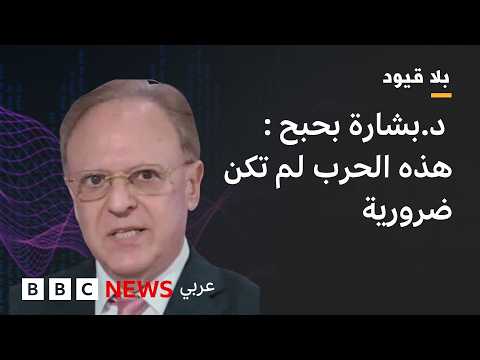
بلاقيود : د.بشارة بحبح: يبدو أن أولوية الإدارة الحالية هي حماية إسرائيل "وطُز" في الدول العربية
Summary
The ongoing conflict in the Middle East is heavily influenced by U.S. involvement, particularly the relationship between the U.S. and Israel. The current administration's focus on Israel's security raises concerns about the stability of the region and the interests of Arab nations. The complexities of these relationships are often overlooked, leading to potential miscalculations in foreign policy.
Iran's role in the conflict is significant, as it is perceived as a primary threat by both the U.S. and Israel. The Trump administration's approach to Iran has been criticized for lacking a coherent strategy, which may exacerbate tensions rather than resolve them. The reliance on military solutions to control Iran's influence could lead to further instability in the region.
Internal divisions within the Republican Party regarding foreign policy may impact the U.S.'s approach to the Middle East. The differing opinions on how to handle relations with Arab nations and Israel could lead to a fragmented policy that undermines U.S. interests. This discord may also affect the party's electoral prospects in upcoming elections.
Arab nations are beginning to reassess their security strategies in light of U.S. policies. The potential for a shift towards alternative alliances, such as with Russia or China, is becoming more pronounced. This realignment could significantly alter the geopolitical landscape in the Middle East.
Perspectives
short
Pro-U.S. involvement
- Argues that U.S. military presence is essential for regional stability
- Claims that supporting Israel is crucial for U.S. interests in the Middle East
- Highlights the importance of U.S. leadership in countering Iranian influence
Critics of U.S. involvement
- Questions the effectiveness of military solutions in resolving conflicts
- Rejects the notion that prioritizing Israels security will stabilize the region
- Accuses the U.S. of overlooking the complexities of Middle Eastern politics
Neutral / Shared
- Notes the historical context of U.S.-Israel relations
- Observes the potential for internal dissent within the Republican Party
- Mentions the changing dynamics of Arab nations security strategies
Metrics
revenue
200 billion dollars USD
U.S. military spending
This significant expenditure reflects the U.S.'s ongoing military commitments in the region.
The US war has increased from 200 billion dollars to 100 billion dollars.
Key entities
Timeline highlights
00:00–05:00
The ongoing conflict in the Middle East is influenced by U.S. involvement and the U.S.-Israel relationship.
- The ongoing conflict in the Middle East is seen as unnecessary, driven by actions from Israel that have led to U.S. involvement
- President Trumps administration seems to have misjudged the risks of escalation in the conflict
- There are doubts about the success of military efforts against Irans nuclear program, as past attempts have not fully dismantled their capabilities, allowing for quick recovery
- Criticism is directed at the decision-making process in the Trump administration for lacking diverse input, which may lead to a limited understanding of foreign policy issues
- The U.S.-Israel relationship is identified as a key factor influencing current military strategies
- The future of U.S. military bases in the Gulf is uncertain, with Gulf states potentially exploring alternative security options
05:00–10:00
The U.S. administration's focus on Israel's security raises concerns about regional stability and the interests of Arab nations.
- The current U.S. administration seems to prioritize Israels security over the interests of Arab nations, raising concerns about regional stability
- A divide is emerging within the Republican Party regarding the ongoing conflict, with some members arguing it mainly benefits Israel, which could affect party unity and electoral outcomes
- Critics claim that President Trumps military strategies are shaped by a narrow group of advisors, potentially leading to ineffective foreign policy decisions
- The war has sparked discussions about reassessing U.S. military support for Israel, especially considering the humanitarian situation in Gaza
- There are indications that Trumps administration may have been more receptive to Arab American perspectives on the conflict compared to Bidens, which could influence future political engagement
- The future of U.S. military bases in the Gulf is being questioned, with Gulf states contemplating alternative security arrangements
10:00–15:00
The U.S. administration's focus on Israel's security raises concerns about regional stability and the interests of Arab nations.
- The current U.S. administration appears to prioritize Israels security over the concerns of Arab nations, which adds to doubts about regional stability
- Speculation exists that President Trump may engage in a prolonged military conflict, reminiscent of past wars, which could strain U.S. resources
- The deployment of U.S. Marines to key locations may aim to control vital oil export routes from Iran, impacting global oil markets
- Occupying strategic islands could compel Iran to accept U.S. terms to cease hostilities, altering the dynamics of the conflict
- The Republican Party may face significant losses in the upcoming midterm elections due to the ongoing war, potentially jeopardizing Trumps political future
- Public opinion in the U.S. seems to be shifting against the war, with many questioning the financial implications of continued military involvement
15:00–20:00
The U.S. administration's prioritization of Israel's security raises concerns about the stability of the region and the interests of Arab nations.
- The current U.S. administration seems to prioritize Israels security over the concerns of Arab nations, raising doubts about regional stability
- Discontent is growing within the Republican Party regarding foreign military involvement, as many members feel let down by President Trumps failure to avoid conflicts
- Financial demands for the war in Iran may force the U.S. to borrow significantly, impacting its economic stability
- The relationship between the U.S. and Gulf states is being questioned, especially as these nations have heavily invested in American military support
- The U.S. military presence has not effectively protected critical infrastructure in the region from Iranian threats, undermining trust in American commitments
- Arab states are increasingly viewed as collateral damage in the conflict between Iran and Israel, which could alter regional alliances
20:00–25:00
The U.S. administration's focus on Israel's security is raising concerns among Arab nations about regional stability.
- The U.S. administration is focusing on Israels security, sidelining the interests of Arab nations, which raises concerns about regional stability
- Gulf states are increasingly worried about needing alternative security partnerships, with countries like China and Russia being considered for defense cooperation
- Arab leaders are actively seeking new methods to safeguard their territories, potentially leading to a shift in military alliances in the region
- Pro-Israel lobbying groups continue to exert significant influence on U.S. foreign policy, affecting decisions in the Middle East
- Candidates in upcoming elections may distance themselves from pro-Israel funding, indicating a possible change in political dynamics regarding U.S. support
- These trends could significantly alter the geopolitical landscape in the Middle East, potentially diminishing U.S. influence