Politics / Saudiarabia
Pluralistic review of domestic politics through national press, media commentary and public debate across diverse political perspectives. Topic: Saudiarabia. Updated briefs and structured summaries from curated sources.
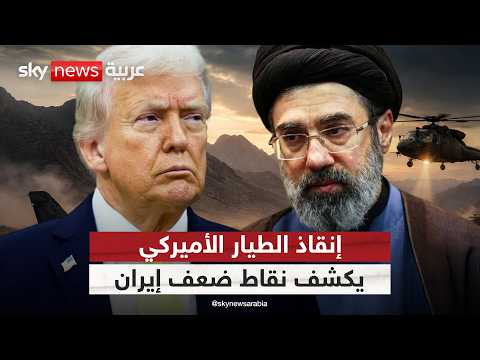
هل كشفت عملية إنقاذ الطيار الأميركي عن ثغرات أمنية كبرى في إيران؟
Summary
Negotiations between the U.S. and Iran are ongoing, with a potential agreement that may change Iran's stance. Experts highlight that the Iranian regime is exploiting the current geopolitical situation to strengthen its military capabilities, raising concerns about future conflicts. The U.S. military strategy is increasingly focused on air campaigns aimed at undermining Iran's infrastructure, reflecting a more aggressive approach.
The recent rescue of an American pilot has exposed vulnerabilities in Iran's military capabilities, potentially impacting U.S. strategic decisions. Analysts warn that military operations may not decisively weaken Iran, as retaliation and escalation remain significant risks. The internal dynamics within Iran, including the Revolutionary Guard's influence, complicate the effectiveness of U.S. military strategies.
Arab nations are increasingly challenged by the aggressive actions of the Iranian regime, which threaten regional stability and energy exports. The potential collapse of the Iranian regime could lead to military escalation and broader implications for global security. Experts caution that the assumption of a straightforward U.S. intervention overlooks the complex interplay of regional dynamics.
Iran's leadership is showing potential willingness to negotiate uranium enrichment limits, which may be a tactic to maintain internal unity. However, the lack of a clear leader in Iran complicates negotiations, suggesting that any agreement may be undermined by internal power struggles. The historical precedents indicate that power vacuums often lead to instability rather than resolution.
Perspectives
Analysis of U.S.-Iran relations and military strategies.
U.S. Perspective
- Argues that air campaigns are a key strategy to undermine Irans infrastructure
- Claims that the Iranian regime is exploiting geopolitical tensions to strengthen its military
Iranian Perspective
- Denies that military actions will lead to a decisive U.S. advantage
- Rejects the notion that internal dissent will unify opposition against the regime
- Questions the effectiveness of U.S. military strategies in light of Irans adaptive tactics
- Accuses the U.S. of miscalculating the impact of its military actions
Neutral / Shared
- Notes that the Iranian regime is facing significant internal challenges
- Observes that regional dynamics complicate the geopolitical landscape
- Acknowledges the potential for military escalation in response to U.S. actions
Metrics
other
155 dollars USD
individual percentage for military funding
This figure highlights the financial commitments required for U.S. military operations.
increase the individual percentage of 155 dollars
other
12 billion dollars a day USD
Iran's economic situation
This figure highlights the scale of economic challenges Iran faces.
One of the 12 billion dollars a day is a big deal.
other
the number of cases that have been reported has been reduced
reported cases related to the situation
A reduction in reported cases may indicate a shift in the operational environment.
the number of cases that have been reported has been reduced
other
more than normal
activity level of military countries compared to others
Indicates a shift in military engagement dynamics.
they are more active than the military countries
Key entities
Timeline highlights
00:00–05:00
Negotiations between the U.S. and Iran are ongoing, with a potential agreement that may change Iran's stance.
- Negotiations between the U.S. and Iran are in progress, with a potential agreement anticipated soon, which could alter Irans approach
- The Trump administration is under pressure to act militarily within a limited timeframe, potentially affecting the negotiation dynamics
- Irans recent military actions appear to be a strategic ploy to enhance its position, raising doubts about the possibility of a peaceful resolution
- The U.S. plans to disrupt Irans infrastructure and communication systems to undermine its regimes stability
- Any military action by the U.S. beyond a specific period requires Congressional approval, complicating the administrations options
- The current political environment in the U.S. may restrict Trumps ability to engage in military operations
05:00–10:00
The U.S. military operation revealed significant security vulnerabilities in Iran, which could be strategically exploited.
- The recent military operation to rescue the American pilot exposed major security weaknesses in Iran, indicating vulnerabilities that the U.S. could exploit
- Irans missile attacks on Israel and Gulf states reflect its aggressive stance, escalating regional tensions and increasing the risk of conflict
- U.S. military strategy is centered on controlling vital maritime routes and crippling Irans infrastructure to destabilize its regime
- The Iranian regimes dependence on the Revolutionary Guard complicates diplomatic efforts, as their hardline approach may hinder negotiations and provoke military confrontations
- The operational capabilities of the U.S. military could serve as a deterrent against Iranian aggression in the near term
- The evolving tactics of Iran necessitate a swift adaptation of U.S. military and diplomatic strategies to effectively respond to the situation
10:00–15:00
The recent rescue of an American pilot has exposed vulnerabilities in Iran's military capabilities, potentially impacting U.S. strategic decisions.
- The recent rescue of the American pilot revealed significant weaknesses in Irans military capabilities, raising doubts about the effectiveness of its defense systems. This situation could be exploited by the U.S
- The failure of the Iranian Revolutionary Guard to prevent the rescue operation suggests a potential vulnerability in their control, which may embolden U.S. actions in the region
- The operation yielded critical intelligence for U.S. forces regarding Iranian ground operations, enhancing their strategic planning
- Irans reliance on military strength is increasingly challenged by internal pressures, including the risk of civil unrest, complicating the regimes ability to respond to external threats
- In response to ongoing tensions, the U.S. is expected to target Irans infrastructure and energy capabilities to destabilize the regime
- Negotiations with Iran seem unlikely as the Revolutionary Guards hardline stance continues to obstruct diplomatic efforts
15:00–20:00
Arab nations are increasingly challenged by the aggressive actions of the Iranian regime, which threaten regional stability and energy exports. The potential collapse of the Iranian regime could lead to military escalation and broader implications for global security.
- Arab nations may find it increasingly difficult to accept the Iranian regime due to its aggressive actions, which could destabilize energy exports and regional stability
- The threat posed by Iran could disrupt historical energy trade routes, leading to higher costs and risks for maritime shipping
- A collapse of the Iranian regime might provoke a defensive reaction from its citizens, escalating military actions and complicating the situation
- Military conflict could have far-reaching effects on global security and trade, particularly regarding control of strategic waterways like the Strait of Hormuz
- The U.S. may consider direct military intervention to secure essential shipping lanes and counter Iranian influence in the region
- Current tensions underscore the vulnerability of international security systems, with unresolved issues potentially leading to broader instability
20:00–25:00
The Iranian regime is experiencing a decline in influence, which may lead to its eventual downfall. The U.S.
- The Iranian regime has diminished its influence, lacking any strategic advantages in the current geopolitical context, which may lead to its decline
- The U.S. is evaluating military strategies focused on securing the Strait of Hormuz amid rising tensions
- Concerns are increasing in the U.S. regarding potential casualties from military actions against Iran
- Upcoming elections in the U.S. are complicating military and foreign policy decisions
- Chinas interests in the region add complexity to the situation as it seeks to protect its energy resources
- The internal disarray within the Iranian regime could facilitate its downfall, presenting potential opportunities for U.S. intervention
25:00–30:00
Iran's leadership is showing potential willingness to negotiate uranium enrichment limits, which may be a tactic to maintain internal unity. The U.S.
- Irans leadership is indicating a possible openness to negotiate uranium enrichment limits, but this may be a tactic to maintain internal unity amid external pressures
- The Trump administration is expressing doubts about the feasibility of reaching a comprehensive agreement with Iran
- Irans demand for the lifting of all sanctions in exchange for limiting uranium enrichment reveals a lack of sincere commitment to negotiations, complicating diplomatic efforts
- The absence of a clear leader in Iran is creating a power struggle, which could lead to instability and hinder the regimes ability to negotiate effectively
- The U.S. is likely to target Irans infrastructure and communication systems as part of its strategic approach
- The military posturing from both Iran and the U.S. suggests that a confrontation may be imminent, raising concerns about regional security and global energy markets