Politics / Saudi Arabia
Iranian Regime Divisions and U.S. Military Strategy
The U.S. administration perceives significant divisions within the Iranian regime, particularly between military leaders and negotiators. President Trump's remarks highlight inconsistencies in public and private statements from Iranian officials, indicating a lack of unified strategy. Recent discussions revealed that Iranian Revolutionary Guard Commander Ahmad Vahidi and his deputies rejected key points from the Iranian delegation led by Parliament Mohammad Baqer Qalibaf, showcasing internal discord.
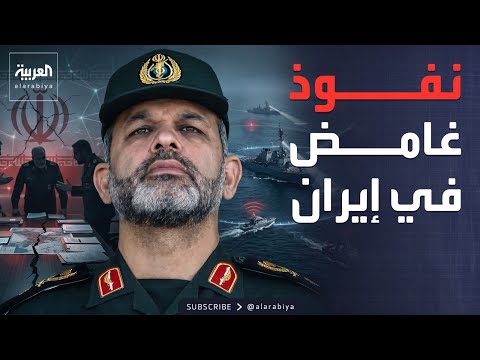
Source material: Mysterious Influence of the Revolutionary Guard Leader Amid Iranian Division.. and US Minesweepers Move in Hormuz
Summary
The U.S. administration perceives significant divisions within the Iranian regime, particularly between military leaders and negotiators. President Trump's remarks highlight inconsistencies in public and private statements from Iranian officials, indicating a lack of unified strategy. Recent discussions revealed that Iranian Revolutionary Guard Commander Ahmad Vahidi and his deputies rejected key points from the Iranian delegation led by Parliament Mohammad Baqer Qalibaf, showcasing internal discord.
In response to ongoing maritime sanctions, Trump ordered the U.S. Navy to adopt a zero-tolerance approach against vessels laying mines in the Strait of Hormuz. This includes tripling the operational capacity of mine sweepers in the area, reflecting a significant escalation in U.S. military posture. The U.S. Department of Defense is actively intercepting ships providing material support to Iran, recently seizing the sanctioned Iranian oil tanker Majestic X in the Indian Ocean.
Concerns regarding Iran's nuclear capabilities persist, with skepticism about the actual existence and storage of enriched uranium. The Iranian regime's internal divisions may complicate negotiations and influence its approach to international pressures. The U.S. strategy may inadvertently strengthen hardliners within Iran, complicating diplomatic efforts and escalating military tensions.
Perspectives
short
U.S. Administration
- Identifies significant divisions within the Iranian regime, particularly between military leaders and negotiators
- Orders aggressive military measures in the Strait of Hormuz to counter Iranian threats
Iranian Regime
- Exhibits internal discord, with military leaders rejecting key negotiation points
- Maintains a firm stance against U.S. sanctions and military actions
Neutral / Shared
- Concerns about Irans nuclear capabilities and the effectiveness of international inspections
- Speculation regarding the potential for hardline factions to consolidate power in response to external pressures
Key entities
Timeline highlights
00:00–05:00
The U.S. administration perceives significant divisions within the Iranian regime, as indicated by President Trump's remarks on inconsistencies in Iranian negotiators' statements.
- The U.S. administration perceives significant divisions within the Iranian regime, highlighted by President Trumps remarks on the inconsistencies between public and private statements from Iranian negotiators
- Trump has ordered the U.S. Navy to destroy any vessel, regardless of size, that lays mines in the Strait of Hormuz, while also tripling mine-clearing operations in the area
- The U.S. has bolstered its military presence in the region, coinciding with the deployment of multiple aircraft carriers, representing one of the largest naval mobilizations since 2005
- The U.S. Department of Defense confirmed the interception of the Iranian oil tanker Majestic X, which was under sanctions and transporting oil from Iran, underscoring efforts to enforce international maritime law against illicit networks supporting Iran
- Reports suggest that Iran is grappling with internal leadership challenges, as hardliners face significant losses while moderates struggle to gain respect and influence
05:00–10:00
The U.S. administration has identified significant divisions within the Iranian regime, particularly evident in the conflicting positions of Iranian negotiators and military leaders during recent discussions.
- The U.S. administration has identified significant divisions within the Iranian regime, particularly evident in the conflicting positions of Iranian negotiators and military leaders during recent discussions
- President Trump has implemented a strict policy against vessels laying mines in the Strait of Hormuz, ordering the U.S. Navy to take decisive action and increasing the operational capacity of mine sweepers in the region
- The U.S. military successfully intercepted the Iranian oil tanker Majestic X, which was under sanctions and transporting oil from Iran, highlighting efforts to disrupt illegal maritime activities supporting Iran
- Irans naval strategy now relies on fast boats to conduct operations in the Strait of Hormuz, adapting to avoid direct confrontations while still engaging aggressively against shipping in the area
- The U.S. has significantly increased its military presence in the region, deploying multiple aircraft carriers, which marks a notable escalation in maritime security efforts aimed at countering Iranian influence
10:00–15:00
The U.S. administration has identified notable divisions within the Iranian regime, particularly in decision-making, as indicated by President Trump's comments on inconsistencies between public and private Iranian negotiations.
- The U.S. administration has identified notable divisions within the Iranian regime, particularly in decision-making, as indicated by President Trumps comments on inconsistencies between public and private Iranian negotiations
- Recent U.S. military directives have escalated operations in the Strait of Hormuz, including orders to fire on vessels laying mines, signaling a tougher stance against Iranian maritime activities
- The U.S. Navy has tripled its mine-clearing operations in the Strait of Hormuz to enhance security in the waterway amid rising tensions and threats from Iran
- The U.S. Department of Defense is actively intercepting vessels that provide material support to Iran, recently seizing the sanctioned Iranian oil tanker Majestic X in the Indian Ocean
- Ongoing negotiations in Bosnia are exploring potential proposals for a partial lifting of U.S. sanctions on Iran, contingent on Irans compliance with certain conditions
15:00–20:00
The U.S. administration believes there are significant divisions within the Iranian regime, particularly between negotiators and military leaders.
- Lebanons political dynamics are significantly shaped by the interplay between Iranian and Saudi influences, with Iran asserting its role while Saudi Arabia aims to stabilize the region
- The Iranian narrative claims it is the main force behind the end of conflict in Lebanon, but this is challenged by the argument that Arab support, especially from Saudi Arabia, is crucial
- Political shifts in Lebanon are evident, with leaders like Nabih Berri potentially moving away from Hezbollahs influence, reflecting a desire for greater autonomy in governance
- Saudi Arabias diplomatic efforts with the U.S. and its influence in Lebanon are critical for shaping the future of Lebanese governance and ensuring regional stability amid ongoing tensions with Israel
- The effectiveness of Saudi diplomacy is underscored as it seeks to utilize its relationships with both the U.S. and Lebanese leadership to foster a stable and independent Lebanese state
20:00–25:00
The U.S. administration perceives significant divisions within the Iranian regime, particularly between negotiators and military leaders.
- The U.S. administration has identified significant divisions within the Iranian regime, particularly in decision-making processes, as noted by President Donald Trumps comments on inconsistencies in Iranian negotiations
- Recent discussions indicated that Iranian Revolutionary Guard Commander Ahmad Vahidi and his deputies rejected major points from the Iranian delegation led by Parliament Speaker Mohammad Baqer Qalibaf
- In response to ongoing maritime sanctions, Trump ordered the U.S. Navy to adopt a zero-tolerance approach against vessels laying mines in the Strait of Hormuz
- The U.S. Department of Defense reaffirmed its commitment to intercepting ships that provide material support to Iran, recently detaining the sanctioned Iranian oil tanker Majestic X in the Indian Ocean
- Pakistan is reportedly acting as a mediator between the U.S. and Iran, with the potential for easing sanctions in exchange for concessions, although progress remains slow and uncertain
25:00–30:00
The U.S. administration believes there are significant divisions within the Iranian regime, particularly between negotiators and military leaders.
- U.S.-Iran negotiations are stalled, with both sides reluctant to make concessions, particularly regarding the U.S. maritime blockade on Iranian ports
- President Trump has escalated military measures in the region, ordering the Navy to aggressively respond to vessels laying mines in the Strait of Hormuz, signaling increased tensions
- Iran continues to demand the lifting of the maritime blockade, which the U.S. considers a crucial leverage point in negotiations
- Despite diplomatic efforts, including Pakistans mediation, both American and Iranian officials recognize the lack of significant progress, highlighting a complex diplomatic environment