Politics / Saudi Arabia
U.S. Security Concerns and Diplomatic Challenges
President Trump announced that Vice President J.D. Vance will not travel to Pakistan due to security concerns raised by the Secret Service. This decision follows a comprehensive security assessment of the situation in Pakistan, coinciding with imminent U.S. negotiations in Islamabad amid rising tensions with Iran.
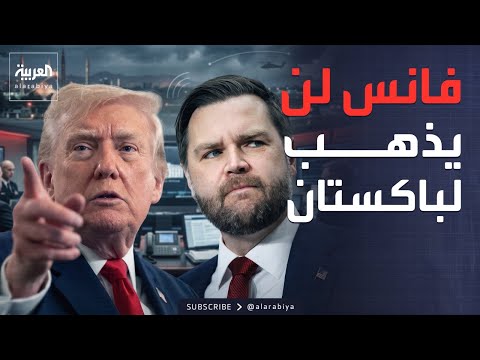
Source material: Secret Service Recommendation.. Trump: Vance Will Not Go to Pakistan for Security Reasons
Summary
President Trump announced that Vice President J.D. Vance will not travel to Pakistan due to security concerns raised by the Secret Service. This decision follows a comprehensive security assessment of the situation in Pakistan, coinciding with imminent U.S. negotiations in Islamabad amid rising tensions with Iran.
The U.S. is reportedly preparing for significant negotiations while Iran's military actions, particularly in the Strait of Hormuz, complicate the geopolitical landscape. Internal divisions within Iran's leadership regarding negotiations with the U.S. suggest differing strategies, with some factions pushing for a more aggressive approach.
The absence of Iran's Supreme Leader during crucial decision-making moments raises concerns about the coherence and strength of Iran's political and military strategies. Trump's remarks emphasize the complexities of U.S.-Iran relations, particularly in light of the recent closure of the Strait of Hormuz.
Public protests in northern Israel indicate local frustration with continuous military actions, with residents calling for a definitive strategy to avoid further conflicts with Hezbollah. The overall situation remains precarious, with the risk of renewed hostilities if diplomatic efforts fail, especially concerning Iran's nuclear program and its influence in the region.
Perspectives
short
U.S. Administration
- Cancels Vances trip to Pakistan due to security concerns raised by the Secret Service
- Emphasizes the importance of thorough security assessments amid rising tensions with Iran
Iranian Leadership
- Exhibits internal divisions regarding negotiation strategies with the U.S
- Projects mixed signals about military actions and diplomatic intentions
Neutral / Shared
- Public protests in Israel indicate local frustration with military actions
Key entities
Timeline highlights
00:00–05:00
President Donald Trump announced that Vice President J.D. Vance will not travel to Pakistan due to security concerns raised by the Secret Service.
- President Donald Trump stated that Vice President JD Vance will not travel to Pakistan due to security concerns, as the Secret Service cannot guarantee his safety in the next 24 hours
- This decision comes after a detailed security assessment, coinciding with rising tensions with Iran and preparations for upcoming negotiations in Islamabad
- An American delegation has reportedly arrived in Islamabad to prepare for new talks with Iran, accompanied by a U.S. security team to ensure safety during these discussions
- Turkish officials have highlighted a shared interest between the U.S. and Iran in maintaining dialogue, despite significant disagreements that persist in the negotiations
- Iran has not yet made a decision regarding sending its delegation to Pakistan, with ongoing sanctions impacting its maritime activities and complicating the diplomatic landscape
05:00–10:00
President Trump announced that Vice President J.D. Vance will not travel to Pakistan due to security concerns raised by the Secret Service.
- President Trump announced that Vice President JD Vance will not travel to Pakistan due to security concerns, as the Secret Service lacks confidence in ensuring his safety in the next 24 hours
- This decision follows a comprehensive security assessment of the situation in Pakistan and aligns with preparations for upcoming negotiations in Islamabad amid ongoing tensions with Iran
- The U.S. is reportedly contemplating military options in response to Irans nuclear activities and its maneuvers in the Strait of Hormuz, with Trump indicating this may be Irans final opportunity to accept a proposed agreement
- Israeli officials remain on high alert regarding the negotiations, expecting potential failure and a return to hostilities, which has prompted heightened military readiness in Israel
10:00–15:00
President Trump announced that Vice President J.D. Vance will not travel to Pakistan due to security concerns raised by the Secret Service.
- Israeli Prime Minister Benjamin Netanyahu is scheduled to meet with Argentine President Alberto Fernández, coinciding with the lifting of security restrictions in northern Israel after a ceasefire with Hezbollah
- Despite the easing of restrictions, there are ongoing concerns about potential escalations in conflict, particularly with Iran, as the U.S. continues to advocate for diplomatic solutions
- President Trump has reiterated that military options against Iran are still viable if diplomatic negotiations do not succeed, highlighting a firm approach to Iranian nuclear ambitions
- Public protests in northern Israel indicate local frustration with continuous military actions, with residents calling for a definitive strategy to avoid further conflicts with Hezbollah
- The overall situation remains precarious, with the risk of renewed hostilities if diplomatic efforts fail, especially concerning Irans nuclear program and its influence in the region
15:00–20:00
President Trump announced that Vice President J.D. Vance will not travel to Pakistan due to security concerns raised by the Secret Service.
- President Trump stated that Vice President J.D. Vance will not visit Pakistan due to security concerns identified by the Secret Service
- This decision follows a comprehensive security assessment of the situation in Pakistan, coinciding with imminent U.S. negotiations in Islamabad amid rising tensions with Iran
- The closure of the Strait of Hormuz has intensified regional tensions, impacting U.S. diplomatic strategies and military readiness in the area
- Irans political landscape is characterized by internal power struggles, with influential figures like Ahmad Vahidi and the Revolutionary Guard vying for control over foreign policy
20:00–25:00
President Trump announced that Vice President J.D. Vance will not travel to Pakistan due to security concerns raised by the Secret Service.
- Irans leadership is sending mixed signals regarding the Strait of Hormuz, with the Revolutionary Guard asserting control over maritime navigation while the foreign minister hints at a temporary ceasefire
- Internal divisions within Irans political and military structures are becoming increasingly evident, highlighted by public disputes over diplomatic strategies and military actions
- The Revolutionary Guards influence extends beyond military operations, affecting Irans economic decisions and its approach to international negotiations, particularly with the United States
- Iran seems to be employing a strategy of delaying negotiations while projecting an image of internal conflict, potentially to buy time against international pressure
- President Trump has warned Iran that the current negotiations represent a final opportunity for the regime to accept terms or face severe consequences, suggesting a possible escalation in U.S.-Iran relations
25:00–30:00
President Trump announced that Vice President J.D. Vance will not travel to Pakistan due to security concerns raised by the Secret Service.
- Iran has reinstated a tax system on maritime passage, echoing historical practices from 1757, raising concerns about its impact on international shipping
- Key Iranian leaders are navigating a complex power dynamic, with differing agendas that could influence Irans negotiations with the U.S
- Recent tensions in the Strait of Hormuz illustrate the fragile balance between Irans military actions and its diplomatic strategies, highlighted by attacks on vessels
- Internal divisions within Irans leadership, particularly between hardliners and moderates, complicate the countrys foreign policy and its willingness to negotiate with the U.S
- The U.S. administration is closely monitoring these developments, stressing that Iran must accept a deal or face serious consequences