Politics / Russia
Russia politics page with daily media monitoring across Meduza, BBC News Russian and Euronews RU, structured summaries of domestic political developments and a country-level press overview.
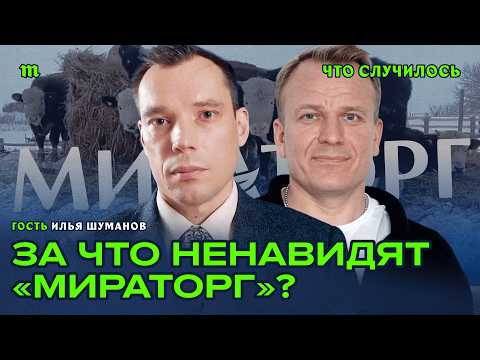
Фермерские протесты в РФ. В чем обвиняют агрохолдинги?
Summary
Siberian farmers are protesting against the mass culling of livestock due to disease control measures, claiming these actions are excessive. The situation has escalated with government crackdowns, raising public concerns about transparency and corporate motives in the agricultural sector.
Farmers suspect that large agribusinesses are trying to eliminate competition through these culling practices. The government's response to the livestock disease outbreak has been criticized for its lack of transparency, leading to further distrust among the farming community.
Miratorg's significant retail presence has led to public scrutiny and speculation regarding its involvement in livestock culling. Despite rumors linking the company to influential political figures, there is no concrete evidence supporting these claims.
The Russian meat market is heavily influenced by political connections, particularly with companies like Miratorg and Cherkizovo benefiting from government support. This dynamic raises concerns about market integrity and the impact on smaller agricultural producers.
Perspectives
short
Farmers
- Protest against mass culling of livestock due to excessive government measures
- Claim that large agribusinesses aim to eliminate competition
- Demand transparency from authorities regarding livestock disease management
- Express distrust towards government actions and corporate motives
- Highlight the negative impact of culling on small farming communities
Government and Agribusiness
- Implement culling as a necessary measure to control livestock disease
- Argue that culling is essential for public health and safety
- Claim that government actions are based on scientific recommendations
- Defend the need for agricultural policies that support large producers
- Emphasize the importance of maintaining meat supply chains
Neutral / Shared
- Acknowledge the influence of political connections in the agricultural sector
- Recognize the role of subsidies in shaping market dynamics
- Note the rising meat consumption in Russia amid economic challenges
Metrics
other
they took the meat and the milk to sell
government actions against farmers
This action directly impacts farmers' livelihoods and raises ethical concerns.
they took the meat and the milk to sell.
livestock
tens of thousands units
number of animals affected by the mass slaughter
This significant number highlights the scale of the crisis and its impact on farmers' livelihoods.
the number of tens of thousands large-scale scotak that was a kill
subsidies
subsidies with the revolutions of budget rubles in the kilograms of the meat RUB
government financial support for meat production
This indicates the extent of government involvement in the meat market.
subsidies with the revolutions of budget rubles in the kilograms of the meat
production
four times the increasing volume of production of the milk times
growth in milk production volume
This indicates significant expansion in the dairy sector, potentially impacting market competition.
four times the increasing volume of production of the milk
market_share
third place for the milk volume, which is produced in Russia rank
market position in milk production
This ranking highlights the company's significant role in the Russian dairy market.
third place for the milk volume, which is produced in Russia
subsidy
two trillion rubles RUB
total allocated money for agricultural support
This substantial amount indicates the scale of government intervention in the agricultural sector.
the amount of giant that passes through these programs of support of the business, and thousands of users of this support
growth
3 %
market growth potential
Indicates possible economic development despite regulatory challenges.
the growth of the growth of the market can be 3
control
since 2004
duration of Sergey Dankvert's control
Highlights the long-term influence of a single individual on the sector.
it is located on this duty since 2004
Key entities
Timeline highlights
00:00–05:00
Siberian farmers are protesting against the mass culling of livestock due to disease control measures, claiming these actions are excessive. The situation has escalated with government crackdowns, raising public concerns about transparency and corporate motives in the agricultural sector.
- Siberian farmers are protesting against the mass culling of livestock, raising concerns about the motives of large agricultural companies involved in meat production
- The protests started in February when authorities began slaughtering animals to control disease outbreaks, but farmers argue that such actions are excessive and alternatives exist
- The governments heavy-handed response to the protests, including police actions and roadblocks, has heightened tensions between local communities and officials
- Public support for the farmers is evident on social media, where many are questioning the ethics of the livestock culling practices
- Two main theories about the culling have emerged: one views it as a necessary action to protect agriculture, while the other suggests a conspiracy involving large corporations, fueled by a lack of transparency from officials
- This situation underscores broader issues of corruption and mismanagement in Russias agricultural sector, impacting public trust and the meat market
05:00–10:00
Farmers are protesting against the mass slaughter of livestock, suspecting that large agribusinesses are trying to eliminate competition. The situation has raised concerns about transparency and the government's response to the livestock disease outbreak.
- Farmers are protesting against the mass slaughter of livestock, suspecting that large agribusinesses like Miratorg are trying to eliminate competition, which raises concerns about monopolization in the meat industry
- Conspiracy theories suggest that the government favors large corporations over small farmers, gaining traction as farmers face increasing restrictions and pressure from authorities
- Investigations reveal that the livestock disease outbreak began before the recent culling, indicating that the governments response may lack transparency and justification
- The mass slaughter has affected tens of thousands of animals, raising fears among farmers that export restrictions, especially to China, could threaten their livelihoods
- Public opposition to Miratorg is rising, with many viewing the companys actions as indicative of broader issues in the agricultural sector, reflecting distrust towards both the government and large agribusinesses
- The situation underscores the tension between disease control measures and the economic challenges faced by small farmers, potentially leading to increased unrest and demands for agricultural reform
10:00–15:00
Miratorg's significant retail presence has led to public scrutiny and speculation regarding its involvement in livestock culling. Despite rumors linking the company to influential political figures, there is no concrete evidence supporting these claims.
- The controversy surrounding Miratorg stems from its significant presence in retail, making it a target for accusations related to livestock culling. This visibility amplifies public scrutiny and speculation about the companys practices
- Rumors link Miratorgs founders to influential political figures, which complicates its public image. These connections, although unfounded, contribute to a perception of the company as having undue influence over market dynamics
- Despite the negative perceptions, there is no concrete evidence that Miratorg is involved in the mass slaughter of livestock in Siberia. This lack of evidence suggests that the accusations may be driven by competitive pressures rather than factual circumstances
- The companys growth has been supported by political connections, particularly with former officials in the agricultural sector. This relationship has potentially facilitated access to resources and opportunities that benefit Miratorgs expansion
- The ongoing rumors and allegations against Miratorg could undermine its reputation and affect its market position. As public sentiment shifts, the company may face challenges in maintaining consumer trust and market share
- It is crucial to differentiate between Miratorgs retail operations and its actual production capabilities in specific regions. The absence of production facilities in Siberia indicates that the accusations may not reflect the companys operational realities
15:00–20:00
The Russian meat market is heavily influenced by political connections, particularly with companies like Miratorg and Cherkizovo benefiting from government support. This dynamic raises concerns about market integrity and the impact on smaller agricultural producers.
- The Russian meat market is shaped by political ties, with companies like Miratorg and Cherkizovo rising during a period of agricultural decline, raising concerns about the sectors integrity
- Miratorgs growth is bolstered by government subsidies and political support, suggesting it may receive preferential treatment that distorts market competition
- Rumors linking Miratorg to influential figures like Dmitry Medvedev damage its reputation and can erode public trust, impacting its relationships with smaller farmers
- The agricultural sector is sensitive to both domestic and international political factors, indicating that food security policies may be influenced by geopolitical issues
- Ekkaniva leads the dairy industry with operations across several regions, including Siberia, and its involvement in health issues underscores risks in large-scale agriculture
- The close ties between meat and dairy production and political figures highlight vulnerabilities in the agricultural industry, posing challenges for smaller producers against larger, connected firms
20:00–25:00
Ekkaniva, owned by Stefan Nudyur, has established strong ties with Russian political elites, raising concerns about the influence of business on agricultural policies. The focus on national development in Russia's agricultural sector since the annexation of Crimea has led to import restrictions that favor local producers.
- Ekkaniva, owned by Stefan Nudyur, has strong connections to Russian political elites, raising concerns about the influence of business interests on agricultural policies
- Nudyurs purchase of production facilities from a politicians family exemplifies the close ties between business and political power, potentially leading to regulatory advantages for Ekkaniva
- Dmitry Patrushevs ongoing influence in agriculture suggests that companies linked to him may receive favorable government policies that support domestic production
- Since the annexation of Crimea, Russias agricultural sector has focused on national development, resulting in import restrictions that benefit local producers
- Government subsidies have significantly strengthened domestic agricultural businesses, indicating a strategic effort to enhance food security and reduce import dependence
- Public protests in regions like Kaliningrad reflect dissatisfaction with government import restrictions, highlighting societal concerns about food availability and national policies
25:00–30:00
The Russian agricultural sector is heavily subsidized by regional and federal governments, which raises concerns about market fairness and competition. Large agricultural holdings dominate the landscape, often at the expense of smaller farms that struggle to survive under current policies.
- The Russian agricultural sector receives substantial subsidies from both regional and federal governments, reflecting a strong commitment to enhancing domestic production
- Large agricultural holdings dominate the market, raising concerns about competition and fairness for smaller farms, which struggle to survive
- Insurance practices in agriculture often favor larger companies, leading to ethical issues as smaller producers face significant losses
- Subsidy distribution tends to benefit large corporations, hindering rural economic growth and missing opportunities to develop a stronger middle class
- Current agricultural policies may inadvertently strengthen the influence of powerful business figures linked to the government, complicating market entry for smaller players
- Farmer protests against livestock culling reveal significant discontent with agricultural policies and corporate practices, potentially signaling a shift in how these issues are addressed