Politics / Poland
Unclear topic
The debate centers on Senator Lenza's accountability, with public opinion favoring consequences for his actions. Ongoing investigations into his behavior and healthcare management issues raise concerns about integrity and patient care. The situation in the hospital raises significant concerns about patient safety and legal compliance, particularly regarding unauthorized procedures and documentation discrepancies. These issues could lead to severe penalties for the medical staff and undermine public trust in the healthcare system.
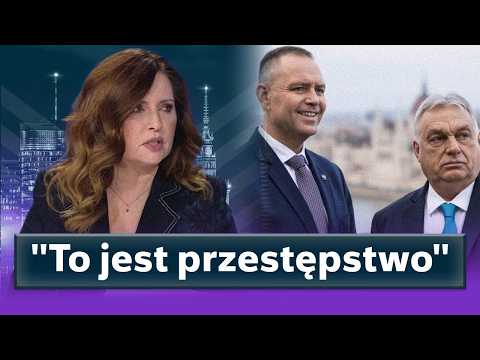
Source material: Poseł PiS porównał Tuska z Orbanem. "Dużo większa godność i honor"
Summary
The debate centers on Senator Lenza's accountability, with public opinion favoring consequences for his actions. Ongoing investigations into his behavior and healthcare management issues raise concerns about integrity and patient care. The situation in the hospital raises significant concerns about patient safety and legal compliance, particularly regarding unauthorized procedures and documentation discrepancies. These issues could lead to severe penalties for the medical staff and undermine public trust in the healthcare system.
Recent actions by a Polish senator have raised significant questions regarding accountability in public health and the management of medical procedures in public hospitals. The situation emphasizes the urgent need for improved governance and ethical standards in public service. The Polish official criticized Donald Tusk for not congratulating the newly elected president, contrasting it with Viktor Orbán's immediate acknowledgment. This situation raises concerns about Tusk's character and the implications for his party's public trust and electoral success.
Perspectives
LLM output invalid; stored Stage4 blocks + metrics only.
Metrics
votes
5,000 votes in 1984 units
historical voting data
This number reflects past electoral engagement and may influence current political accountability discussions.
The number of 5,000 votes in 1984 and 20 is on the table.
fines
a few dozen to a few hundred thousand USD
potential fines for the hospital
Substantial fines could impact hospital operations and funding.
it can pay a lot of money from a few dozen to a few hundred thousand
financial responsibility
500,000 gold
potential financial penalties related to hospital trials
This amount indicates the financial stakes involved in the senator's actions and their implications for taxpayers.
500,000 gold, they won't be paid for the trial.
Key entities
Timeline highlights
00:00–05:00
The debate centers on Senator Lenza's accountability, with public opinion favoring consequences for his actions. Ongoing investigations into his behavior and healthcare management issues raise concerns about integrity and patient care.
- The debate focuses on whether Senator Lenza should be held accountable for his actions, with public opinion strongly favoring consequences. This suggests a demand for political accountability in the current climate
- Investigations into the senators behavior are ongoing, raising concerns about his integrity. The results will likely affect party decisions regarding his future role
- Issues have emerged regarding the management of medical records at a local hospital, which could significantly impact patient care. Confirmed allegations may prompt a wider examination of healthcare practices in the area
- There is a perceived double standard in political accountability, particularly if the situation were reversed. This inconsistency risks eroding public trust in political leaders and their ethical commitments
- The senators case highlights broader challenges within the healthcare system, where patients frequently face delays in receiving care. This ongoing issue underscores the urgent need for reforms to improve access to medical services
- Political actions can have serious repercussions for individuals, especially in sensitive healthcare contexts. Politicians must acknowledge their responsibilities and the effects of their decisions on public health
05:00–10:00
The situation in the hospital raises significant concerns about patient safety and legal compliance, particularly regarding unauthorized procedures and documentation discrepancies. These issues could lead to severe penalties for the medical staff and undermine public trust in the healthcare system.
- The situation in the hospital raises serious concerns about patient safety and legal compliance. If proper procedures were not followed, it could lead to significant repercussions for the medical staff involved
- There are allegations of a doctor leaving their post to perform an unauthorized procedure. This could be classified as a serious violation of medical regulations, potentially resulting in legal action
- The handling of medical documentation appears to be problematic, with discrepancies between physical and electronic records. Such issues could undermine the integrity of the hospitals operations and lead to severe penalties
- The financial implications for the hospital could be substantial, with potential fines reaching millions. This adds to doubts about who will ultimately bear the cost, whether it be the hospital, the senator involved, or taxpayers
- The debate highlights the broader issues within the healthcare system, particularly regarding access and the prioritization of patients. It underscores the need for reforms to ensure that all patients receive timely and appropriate care
- The incident reflects a troubling trend where political figures may exploit their positions to bypass standard medical procedures. This could erode public trust in the healthcare system and lead to calls for stricter regulations
10:00–15:00
Recent actions by a Polish senator have raised significant questions regarding accountability in public health and the management of medical procedures in public hospitals. The situation emphasizes the urgent need for improved governance and ethical standards in public service.
- A Polish senators recent actions raise questions about accountability in public health, highlighting the need for better governance. This incident underscores the importance of ethical standards in public service
- Criticism has emerged regarding the management of medical procedures in public hospitals, particularly when doctors neglect their responsibilities. This situation calls for enhanced regulations and oversight to protect patient safety
- The political fallout from Viktor Orbans electoral defeat in Hungary is being linked to the actions of Polish politicians. This connection suggests that political decisions can significantly influence public trust and perception
- False information about a political opponent was circulated and later retracted, demonstrating the risks of misinformation in politics. Such incidents can mislead the public and damage reputations
- The financial repercussions of the senators actions may ultimately impact taxpayers, raising concerns about fiscal responsibility. This situation highlights the need for careful management of public funds
- There is a warning about increased scrutiny for politicians who do not uphold ethical standards. This serves as a reminder of the potential consequences of misconduct in public office
15:00–20:00
The Polish official criticized Donald Tusk for not congratulating the newly elected president, contrasting it with Viktor Orbán's immediate acknowledgment. This situation raises concerns about Tusk's character and the implications for his party's public trust and electoral success.
- The Polish official criticized Donald Tusk for not congratulating the newly elected president of Poland, contrasting this with Viktor Orbáns immediate congratulations to his opponent. This highlights a perceived lack of honor and dignity in Tusks response to electoral defeat
- The official argued that Orbáns approach to politics, particularly regarding the European Union, aligns with a vision of sovereign states working together. This stance is presented as a more respectable political philosophy compared to Tusks alleged alignment with pro-Russian policies
- There is a strong assertion that Tusks failure to acknowledge his opponents victory reflects poorly on his character and leadership. The implication is that such behavior undermines democratic principles and the integrity of political discourse
- The discussion also touches on the broader implications of political alliances, suggesting that supporting figures like Orbán could lead to negative perceptions of Tusks party. This raises concerns about the long-term impact of such associations on public trust and electoral success
- The official emphasized the importance of verifying information before making public statements, especially in the context of political accusations. This serves as a warning about the dangers of misinformation in shaping public opinion and political narratives
- Finally, the conversation suggests that Tusks political future may be jeopardized by his current strategies and alliances. The officials remarks indicate a belief that failing to adapt could lead to significant consequences for Tusk and his party
20:00–25:00
The discussion highlights concerns regarding the new Hungarian Prime Minister's approach to international relations and the implications for regional stability. Criticism of political gestures, such as failing to congratulate opponents, raises questions about integrity in political discourse.
- Criticism of the approach to international politics highlights irresponsibility, particularly in insulting the new Hungarian Prime Minister, which undermines diplomatic relations
- Concerns about misinformation regarding Hungarys new leadership emphasize the need for fact verification in political discussions to protect reputations
- The comparison between Viktor Orbán and Donald Tusk underscores Tusks perceived lack of honor for not congratulating his opponent, raising questions about expected integrity in politics
- The differing perspectives of Hungarian citizens on their political landscape compared to external observers are crucial for effective foreign policy formulation
- The new Hungarian Prime Ministers stance on international relations, especially regarding Russia, is viewed as a continuation of problematic policies that could affect regional stability
- The dialogue reflects a broader debate on the responsibilities of political leaders to maintain respectful communication, as failures can lead to diplomatic tensions
25:00–30:00
The election of Hungary's new premier indicates a potential shift in the country's political landscape, reflecting a desire for change among voters. This change may impact Hungary's foreign relations, particularly concerning its previous ties with Russia, which are viewed as security risks for Poland.
- The election of Hungarys new premier signals a shift away from Viktor Orbans leadership, reflecting voters desire for change that may alter Hungarys political direction and its regional relationships
- Aligning international relations with national interests is crucial, especially given Hungarys previous ties with Russia, which pose security risks for Poland
- Criticism of Orbans foreign policy, particularly his ties to Putin, suggests that a new leadership in Hungary could create a more favorable environment for Polands interests
- The speaker expresses cautious optimism about the new Hungarian premier, viewing a decrease in pro-Putin sentiment in Europe as beneficial for Polands standing in the EU
- Evaluating foreign leaders based on their foreign policy actions is essential to protect Polands national interests from conflicting ideologies
- Maintaining relationships with leaders whose policies contradict Polands interests is dangerous; the focus should be on building alliances that enhance Polands security