Politics / Japan
Japan politics page with daily media monitoring across Kyodo News, Jiji Press, NHK World and Nikkei Asia, structured summaries of domestic political developments and a country-level press overview.
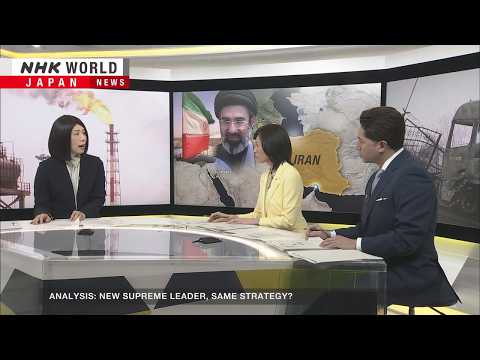
New supreme leader, same strategy?ーNHK WORLD-JAPAN NEWS
Summary
Mojtaba Khamenei's appointment as the new Supreme Leader of Iran is expected to influence the ongoing conflict and oil prices. Experts predict that his hardline stance will lead to a continuation of Iran's confrontational policies, particularly towards the U.S. and Israel. Despite expectations for a ceasefire, the leadership change signals a commitment to prolonged hostilities.
Khamenei's lack of public experience raises questions about his ability to control the Iranian Revolutionary Guard Corps (IRGC), which is expected to play a significant role in the conflict. The IRGC's influence in Iran's political landscape suggests that they may lead military efforts, potentially complicating the situation further.
Iran's strategy appears focused on demonstrating resilience and continuity in its policies, rejecting any notion of unconditional surrender. The leadership change is interpreted as a message of defiance against U.S. demands, indicating that the resolution of the conflict may depend heavily on U.S. actions.
Concerns about military capabilities arise, with experts suggesting that Iran's resources may be depleted soon. However, Iran is likely to employ various tactics to prolong the conflict, including strategic maneuvers in the Strait of Hormuz, which could have significant implications for global oil markets.
Perspectives
Analysis of Iran's new leadership and its implications for ongoing conflict.
Iran's Commitment to Confrontation
- Highlights Khameneis hardline approach as a reason for rising oil prices
- Argues that Iran will not surrender and will continue fighting until U.S. withdrawal
- Claims that the IRGC will lead military efforts under Khameneis leadership
- Proposes that Iran will use various tactics to prolong the conflict
U.S. Response and Strategy
- Questions the feasibility of U.S. military escorting tankers through the Strait of Hormuz
- Denies the likelihood of a successful ceasefire under current conditions
- Rejects the notion that Khameneis leadership will lead to a unified military strategy
- Accuses Iran of risking its survival by continuing the conflict
Neutral / Shared
- Notes the uncertainty surrounding Khameneis control over the IRGC
- Acknowledges the potential impact of closing the Strait of Hormuz on global oil prices
- Mentions the lack of information about Khameneis public persona and experience
Metrics
oil_supply
90%
Japan's oil dependency on the Middle East
This highlights Japan's vulnerability to disruptions in oil supply.
90% of Japan's oil comes from the midrits.
military_capability
two weeks
Estimated depletion of Iran's missiles and drones
This timeframe suggests a critical juncture for Iran's military strategy.
some experts say that their missiles are drones will be depleted in only like two weeks.
Key entities
Timeline highlights
00:00–05:00
Oil prices are projected to rise due to the hardline leadership of Mojtaba Khamenei, indicating a sustained conflict. Iran's strategy remains unchanged, with no intention of unconditional surrender and a commitment to prolong hostilities.
- Oil prices are expected to rise due to Mojtaba Khameneis hardline leadership, indicating a prolonged conflict
- Irans strategy remains unchanged, signaling no unconditional surrender and continued hostilities
- Khameneis lack of public experience suggests continuity in Irans policies despite leadership changes
- Iran may deplete its military capabilities but will use available means to prolong the conflict
- Closing the Strait of Hormuz could pressure the U.S. to end the war, significantly impacting Japans oil supply
- U.S. military escorts may not guarantee tanker safety, deterring passage through the Strait
05:00–10:00
Mojtaba Khamenei's appointment as Supreme Leader signifies Iran's commitment to continue its confrontational stance, particularly against the U.S. and Israel.
- Mojtaba Khameneis appointment as Supreme Leader indicates Irans determination to continue fighting, crucial for the Islamic Republics survival
- The IRGC is expected to lead the war effort, reflecting their significant influence in Irans political system
- Iran may deplete its military capabilities quickly but will use available resources to prolong the conflict
- Closing the Strait of Hormuz would severely impact Japans oil supply and economy, as it relies on the Middle East for 90% of its oil
- Mojtaba Khameneis leadership suggests no change in Irans confrontational stance towards the U.S. and Israel