Politics / Iraq
Iraq's Political and Military Landscape
Negotiations between the United States and Iran in Islamabad aim to resolve ongoing conflicts and could significantly impact regional stability. The Iranian government has expressed willingness to negotiate in good faith, but historical tensions complicate these discussions. The fragile nature of the ceasefire in the region underscores the need for robust mechanisms for accountability and external oversight.
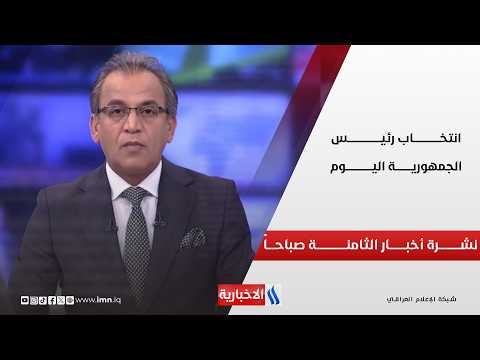
Source material: انتخــــاب رئيــــس الجمهوريـــــــة اليـــوم | نشــــــرة أخبـــــار الثامنـــــة صباحـــــاً
Summary
Negotiations between the United States and Iran in Islamabad aim to resolve ongoing conflicts and could significantly impact regional stability. The Iranian government has expressed willingness to negotiate in good faith, but historical tensions complicate these discussions. The fragile nature of the ceasefire in the region underscores the need for robust mechanisms for accountability and external oversight.
Hezbollah's military actions against Israeli settlements indicate a significant escalation in regional tensions. The use of drones and coordinated attacks suggests a shift in tactics that could provoke a stronger Israeli military response. The assumption that Hezbollah's military strategy will deter Israeli aggression overlooks the potential for miscalculation on both sides.
The Iraqi government emphasizes the importance of solidarity with Iran amid regional tensions. Iraq's diplomatic strategy aims to maintain balance while enhancing its influence as a mediator among various regional powers. However, the complexities of regional dynamics and the influence of external powers may hinder Iraq's mediation efforts.
Political deadlock in Iraq is hindering the presidential election, exacerbating authority issues and political crises. Key political factions are preparing for a parliamentary session to finalize the election, which is crucial for restoring stability. The entrenched divisions among Kurdish factions pose a significant challenge to achieving a peaceful resolution.
Perspectives
short
Pro-Iran
- Emphasizes the importance of negotiations with Iran to resolve conflicts
- Highlights Iraqs solidarity with Iran amid regional tensions
- Supports Hezbollahs military actions as a response to Israeli aggression
Pro-Israel
- Argues that the ceasefires maintenance relies on adherence to commitments from all parties
- Questions the effectiveness of Iraqs mediation efforts given external influences
Neutral / Shared
- Notes the political deadlock in Iraq is hindering the presidential election
- Observes that restoration efforts in Baghdad focus on enhancing cultural tourism
Metrics
other
14,500 USD
cost of water
This reflects the economic strain on local communities amidst ongoing conflict.
How much for the water? 14,500
other
15,500 USD
cost of water
Rising costs indicate worsening humanitarian conditions in the region.
How much for the water? 15,500
other
9,500 USD
cost of taxi
Transportation costs contribute to the economic burden faced by residents.
It's so many. You can't see it now. 9,500
other
presidential election in July
upcoming election timeline
The timing of the election is critical for political stability.
the presidential election in July
other
40 days
duration of a situation involving Iraqi forces
This indicates a prolonged state of readiness or inactivity, which may affect operational effectiveness.
Abu Omar, one of the Iraqi forces, in the Al-Alaman region, is more than 40 days.
Key entities
Timeline highlights
00:00–05:00
Negotiations between the United States and Iran in Islamabad aim to resolve ongoing conflicts and could significantly impact regional stability. The U.S.
- Global attention is focused on Islamabad, where negotiations between the United States and Iran are set to take place. These talks aim to resolve ongoing conflicts and could significantly impact regional stability
- The U.S. envoy has arrived in Islamabad, signaling a serious commitment to the negotiations
- Irans parliamentary leader is also participating in the talks, indicating Irans willingness to engage in dialogue. This could pave the way for a peaceful resolution to longstanding tensions
- The Pakistani Prime Minister has expressed optimism about the negotiations, stating both nations are ready to address their differences. Successful discussions could lead to a de-escalation of hostilities in the area
- The U.S. has emphasized that any agreement must include a halt to Irans nuclear enrichment activities
- The outcome of these negotiations could determine the future of U.S.-Iran relations and influence military presence in the region. A failure to reach an agreement may lead to increased tensions and military readiness
05:00–10:00
The Iranian President emphasized that the ceasefire's continuation relies on the other party's adherence to commitments, underscoring the fragile peace efforts. Additionally, Iran's Foreign Minister highlighted the necessity of including Lebanon in ceasefire discussions, reflecting the interconnectedness of regional conflicts.
- The Iranian President, Masoud Bezhakian, emphasized that the continuation of the ceasefire depends on the other partys commitment to their promises. This highlights the fragile nature of the current peace efforts and the need for accountability
- Irans Foreign Minister, Abbas Araqchi, stressed the importance of including Lebanon in the ceasefire discussions between Tehran and Washington. This indicates a broader regional concern and the interconnectedness of conflicts in the area
- Iranian military officials asserted that their armed forces are prepared to respond to any threats from the U.S. and Israel
- Reports indicate that shipping traffic in the Strait of Hormuz has significantly decreased since the onset of hostilities. This decline could have serious implications for global oil supply and economic stability
- Iran is maintaining a strategy of controlling maritime navigation in the Strait, requiring coordination with its naval forces for safe passage. This move reflects Irans intent to leverage its strategic position in the region amidst ongoing negotiations
- The situation remains tense, with fears of a broader conflict persisting as both Iran and the U.S. articulate differing narratives regarding their positions
10:00–15:00
The European Union supports direct negotiations between Lebanon and Israel, emphasizing the need for tangible results to address the ongoing crisis. Lebanese officials and citizens express a strong reluctance to engage with Israel, viewing it as a criminal occupation amidst escalating violence and humanitarian concerns.
- The European Union welcomed direct negotiations between Lebanon and the Israeli entity, emphasizing the need for tangible results to resolve the ongoing crisis. This diplomatic approach is seen as the only viable solution to the escalating conflict
- Lebanese Foreign Minister Joseph Raji highlighted the reliance on support from friendly nations to counter Israeli aggression. He stressed the importance of maintaining national sovereignty and control over arms within Lebanon
- Lebanese citizens expressed their unwillingness to negotiate with the Israeli entity, viewing it as a criminal occupation. The sentiment reflects a deep-seated belief that any dialogue with such an entity is futile and unacceptable
- The recent Israeli airstrikes resulted in the deaths of several Lebanese civilians, exacerbating the humanitarian crisis. This violence has led to calls for urgent international intervention to address the ongoing military aggression
- The Lebanese government plans to file an urgent complaint with the United Nations regarding the extensive military actions against its territory. This move aims to highlight the severity of the situation and seek accountability for the attacks
- Footage from the conflict zone revealed significant destruction in populated areas due to Israeli bombardments. The humanitarian impact of these attacks is profound, leaving many residents in dire conditions
15:00–20:00
Hezbollah's military actions against Israeli settlements indicate a significant escalation in regional tensions. The use of drones and coordinated attacks suggests a shift in tactics that could provoke a stronger Israeli military response.
- Hezbollah continues to target Israeli settlements in the occupied territories, indicating a sustained military response. This escalation highlights the ongoing tensions and the potential for further conflict in the region
- Recent attacks included multiple rocket strikes on Kiryat Shmona and other settlements, showcasing Hezbollahs capability to launch coordinated assaults. Such actions may provoke a stronger military response from Israel, escalating the situation further
- The use of drones in these attacks signifies a shift in tactics, emphasizing Hezbollahs evolving military strategy. This development could alter the dynamics of the conflict and increase the risks for both sides
- Hezbollahs statements about these operations reflect a commitment to retaliate against perceived aggressions from Israel. This determination may lead to a cycle of violence that complicates diplomatic efforts for peace
- Visual evidence of the attacks on populated areas underscores the humanitarian impact of the ongoing conflict. The destruction and casualties could galvanize international attention and calls for intervention
- The situation remains volatile, with both sides poised for further military engagement. The potential for escalation raises concerns about regional stability and the safety of civilians caught in the crossfire
20:00–25:00
Hezbollah's recent military actions, including missile strikes on Israeli military bases and the city of Safed, indicate a significant escalation in the ongoing conflict. This shift in strategy raises concerns about potential retaliatory actions and further destabilization in the region.
- Hezbollah has attacked the city of Safed in the occupied territories, causing significant destruction and impacting local communities. This escalation reflects the ongoing conflict in the region
- The group has launched advanced missile strikes on Israeli military bases in northern Palestine, indicating a shift in its operational capabilities. This development suggests a more aggressive military strategy
- Visual evidence has surfaced showing the damage from these attacks, highlighting the severity of the situation. Such documentation emphasizes the humanitarian consequences of the ongoing hostilities
- Hezbollahs missile strikes on various settlements indicate a strategic effort to weaken Israeli defenses. This approach may provoke further retaliatory actions and escalate violence in the area
- The continuous targeting of Israeli positions raises concerns about a potential broader conflict. These actions could further destabilize the already volatile situation in the region
- Hezbollahs military operations demonstrate its commitment to confronting Israeli forces. This determination may shape future engagements and influence the overall security landscape
25:00–30:00
The Iranian ambassador in Baghdad emphasized the importance of Iraq's solidarity with Iran amid regional tensions. Efforts are being made to enhance Iraq's role as a mediator among various regional powers to promote stability and dialogue.
- The Iranian ambassador in Baghdad praised Iraqs solidarity with Iran, highlighting the importance of this support in the face of perceived aggression. This relationship is seen as crucial for both nations amid ongoing regional tensions
- The ambassador expressed gratitude for the Iraqi governments and peoples stance against what they term as terrorist acts by foreign powers. Such solidarity is expected to strengthen ties between Iraq and Iran in their mutual interests
- Efforts are underway to enhance Baghdads role as a mediator among various regional powers, aiming for a balanced approach in international relations. This strategy seeks to reduce polarization and foster dialogue among conflicting parties
- The ongoing diplomatic engagements are designed to address regional crises and promote stability through cooperation. Iraqs position is increasingly viewed as pivotal in facilitating discussions that could lead to conflict resolution
- The segment emphasizes the need for Iraq to leverage its relationships with key players, including the United States and Iran, to navigate complex geopolitical challenges. This balancing act is essential for Iraqs influence in shaping regional policies
- The dialogue aims to establish a platform for constructive engagement, focusing on shared interests rather than exacerbating conflicts. This approach is seen as vital for Iraqs future role in the region and its ability to address pressing issues