Politics / Iraq
Lebanon and Regional Stability
The Prime Minister and French President Emmanuel Macron discussed the urgent need to halt attacks on Lebanon, emphasizing international concern for regional stability. The Iraqi government condemned recent military actions, reflecting a commitment to support Lebanon and promote peace through regional diplomatic efforts.
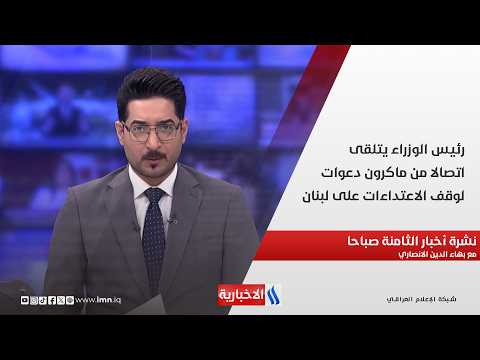
Source material: رئيس الوزراء يتلقى اتصالا من ماكرون، دعوات لوقف الاعتداءات على لبنان في نشرة الـ 8
Summary
The Prime Minister and French President Emmanuel Macron discussed the urgent need to halt attacks on Lebanon, emphasizing international concern for regional stability. The Iraqi government condemned recent military actions, reflecting a commitment to support Lebanon and promote peace through regional diplomatic efforts.
Military aggression in Lebanon has led to a humanitarian crisis, overwhelming hospitals with casualties. Hezbollah's stance on resistance and Iranian accusations against the U.S. complicate the situation, indicating that external pressures may not yield the desired outcomes without addressing underlying issues.
The Pakistani Prime Minister emphasized the necessity of adhering to the ceasefire agreement between the U.S. and Iran for regional peace. However, the lack of inclusion of Lebanon in ceasefire negotiations suggests a potential escalation of violence, indicating that the peace process may be fundamentally flawed.
The U.S. President highlighted the necessity of including Lebanon in any ceasefire agreement, raising concerns about its stability. The assumption that including Lebanon in ceasefire discussions will stabilize the region overlooks the entrenched internal conflicts and motivations of local actors.
Perspectives
short
Support for Lebanon and Regional Stability
- Condemns military aggression against Lebanon
- Emphasizes international concern for regional stability
- Calls for adherence to ceasefire agreements
- Highlights the humanitarian crisis in Lebanon
- Stresses the importance of including Lebanon in peace discussions
Critique of External Interventions
- Questions the effectiveness of external pressures in resolving internal conflicts
- Argues that the lack of a clear strategy undermines peace efforts
Neutral / Shared
- Acknowledges the need for collaboration among governors to address national challenges
- Notes the importance of managing strategic reserves for public welfare
- Recognizes the ongoing political deadlock in Iraq affecting governance
Metrics
other
150 people
number of people protected by the government
This indicates the government's commitment to safety and protection.
the government's first official policy to prevent 150 people from being protected.
other
6 years
duration of the protection policy
This suggests a long-term commitment to the initiative.
for the first 6 years.
Key entities
Timeline highlights
00:00–05:00
The Prime Minister and French President Emmanuel Macron discussed the urgent need to halt attacks on Lebanon, emphasizing international concern for regional stability. The Iraqi government condemned recent military actions, reflecting a commitment to support Lebanon and promote peace through regional diplomatic efforts.
- The Prime Minister received a call from French President Emmanuel Macron, discussing the urgent need to halt attacks on Lebanon. This dialogue underscores the international concern regarding regional stability
- The Prime Minister emphasized the importance of unity in addressing various challenges, including economic and social issues. This approach aims to enhance the governments responsiveness to citizens needs
- During the conversation, both leaders acknowledged the painful attacks Lebanon has faced and their impact on regional stability. They stressed the necessity of collaborative efforts to prevent further violence
- The Iraqi government condemned the recent military actions by the occupying forces, which resulted in significant casualties. This condemnation reflects Iraqs commitment to supporting Lebanon and opposing aggression
- The Foreign Minister engaged in discussions with his Iranian and Pakistani counterparts about the escalating situation in Lebanon. These talks highlight the regional diplomatic efforts to de-escalate tensions and promote peace
- The recent military operations by the occupying forces are described as the largest since the onset of their aggression against Lebanon. This escalation raises concerns about the potential for further conflict and instability in the region
05:00–10:00
The military aggression in Lebanon has led to a humanitarian crisis, overwhelming hospitals with casualties. Hezbollah's stance on resistance and Iranian accusations against the U.S.
- The ongoing military aggression has caused significant destruction in Lebanon, highlighting the urgent need for international intervention to address the humanitarian crisis
- Hospitals in Lebanon are overwhelmed with casualties from the attacks, indicating a critical healthcare situation amid rising violence
- Hezbollah has reiterated its right to resist occupation and retaliate, suggesting a potential for increased conflict in the region
- Iranian officials have accused the U.S. of breaching key agreements related to ceasefire conditions, complicating diplomatic efforts to reduce tensions in Lebanon
- The U.S. faces criticism for failing to meet its commitments regarding the ceasefire in Lebanon
- Iran has expressed its readiness to respond to military actions against its interests, indicating a risk of escalating hostilities if provocations persist
10:00–15:00
The Pakistani Prime Minister emphasized the necessity of adhering to the ceasefire agreement between the U.S. and Iran for regional peace.
- The Pakistani Prime Minister stressed the importance of adhering to the ceasefire agreement between the U.S. and Iran, as this is vital for regional peace and stability
- Violations of the ceasefire were highlighted as detrimental to the peace process, potentially escalating tensions and obstructing diplomatic initiatives
- Chinas active role in promoting lasting peace in the Middle East has been noted, with its commitment to a ceasefire viewed as a key factor for regional stability
- Direct negotiations between the U.S. and Iran are anticipated, focusing on the ongoing conflict and its implications
- The U.S. administration reaffirmed its support for the ceasefire and its intention to collaborate with allies on this issue
- Lebanons situation remains unstable, as it is not part of the current ceasefire discussions, raising concerns about the risk of further violence
15:00–20:00
The U.S. President emphasized the necessity of including Lebanon in any ceasefire agreement, highlighting concerns about its stability.
- The U.S. President stated that any ceasefire agreement must include Lebanon, which is currently excluded from discussions, raising concerns about its stability
- Iran is called to take significant actions before negotiations can advance, with expectations for good faith engagement on nuclear issues
- International approval followed the announcement of a ceasefire between Iran and the U.S, indicating a possible move towards greater stability in the Middle East
- Pakistans mediation efforts are emphasized, urging both parties to continue talks in Islamabad to prevent further escalation
- Ongoing discussions reveal significant disagreements between the U.S. and Iran, particularly regarding military actions and nuclear ambitions
- The ceasefires fragility is evident, as violations could put pressure on peace efforts, making the upcoming negotiations a crucial test of commitment to de-escalation
20:00–25:00
The U.S. seeks a long-term agreement to limit Iran's uranium enrichment, while Iran firmly rejects any restrictions on its nuclear program.
- The U.S. aims for a long-term agreement that restricts Irans uranium enrichment
- Iran rejects any limitations on its nuclear program, asserting it is non-negotiable. This stance complicates diplomatic efforts and raises tensions in the region
- The U.S. administration is considering a gradual lifting of sanctions tied to Irans regional behavior
- Iranian citizens express optimism about the ceasefire and its potential to improve their countrys future. This sentiment highlights the desire for peace and recovery from the recent conflicts
- The Iranian leadership emphasizes that their victories are a result of resilience and sacrifice. This narrative reinforces national pride and unity among the Iranian people
- The ongoing conflict has strained economic relations in the region, affecting even those with good ties to Iran. This economic fallout underscores the broader implications of military actions on regional stability
25:00–30:00
The Prime Minister emphasized the need for collaboration among governors to address national challenges and ensure market stability. He announced initiatives to promote national pride and support clean energy efforts, including solar energy installations in government buildings.
- The Prime Minister underscored the importance of collaboration among governors to tackle the countrys challenges, which is essential for effectively addressing citizens needs and ensuring market stability
- He stressed the need for stable prices in local markets and urged governors to take action against monopolistic practices to improve living conditions
- The Prime Minister announced a government initiative to honor a national football hero by naming a street after him, aiming to boost national pride
- He highlighted the necessity of creating supportive environments for students during exams, which is crucial for their academic success
- The meeting focused on provinces adopting national clean energy initiatives, aligning with goals to reduce emissions and promote sustainability
- Plans were outlined to install solar energy systems in government buildings as part of a national energy support initiative, aimed at enhancing energy efficiency over the next six years