Politics / India
Iran's Hormuz Declaration Controversy
Abbas Araghchi, Iran's foreign minister, faced backlash from state media for his unclear announcement regarding the Strait of Hormuz. His statement, which suggested that the strait would remain open for commercial shipping, was criticized as vague and lacking essential details.
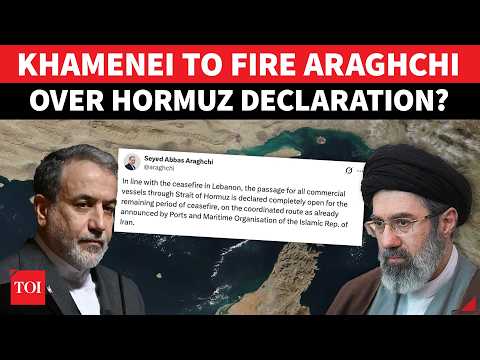
Source material: 'Where Is The Explanation?': IRGC Media Blasts Own FM Araghchi Over Iran Hormuz Declaration
Summary
Abbas Araghchi, Iran's foreign minister, faced backlash from state media for his unclear announcement regarding the Strait of Hormuz. His statement, which suggested that the strait would remain open for commercial shipping, was criticized as vague and lacking essential details.
The Tasnim News Agency labeled Araghchi's tweet as 'bad and incomplete,' highlighting the confusion it caused regarding the conditions for vessel passage. This criticism reflects a significant communication failure within the Iranian government.
In response to the controversy, the Iranian military declared that the Strait of Hormuz is under strict military control. They asserted that vessel passage is contingent upon the cessation of U.S. naval blockades, which they described as acts of piracy.
Donald Trump responded to Araghchi's comments by affirming that the U.S. would maintain its naval blockade until a comprehensive agreement with Iran is achieved. He framed this stance as part of broader nuclear disarmament negotiations.
Perspectives
short
Iranian Government
- Claims the Strait of Hormuz is under strict military control
- Argues that vessel passage depends on the cessation of U.S. naval blockades
U.S. Government
- Affirms the continuation of the naval blockade until a comprehensive agreement is reached
- Frames the blockade as necessary for nuclear disarmament negotiations
Neutral / Shared
- Criticism of Araghchis announcement highlights communication failures
Metrics
other
59%
decrease in fentanyl trafficking
This reduction is presented as a success in combating drug trafficking
The flow of deadly fentanyl pouring across up order is down by a sounding 59%.
other
97%
reduction in illegal drugs entering by sea
This statistic underscores the administration's focus on border security
illegal drugs coming in by ocean or sea are down by 97%.
Key entities
Timeline highlights
00:00–05:00
Abbas Araghchi, Iran's foreign minister, faced backlash from state media for his unclear announcement regarding the Strait of Hormuz. The Iranian military has since declared the strait under strict military control, contingent on the cessation of U.S.
- Irans Foreign Minister, Abbas Araghchi, received criticism from state media for his announcement regarding the Strait of Hormuz, which was deemed unclear and poorly articulated
- Tasnim News Agency described Araghchis statement as bad and incomplete, pointing out the absence of crucial details about the conditions for vessel passage, leading to widespread confusion
- The Iranian military declared that the Strait of Hormuz is under strict military control, asserting that vessel passage is dependent on the end of U.S. naval blockades, which they labeled as piracy
- In reaction to Araghchis comments, Donald Trump stated that the U.S. naval blockade would continue, justifying it as a necessary response to Irans regional activities
05:00–10:00
Iran's Foreign Minister Abbas Araghchi faced criticism for his vague announcement regarding the Strait of Hormuz, which was labeled as 'bad and incomplete' by state media. The Iranian military has since declared the strait under strict military control, contingent on the cessation of U.S.
- Irans Foreign Minister, Abbas Araghchi, faced criticism from state media for his tweet about the Strait of Hormuz, which was deemed vague and lacking essential details
- Tasnim News Agency described Araghchis announcement as bad and incomplete, emphasizing the confusion it caused regarding conditions for commercial shipping in the crucial waterway
- An Iranian military spokesperson stated that the Strait of Hormuz is under strict military control, asserting that vessel passage depends on the end of U.S. naval blockades
- In response to Araghchis comments, Donald Trump affirmed that the U.S. would continue its naval blockade until a comprehensive agreement with Iran is achieved, framing it as part of nuclear disarmament negotiations
- Trump also highlighted U.S. military achievements, including a ceasefire between Israel and Lebanon, which he characterized as a significant milestone
10:00–15:00
Iran's Foreign Minister Abbas Araghchi faced criticism for his vague announcement regarding the Strait of Hormuz, which was labeled as 'bad and incomplete' by state media. The Iranian military has since declared the strait under strict military control, contingent on the cessation of U.S.
- The administration claims to have ended eight wars, with the potential to resolve conflicts in Iran and Lebanon, emphasizing the lives saved
- It is reported that the U.S. has achieved the most secure border in history, with zero illegal entries in the past eleven months and a significant drop in violent crime
- Fentanyl trafficking has reportedly decreased by 59%, alongside a 97% reduction in illegal drugs entering by sea, showcasing a focus on border security
- Major legislative achievements include the largest tax cuts, spending cuts, and regulatory reductions in American history, which are framed as crucial for economic growth
- A controversial policy has been introduced, stating that the U.S. recognizes only two genders, indicating a significant shift in social policy