Politics / India
Strait of Hormuz Tensions
Tensions escalated in the Strait of Hormuz as a U.S. Navy destroyer reversed course following a warning from Iran, which threatened to target U.S. vessels. Iran's state-linked media reported that any military vessel entering the strait would face consequences, linking the warning to ongoing peace talks in Islamabad. The situation remains complicated by conflicting reports regarding U.S. naval movements in the area.
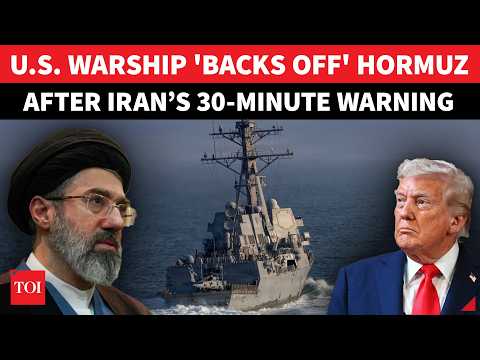
Source material: ‘BLOW UP IN 30 MINS’: Iran’s Shock Countdown Forces US Destroyer To ‘ABORT ENTRY’ In Hormuz | Report
Summary
Tensions escalated in the Strait of Hormuz as a U.S. Navy destroyer reversed course following a warning from Iran, which threatened to target U.S. vessels. Iran's state-linked media reported that any military vessel entering the strait would face consequences, linking the warning to ongoing peace talks in Islamabad. The situation remains complicated by conflicting reports regarding U.S. naval movements in the area.
Iran's demands during negotiations include control over the Strait of Hormuz, full war reparations, the release of blocked assets, and a ceasefire in Lebanon. These conditions pose significant challenges for the U.S., as accepting them could shift the regional balance of power. The ongoing diplomatic efforts are critical, as any miscalculation could disrupt global oil markets.
Reports indicate that Iran is struggling to locate sea mines it deployed, complicating the reopening of the Strait of Hormuz. U.S. officials have raised concerns about the operational planning of these mines, which could pose risks to commercial and military vessels. Despite an agreement to reopen the strait, warnings have been issued to avoid the main channel due to hidden mines.
The Strait of Hormuz is vital for global energy markets, with significant reliance from countries like India on its uninterrupted flow. Analysts suggest that the strait's accessibility ultimately depends on Iran's decisions, highlighting the complexities of military and political solutions in this context. The situation underscores the precarious balance between military presence and diplomatic negotiations.
Perspectives
short
Iran
- Warns that any U.S. military vessel entering the Strait will be targeted
- Describes its response as a firm reaction to U.S. actions
- Demands control over the Strait of Hormuz as a non-negotiable condition
- Seeks full war reparations from the U.S
- Insists on the unconditional release of blocked assets
- Calls for a ceasefire in Lebanon as part of peace negotiations
United States
- Claims multiple U.S. Navy vessels crossed the Strait without incident
- Describes military capabilities as superior and effective against Iranian threats
- Warns Iran to reopen the Strait quickly or face serious consequences
- Highlights the importance of maintaining open shipping lanes for global energy supply
- Expresses skepticism about Irans ability to control the Strait effectively
Neutral / Shared
- Reports indicate that Iran is unable to locate all sea mines deployed in the Strait
- Diplomatic talks are ongoing in Islamabad, involving high-level U.S. and Iranian delegations
Metrics
other
one-fifth %
global oil and LNG shipments passing through the Strait of Hormuz
Disruption in this area could significantly impact global energy supplies.
about one-fifth of the world's oil and LNG shipments pass.
other
28
Iran's mine-laying vessels claimed to be destroyed
This claim could influence U.S. military strategy in the region.
all 28 Iran's mind-laying vessels had been destroyed.
oil_supply
a fifth of the world's oil supply %
global oil supply affected by the strait's status
Disruption in the strait could lead to significant economic consequences worldwide.
the state of Hormuz carries roughly a fifth of the world's oil supply
Key entities
Timeline highlights
00:00–05:00
Tensions in the Strait of Hormuz escalated as a U.S. Navy destroyer reversed course after a warning from Iran, which threatened to target U.S.
- A U.S. Navy destroyer changed its course after receiving a warning from Iran, indicating rising tensions in the Strait of Hormuz
- Iran has threatened to target any U.S. military vessel entering the Strait within 30 minutes, connecting this warning to ongoing peace negotiations in Islamabad
- U.S. officials report that several warships crossed the Strait without issues, while Iranian media disputes this claim
- Tensions escalated after President Trump stated that the U.S. had started clearing the Strait, alleging the destruction of Iranian mines
- Irans delegation has presented four non-negotiable demands for peace talks, including control over the Strait and full war reparations, complicating U.S. negotiations
- As peace talks begin in Islamabad, Irans hardline stance raises concerns that failure to reach an agreement could put pressure on fragile diplomacy and impact global oil supply
05:00–10:00
Iran is struggling to fully reopen the Strait of Hormuz due to difficulties in locating sea mines, which poses a threat to global oil supply. The situation is complicated by U.S.
- Iran faces challenges in fully reopening the Strait of Hormuz due to difficulties in locating sea mines, which threatens global oil supply as the strait is vital for energy transport
- Donald Trump has increased pressure on Iran, warning of serious consequences if the waterway remains closed, raising stakes before crucial diplomatic talks
- Irans mining operations are poorly executed, with many mines unaccounted for or drifting, making the strait hazardous for both commercial and military navigation
- Despite a ceasefire agreement to reopen the strait, Iran has cautioned against using the main shipping channel due to hidden mines, creating a situation where the strait is technically open but functionally restricted
- Analysts believe the strait will only fully open if Iran chooses to do so, highlighting the lack of military solutions and the need for careful navigation in a tense region
- The decision on the straits accessibility rests with Iran, underscoring the limited impact of external military forces and the importance of diplomatic efforts