Politics / India
India politics page with daily media monitoring across NDTV, ANI, PTI and Times of India, structured summaries of domestic political developments and a country-level press overview.
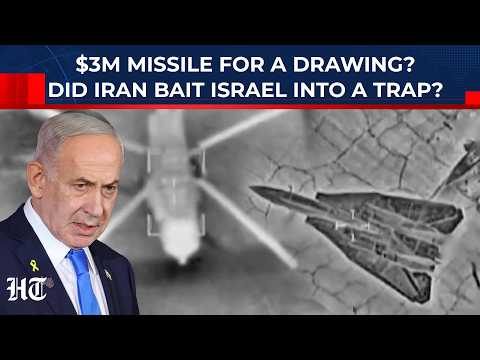
Internet Questions Israel’s Viral Strike Video, Did IDF Really Hit Iran's Mi-17 Painting Or...?
Summary
The Israel Defense Forces (IDF) claimed to have conducted a precision strike on an Iranian Mi-17 helicopter, but critics argue that the target was merely a painted decoy. This incident has ignited a fierce online debate, with many questioning the authenticity of the IDF's claims and the effectiveness of their military operations.
Critics highlight that the footage released by the IDF shows explosions at two sites but fails to clearly depict an actual helicopter being hit. Observers have pointed out that the supposed helicopter resembles a low-cost decoy designed to mislead incoming missiles, raising concerns about the IDF's intelligence and operational effectiveness.
Social media reactions have been overwhelmingly critical, with users mocking the IDF for allegedly wasting expensive missiles on what they describe as a drawing. Analysts note that the cost disparity between Israeli missiles and Iranian decoys further complicates the narrative, suggesting a significant misallocation of resources.
The controversy has intensified following recent coordinated attacks by the US and Israel on Iran, leading to heightened tensions in the region. Iranian retaliation is anticipated, with warnings of increased missile and drone attacks if the conflict escalates further.
Perspectives
short
Israel Defense Forces
- Claims to have struck an Iranian Mi-17 helicopter
- Describes the strikes as part of an ongoing campaign against Tehran
- Maintains that the footage shows valuable Iranian assets being destroyed
Critics and Observers
- Argue that the target was a painted decoy rather than a real helicopter
- Highlight the lack of clear evidence showing an actual helicopter being hit
- Mock the IDF for allegedly wasting expensive missiles on a low-cost target
Neutral / Shared
- Notes that Iranian tactics include using painted decoys to mislead enemy forces
- Observes that the controversy has sparked significant online debate
- Mentions the cost disparity between Israeli missiles and Iranian decoys
Metrics
cost
tens of thousands to millions of dollars USD
cost of Israeli missiles
High costs highlight the potential waste of resources if the target was a decoy.
Israeli missiles can cost anywhere from tens of thousands to millions of dollars each
cost
a few dollars USD
cost of Iranian decoy paintings
The low cost of decoys emphasizes the disparity in military expenditure.
these decoy paintings may only cost Iran a few dollars to produce
Key entities
Timeline highlights
00:00–05:00
The Israel Defense Forces claimed to have struck an Iranian Mi-17 helicopter, but critics argue it was a painted decoy. This incident has sparked widespread ridicule and debate over the effectiveness of Israeli military operations against Iranian tactics.
- The Israel Defense Forces (IDF) released footage claiming a precision strike on an Iranian Mi-17 helicopter, but critics argue the target was merely a painted decoy, turning the incident into a viral joke. Observers noted that the grainy footage did not clearly show a helicopter being hit, with many suggesting the supposed target resembled a 3D drawing designed to mislead incoming missiles
- Criticism on social media was intense, with users mocking Israel for allegedly destroying what they called a drawing instead of a real helicopter. Analysts highlighted the disparity in costs, noting that Israeli missiles can range from tens of thousands to millions of dollars, while the decoy paintings may only cost Iran a few dollars to produce
- Local reports indicate that Iran may be employing painted decoy targets to mislead Israeli forces and conserve their firepower. The controversy intensified following coordinated US and Israeli attacks on Iran, with warnings of potential retaliation from Tehran and its allies