Politics / India
India politics page with daily media monitoring across NDTV, ANI, PTI and Times of India, structured summaries of domestic political developments and a country-level press overview.
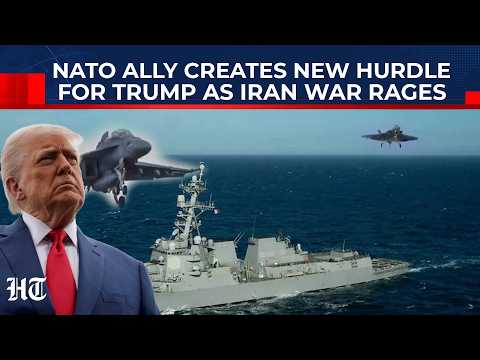
New War Setback For Trump: US Jets Headed To Iran Will Have To Reroute As NATO Ally Closes Airspace?
Summary
Spain's decision to U.S. military aircraft from its airspace complicates President Trump's strategy in the ongoing Iran conflict. This ban forces American warplanes to reroute, increasing operational costs and logistical challenges. Madrid's refusal to support U.S. military actions reflects growing divisions within NATO and raises questions about alliance unity.
The Pentagon has deployed over 10,000 troops trained for ground combat operations in response to escalating tensions with Iran. This military buildup includes elite special forces and selected infantry units, aiming for limited strikes rather than a full-scale invasion. U.S. Secretary of State Marco Rubio emphasizes that military objectives can be achieved without deep troop deployments into Iranian territory.
Spain's airspace closure not only impacts U.S. military operations but also highlights Madrid's commitment to an independent foreign policy. Prime Minister Pedro Sanchez's opposition to what he deems an illegal war underscores the complexities of international relations amid military conflicts. The U.S. must now navigate around Spain, potentially undermining its military objectives.
Trump's administration has indicated a willingness to escalate military actions, including the potential seizure of Iranian oil infrastructure. Such plans, however, come with significant risks, including higher casualties for U.S. forces and regional partners. The ongoing military buildup signals a serious commitment to addressing the Iran conflict while managing diplomatic relations.
Perspectives
short
U.S. Military Strategy
- Deploys over 10,000 troops trained for ground combat amid rising tensions
- Plans to utilize elite special forces for limited, high-impact strikes
- Indicates readiness for further escalation in the Iran conflict
- Seeks to achieve military objectives without large troop deployments
Spain's Opposition
- Blocks U.S. military aircraft from using its airspace for operations against Iran
- Cites opposition to what it calls an illegal war effort
- Refuses to grant access to military bases for U.S. operations
- Demonstrates commitment to an autonomous foreign policy despite diplomatic frictions
Neutral / Shared
- Highlights growing divisions within NATO regarding military support
- Raises questions about the effectiveness of U.S. military strategy in the region
Metrics
troops
more than 3,500 units
U.S. military deployment to the Middle East
This troop deployment signals a significant military build-up amid escalating tensions.
the United States deployed more than 3,500 troops to the Middle East
troops_deployed
more than 10,000 units
total number of troops deployed by the Pentagon
This indicates a significant military commitment amid rising tensions.
The Pentagon had ordered the deployment of more than 10,000 troops trained for ground combat operations as tensions escalated.
Key entities
Timeline highlights
00:00–05:00
Spain has implemented a ban on U.S. military aircraft using its airspace, complicating President Trump's military strategy in the Iran conflict.
- Spains ban on U.S. military aircraft using its airspace complicates President Trumps strategy in the Iran conflict, forcing a reroute that raises operational costs
05:00–10:00
The Pentagon has deployed over 10,000 troops trained for ground combat amid rising tensions with Iran, indicating a serious military commitment. The Trump administration's military buildup in the Middle East prepares for potential escalation in the Iran conflict while aiming to limit troop numbers.
- The Pentagon has deployed over 10,000 troops trained for ground combat amid rising tensions with Iran, indicating a serious military commitment without signaling a full-scale invasion
- US Secretary of State Marco Rubio emphasizes that military goals can be achieved without large troop deployments, suggesting a focus on special forces for targeted operations
- The Trump administrations military buildup in the Middle East, including additional soldiers from the 82nd Airborne Division, prepares for potential escalation in the Iran conflict
- The Pentagon aims to achieve military success while limiting troop numbers, balancing operational effectiveness with political concerns about troop presence
- The situation in the region is dynamic, with ongoing military actions likely to affect US relations with allies and the overall geopolitical landscape
- Current military operations highlight the complexity of US strategic objectives in the Middle East, with significant implications for regional stability and international alliances