Politics / Greece
Greek Election Dynamics and Voter Sentiment
Recent polling indicates that economic issues and corruption are the primary concerns for voters in Greece. Alexis Tsipras is positioning himself as a credible alternative to the ruling party by promoting political stability and addressing these concerns.
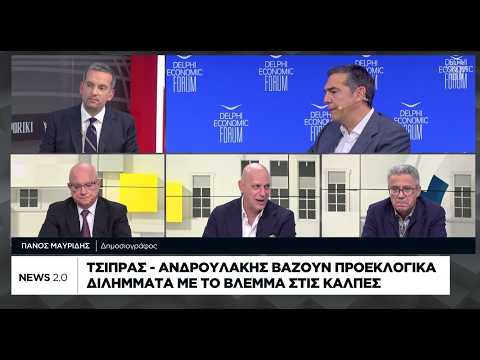
Source material: Tsipras-Androulakis pose pre-election dilemmas with an eye on the polls
Summary
Recent polling indicates that economic issues and corruption are the primary concerns for voters in Greece. Alexis Tsipras is positioning himself as a credible alternative to the ruling party by promoting political stability and addressing these concerns.
Voter sentiment shows a significant desire for government change, with a notable portion of the electorate favoring continuity. Rising inflation and high abstention rates indicate a fragmented political landscape that parties must navigate to regain voter trust.
Perspectives
Alexis Tsipras
- Positions himself as a credible alternative by addressing economic issues and corruption
- Promotes political stability to attract disillusioned voters
Kyriakos Mitsotakis
- Faces challenges in retaining voter base amid rising inflation
- Struggles to surpass 1.1 million votes in upcoming elections
Neutral / Shared
- Voter sentiment indicates a divided political landscape
- High abstention rates reflect disillusionment with the political system
Key entities
Timeline highlights
00:00–05:00
Recent polling indicates that economic issues and corruption are the primary concerns for voters in Greece. Alexis Tsipras is positioning himself as a credible alternative to the ruling party by promoting political stability and addressing these concerns.
- Recent polling shows that economic issues and corruption are the top concerns for voters, with 35-36% prioritizing the economy and 34% focusing on corruption
- Alexis Tsipras has presented a strong case for political stability, distancing himself from previous associations with the current government
- His strategy targets leftist voters by promoting a social state and addressing economic challenges, positioning himself as a credible alternative to the ruling party
- Nikos Androulakis is also in a competitive position but struggles to gain support, particularly regarding his partys potential post-election alliances
- The political landscape indicates that while Tsipras is gaining momentum, right-wing parties are consolidating their positions, which may complicate the electoral dynamics
05:00–10:00
Voter sentiment in Greece shows a significant desire for government change, with a notable portion of the electorate favoring continuity. Rising inflation and high abstention rates indicate a fragmented political landscape that parties must navigate to regain voter trust.
- Voter sentiment is increasingly leaning towards a desire for government change, with around 23-34% of the electorate favoring continuity in the current administration, highlighting a divided political landscape
- High abstention rates in recent elections indicate significant disillusionment with the political system, which parties must address to regain voter trust and support
- Rising inflation is a pivotal issue that is expected to heavily influence electoral outcomes, overshadowing other political considerations
- The political environment is fragmented, with parties like PASOK needing to demonstrate their viability to attract voters and secure a competitive position in the elections
- Current Prime Minister Kyriakos Mitsotakis faces challenges in retaining his voter base, with forecasts suggesting he may struggle to surpass 1.1 million votes in the upcoming elections