Politics / Germany
Germany politics page with daily media monitoring, structured summaries of domestic political developments and a country-level press overview built from national political coverage.
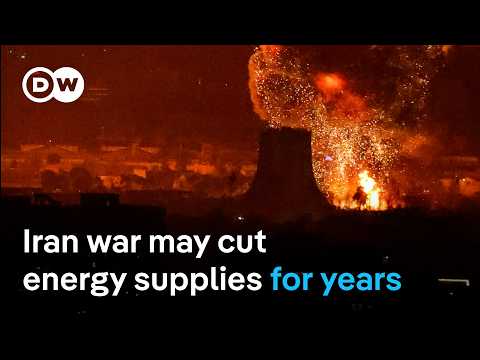
What the attacks oil & gas facilites in the Middle East mean for global energy security | DW News
Summary
U.S. President Donald Trump has issued a warning to Iran regarding further attacks on gas facilities in Qatar, following Iran's strikes on the Ras Laffan LNG hub. The attacks caused significant damage to the world's largest LNG complex, which is crucial for global energy supply. Iran claims the strikes were retaliation for an Israeli attack on its South Pars facilities, highlighting the escalating tensions in the region.
Iran's asymmetric warfare strategy poses significant risks to critical energy infrastructure in the Gulf, particularly affecting regional stability and global energy security. Despite ongoing violence, oil prices have not surged, indicating that markets remain well-supplied. Analysts express concern that the current situation could lead to long-term disruptions in energy supply chains.
The recent attacks on energy infrastructure in the Gulf could result in a loss of 12.8 million tons per year of LNG capacity for three to five years. This damage threatens not only LNG production but also condensate, helium, and other products, complicating the recovery of the global energy market. The timeline for restoring production capacity is expected to be prolonged due to the scale of the damage.
Governments are attempting to implement quick fixes to mitigate rising energy prices, but their options are limited. Strategic oil reserves are being released to alleviate short-term pressure, but the scale of disruption from the conflict is significant. The market is looking for signals regarding the conflict's resolution to stabilize and rebuild from the current situation.
Perspectives
Analysis of the impact of recent attacks on energy infrastructure in the Middle East.
U.S. and Allies
- Warns Iran against further attacks on gas facilities
- Claims Irans actions are retaliatory and destabilizing
- Highlights the importance of energy security for allies
- Stresses the need for a clear response to Iranian aggression
- Emphasizes the control of U.S. military over regional stability
Iran
- Accuses Israel of provoking attacks on Iranian facilities
- Claims retaliation is necessary for national security
- Highlights the capacity to target specific energy infrastructure
- Denies responsibility for escalating tensions without provocation
- Argues that U.S. threats do not deter Iranian actions
Neutral / Shared
- Notes the ongoing volatility in global energy markets
- Observes that oil prices have not spiked despite attacks
- Mentions the potential for long-term disruptions in energy supply
- Acknowledges the limited options available to governments for mitigating price surges
Metrics
electricity_dependency
80 percent %
Iran's electricity generation
This highlights Iran's vulnerability and strategic reliance on gas facilities.
Tehran is heavily dependent on gas and uses it to generate about 80 percent of the country's electricity.
damage_extent
extensive damage
Impact of Iran's strikes on Qatar's gas infrastructure
The damage to critical infrastructure could destabilize energy markets.
Iran targeted the Rastlafan-liquified natural gas hub on Wednesday evening causing extensive damage.
percentage
12 percent %
LNG imports from Qatar to the EU
This highlights Qatar's critical role in European energy security.
12 percent of its LNG imports come from Qatar.
capacity_loss
12.8 million tons per year tons
LNG capacity loss due to attacks
This loss significantly impacts global LNG supply and pricing.
12.8 million tons per year of LNG capacity could be lost for three to five years.
price
$118 USD
current crude oil price
High oil prices can lead to increased costs for consumers and businesses.
crude oil spiking to $118 a barrel today
Key entities
Timeline highlights
00:00–05:00
U.S. President Donald Trump has issued a warning to Iran regarding further attacks on gas facilities in Qatar, following Iran's strikes on the Ras Laffan LNG hub.
- U.S. President Donald Trump has warned Iran against further attacks on gas facilities in Qatar, following Irans strikes on the Ras Laffan LNG hub
- Irans attacks were framed as retaliation for an Israeli strike on its South Pars facilities, highlighting the cycle of violence in the region. Irans dependency on gas for 80 percent of its electricity underscores the strategic importance of these facilities
- Trump emphasized that Israel would not conduct further attacks unless provoked by Iran, suggesting a precarious balance of power. Any future aggression from Iran could lead to severe military responses from the U.S
- U.S. Defense Secretary Pete Tehran noted that Iran has a history of weaponizing energy, complicating the geopolitical landscape
- Economist Christoph Rühl pointed out that the reactions from Israel and the U.S. are aimed at calming a jittery global energy market
05:00–10:00
Iran's asymmetric warfare strategy poses significant risks to critical energy infrastructure in the Gulf, particularly affecting regional stability and global energy security. The ongoing violence has not yet led to a surge in oil prices, indicating that markets remain well-supplied despite the threats.
- Irans strategy of asymmetric warfare allows it to target critical infrastructure with precision, raising concerns about potential escalations in the region
- Despite ongoing violence, oil prices have not surged, indicating that markets are currently well-supplied and focused on future disruptions
- Attacks on energy infrastructure, particularly the Ras Laffan facility, threaten regional stability and global energy security, with dire consequences for energy supplies
- Targeting South Pars is significant as it is crucial for Irans electricity supply; disrupting it could cripple Irans economy
- The tit-for-tat attacks between Iran and its adversaries highlight the precarious nature of energy security in the Gulf, risking a broader conflict
- The situation underscores the need for a strategic response to prevent escalation and protect vital energy infrastructure
10:00–15:00
The recent attacks on energy infrastructure in the Gulf, particularly in Qatar, could result in a loss of 12.8 million tons per year of LNG capacity for three to five years. This damage threatens not only LNG production but also condensate, helium, and other products, complicating the recovery of the global energy market.
- The recent attacks on energy infrastructure in the Gulf, particularly in Qatar, have escalated significantly, potentially resulting in a loss of 12.8 million tons per year of LNG capacity for three to five years, severely impacting global supply
- The damage extends beyond LNG to include lost production of condensate, helium, and other products, indicating a broader threat to energy security in the region
- Rebuilding the damaged energy infrastructure will take years, complicating the recovery of the global energy market and prolonging vulnerability to explosive attacks
- The ongoing conflict suggests that energy markets will not return to normal quickly, with significant disruptions expected for both crude oil and natural gas, likely leading to increased oil price premiums
- The situation is worsened by the limited availability of spare parts and skilled labor for repairs, extending the timeline for restoring full production capacity and raising concerns about long-term energy security
- The attacks mark a turning point in the conflict, indicating that the stakes for global energy security are higher than ever, with potential severe repercussions for the global economy
15:00–20:00
The ongoing conflict is causing significant disruptions in global energy supply chains, particularly affecting jet fuel prices and energy rationing in Asia. Governments are attempting to implement quick fixes to mitigate rising energy prices, but their options are limited.
- The ongoing conflict is causing significant disruptions in global energy supply chains, particularly affecting jet fuel prices and energy rationing in Asia. This escalation in energy insecurity is likely to have widespread economic repercussions
- Governments, especially in the EU, are attempting to implement quick fixes to mitigate rising energy prices, but their options are limited. The release of strategic oil reserves is a temporary measure that may not sufficiently address the scale of the disruption
- The International Energy Agency has announced the largest release of strategic stocks in history, involving multiple countries. However, this action may only buy time rather than resolve the underlying issues caused by the conflict
- The market is looking for signals regarding the resolution of the conflict, as uncertainty continues to drive oil prices higher. With crude oil hovering around $118 a barrel, the potential for further price increases remains significant
- Refineries are facing increased costs due to the disruption of inputs, leading to potential cuts in production runs. This situation is likely to result in higher consumer prices, particularly for airlines in Asia, which have already announced price hikes
- The complexity of the energy supply chain means that restoring normal operations will take time, with some facilities potentially affected for years. The long-term implications of this conflict could reshape energy markets and consumer behavior globally