Politics / Germany
Germany politics page with daily media monitoring, structured summaries of domestic political developments and a country-level press overview built from national political coverage.
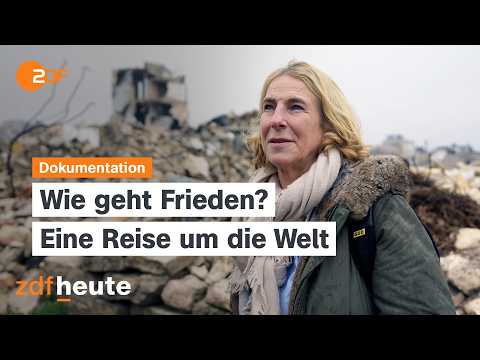
Ukraine, Iran, Israel: Die Welt im Krieg - So geht Frieden | auslandsjournal
Summary
Current conflicts may not involve direct violence, but they represent a different kind of struggle that requires understanding for long-term peace. The documentary explores eight countries, highlighting Iceland as a model of peace through its educational practices that focus on equality and emotional resilience.
Iceland's educational approach emphasizes kindness and respect, which may contribute to a more peaceful society. The absence of a military is viewed as a significant factor in Iceland's peaceful identity.
Iceland is highlighted as a model of positive peace, characterized by trust, justice, and social cohesion. In contrast, Liberia exemplifies negative peace, struggling with poverty and a lack of opportunities despite the absence of direct violence.
The journey to the outskirts of Monrovia highlights the historical struggles of young women who demanded peace during Liberia's civil war. The ongoing marginalization of former child soldiers and the weak justice system continue to threaten social stability and peace in the country.
Perspectives
short
Pro-Peace Education and Community Engagement
- Highlights the role of education in fostering peace
- Emphasizes the importance of kindness and respect in society
- Argues that the absence of military contributes to a peaceful identity
- Points out the need for community engagement to address social issues
- Advocates for anti-corruption measures to stabilize society
Challenges to Peace in Conflict Zones
- Describes the negative impact of drug trafficking on youth stability
- Notes the exploitation of resources by international corporations
- Highlights the ongoing marginalization of former child soldiers
- Discusses the psychological toll of war on individuals and communities
- Questions the effectiveness of peace without addressing underlying grievances
Neutral / Shared
- Acknowledges that peace is a complex and multifaceted issue
- Recognizes that historical context plays a significant role in current conflicts
- Notes that the absence of violence does not equate to true peace
Metrics
population
400,000 units
population of Iceland
A smaller population may contribute to social cohesion.
400,000 inhabitants, a rich country and above all, that's not threatened.
deaths
a quarter million units
deaths during the civil war in Liberia
This figure highlights the severe human cost of conflict in Liberia.
massacres, violence, a quarter million deaths.
other
$70 USD
payment for plastic bottles
This highlights the economic struggles faced by individuals in Liberia.
$70 per bottle is paid for this morning, about 34 cents.
other
34 cents USD
value of each bottle sold
This reflects the low economic value of labor in Liberia.
about 34 cents.
other
a whole generation
impact of drug trafficking on youth
The loss of a generation threatens the future stability of Liberia.
But because of the lucrative income, we lose a whole generation.
other
fragile peace
current state of peace in Liberia
A fragile peace indicates ongoing risks of conflict.
Liberia's peace is still being held as a fragile peace.
other
enough resources
potential for economic development
Exploiting resources could provide opportunities for growth.
Liberia had enough resources to offer a perspective for his people.
casualties
23 people died people
casualties from a rocket explosion
This highlights the human cost of the ongoing conflict.
23 people died. Among them a child.
Key entities
Timeline highlights
00:00–05:00
Current conflicts may not involve direct violence, but they represent a different kind of struggle that requires understanding for long-term peace. The documentary explores eight countries, highlighting Iceland as a model of peace through its educational practices that focus on equality and emotional resilience.
- Current conflicts may not involve direct violence, but they still represent a different kind of struggle. Understanding these dynamics is crucial for fostering long-term peace
- Creating peace is a generational task that requires reaching out to former adversaries. This approach emphasizes the importance of reconciliation in conflict resolution
- The documentary explores eight countries to uncover what constitutes peace and how it can be maintained. This journey aims to provide insights into the complexities of achieving and sustaining harmony
- Iceland is highlighted as a model of peace, characterized by its low population and lack of external threats. Learning from such nations can offer valuable lessons on fostering peaceful societies
- Educational practices in Iceland, particularly in early childhood settings, focus on equality and emotional resilience. These principles are believed to contribute to the development of more peaceful adults
- The segment adds to doubts about the role of equality in reducing societal conflict. By instilling values of fairness from a young age, communities may cultivate a more harmonious environment
05:00–10:00
Iceland's educational approach emphasizes kindness and respect, which may contribute to a more peaceful society. The absence of a military is viewed as a significant factor in Iceland's peaceful identity.
- The approach to education in Iceland emphasizes kindness and respect, which can foster a more peaceful society. This suggests that instilling these values early on may contribute to long-term societal harmony
- The absence of a military in Iceland is seen as a key factor in its peaceful identity. This adds to doubts about the role of military presence in achieving peace in other nations
- Halla Thomas-Datier, the President of Iceland, acknowledges that peace is not fully realized in her country, reflecting a global trend of declining societal peace. Her insights highlight the need for dialogue and understanding to address internal and external conflicts
- The focus on gender equality in Iceland is believed to enhance social cohesion and prioritize well-being over mere economic growth. This perspective could inform peace-building strategies in other regions facing conflict
- Experiencing challenges together, such as cold water immersion, is viewed as a way to strengthen community bonds. This suggests that shared experiences can help individuals navigate difficult situations more effectively
- The emphasis on kindness, both to oneself and others, is central to the Icelandic approach to fostering peace. This principle could serve as a model for other societies seeking to improve their social dynamics
10:00–15:00
Iceland is highlighted as a model of positive peace, characterized by trust, justice, and social cohesion. In contrast, Liberia exemplifies negative peace, struggling with poverty and a lack of opportunities despite the absence of direct violence.
- The softness of the sand and the absence of frost create a calming atmosphere, allowing participants to connect with their intuition. This practice emphasizes the importance of mindfulness and community in fostering peace
- Women play a crucial role in building peaceful communities through acts of kindness and collaboration. Their collective efforts can lead to significant social change, even in challenging environments
- Iceland serves as a unique example of positive peace, characterized by trust, justice, and social cohesion. Understanding how these factors contribute to peace can provide insights for other nations facing conflict
- Liberia exemplifies a country struggling with negative peace, marked by poverty and lack of opportunities despite the absence of direct violence. The historical context of civil war highlights the complexities of maintaining peace in such conditions
- A remarkable movement emerged in Liberia when thousands of women protested for peace during a brutal civil war. Their faith and determination played a pivotal role in ending the conflict, demonstrating the power of grassroots activism
- The leader of the womens movement reflects on their commitment to faith and community, emphasizing reliance on a higher power rather than human assurances. This perspective underscores the importance of hope and resilience in the pursuit of peace
15:00–20:00
The journey to the outskirts of Monrovia highlights the historical struggles of young women who demanded peace during Liberia's civil war. The ongoing marginalization of former child soldiers and the weak justice system continue to threaten social stability and peace in the country.
- The journey to the outskirts of Monrovia reflects the historical path taken by young women who bravely confronted armed factions to demand peace. Their actions were pivotal in forcing negotiations during a brutal civil war
- Many individuals in Liberia still bear the psychological scars of war, with a significant number seeking justice for lost family members. The weak justice system exacerbates feelings of injustice, as financial barriers prevent many from accessing legal recourse
- The legacy of child soldiers remains a pressing issue, as many have not been reintegrated into society and continue to live on the fringes. This ongoing marginalization poses a threat to social stability and peace in Liberia
- Melvin, a former child soldier, exemplifies the struggles faced by many who resort to drug use as a coping mechanism for their traumatic past. His situation highlights the urgent need for support systems to address the mental health and addiction crises in the country
- The economic conditions in Liberia force individuals into a cycle of poverty, where survival often takes precedence over community support. This environment fosters a lack of empathy, as people prioritize their own needs in a struggle for basic necessities
- Research at the Kofi Annan Institute indicates that corruption and a lack of opportunities for youth hinder Liberias progress. The failure to empower young people as a resource threatens the nations future and allows political manipulation to persist
20:00–25:00
Liberia faces significant challenges due to drug trafficking, which threatens the stability and future of its youth. The exploitation of resources by international corporations exacerbates these issues, highlighting the need for community engagement and anti-corruption measures.
- Government officials recognize the drug trafficking issue in Liberia, but the revenue generated from drugs threatens the future of an entire generation and the nations stability
- The fragile peace in Liberia is at risk as the youth lack opportunities after the civil war, leaving the future uncertain and the potential for conflict high
- Despite having abundant resources, Liberias wealth is often exploited by international corporations, which can heighten tensions and hinder peace efforts
- Isaac Benwons community is frustrated by the lack of local benefits from a palm oil plantation established without their consent, underscoring the need for community engagement in resource management
- Isaac suggests leveraging a legal clause to protect land from corporate exploitation, advocating for community agriculture to enhance land value and resist corporate greed
- To secure a peaceful future, Liberia must tackle corruption and invest in youth opportunities, breaking the cycle of poverty and violence
25:00–30:00
The psychological toll of war on individuals, particularly children, is profound, as they are forced to adapt to a reality filled with fear and anxiety. The ongoing conflict in Ukraine highlights the necessity of justice and accountability to achieve lasting peace, as exemplified by personal stories of loss and survival.
- For many, peace is defined as a state free from fear and anxiety, where individuals do not have to worry about safety during conflicts. This understanding highlights the psychological toll of war on children and communities
- The Ukrainian education system is adapting to the realities of war by preparing students for military service, indicating a shift in societal norms. This reflects a grim acceptance of ongoing conflict as a part of life for the youth
- Alexander with Witschuk emphasizes that justice is essential for achieving lasting peace, as the current situation benefits aggressors like Putin. The implication is that without accountability, the cycle of violence may continue
- Valentin Bondarenko shares his traumatic experience of losing his home to a Russian missile strike, illustrating the personal impact of war. His story underscores the urgent need for protection and support for civilians affected by conflict
- The narrative suggests that true peace cannot be achieved through capitulation, as it would only signify surrender rather than resolution. This perspective stresses the importance of maintaining sovereignty and dignity in the face of aggression
- Valentins account of survival and loss highlights the fragility of life during wartime, emphasizing the need for unity in Europe to support Ukraine. This call to action suggests that collective defense is crucial for both regional and global stability