Politics / Germany
Taiwan's Semiconductor Economy
Taiwan's economy is experiencing significant growth, primarily driven by its semiconductor exports, which are crucial for its GDP. The island's dominance in advanced chip production positions it as a vital player in global technology, but this dependence raises concerns about economic stability in the event of disruptions.
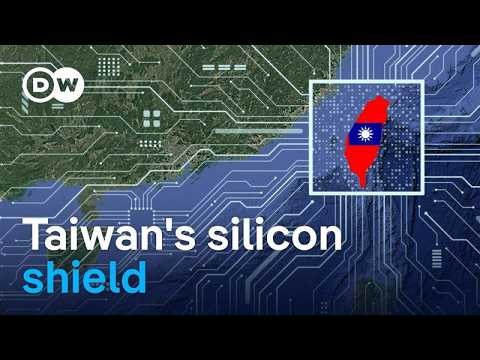
Source material: Why Taiwan is an economic chokepoint - for better or worse | DW News
Summary
Taiwan's economy is experiencing significant growth, primarily driven by its semiconductor exports, which are crucial for its GDP. The island's dominance in advanced chip production positions it as a vital player in global technology, but this dependence raises concerns about economic stability in the event of disruptions.
The semiconductor sector accounts for a substantial portion of Taiwan's GDP, with the industry being intricately linked to various economic sectors. Despite impressive growth figures, some experts warn of over-dependence on microchips, which could pose risks if global demand fluctuates or if geopolitical tensions escalate.
Taiwan's semiconductor industry is shifting from manufacturing to technology exporting, essential for its global competitiveness. However, geopolitical tensions and economic uncertainties pose significant challenges to its growth trajectory.
China's efforts to build its domestic chip-making capacity threaten Taiwan's market share, as the country aims for 80% self-sufficiency by 2030. This shift in the competitive landscape necessitates that Taiwan diversifies its economic strategies to mitigate risks associated with its semiconductor reliance.
Perspectives
Analysis of Taiwan's economic position in the global semiconductor market.
Proponents of Taiwan's Semiconductor Dominance
- Highlights Taiwans significant economic growth driven by semiconductor exports
- Claims Taiwans semiconductor sector is crucial for its GDP and global technology leadership
- Argues that Taiwans adaptability in manufacturing has allowed it to thrive during global challenges
- Emphasizes the importance of advanced chip production for various industries
- Notes that Taiwans GDP per capita has consistently surpassed G20 averages since 2020
Critics of Taiwan's Economic Dependence
- Warns of over-dependence on microchips, which account for a significant portion of GDP
- Questions Taiwans ability to maintain its semiconductor leadership amid rising Chinese competition
- Denies the sustainability of Taiwans growth if geopolitical tensions escalate
- Accuses Taiwan of lacking diversification strategies in its economy
- Highlights potential risks of economic instability due to reliance on semiconductor exports
Neutral / Shared
- Acknowledges the global demand for semiconductors driven by AI and technology
- Recognizes the challenges posed by high construction costs for new manufacturing facilities in the US
- Notes the impact of global supply chain pressures on Taiwans economic prospects
Metrics
growth
more than 8.5%
Taiwan's GDP growth last year
This growth rate is significantly higher than many other countries, indicating strong economic performance.
Last year, Taiwan clocked in at more than 8.5% GDP growth
growth
more than 7%
Estimated GDP growth for this year
Sustained growth is crucial for economic stability and investment.
it's estimated at more than 7 for this year
GDP_share
around one-fifth %
Percentage of Taiwanese GDP accounted for by the semiconductor industry
A high dependency on one sector can lead to vulnerabilities in the economy.
the industry accounts for around one-fifth of Taiwanese GDP
production_share
over 2 thirds %
Taiwan's share of global semiconductor production
This dominance creates a critical chokepoint in the global supply chain.
Taiwan is the global leader and semiconductor manufacturing, producing over 2 thirds of the world's semi-conductors
production_share
more than 90%
TSMC's share of advanced semiconductor production
TSMC's dominance in advanced chips is crucial for industries like AI.
TSMC manufactures more than 90% of the most sophisticated semi-conductors
growth
5%
projected growth rate for Taiwan's semiconductor industry in 2026
A slower growth rate indicates potential economic vulnerabilities.
Taiwan will still grow at around 5% in 2026
self-sufficiency
33%
current self-sufficiency of China's semiconductor industry
Increased self-sufficiency could threaten Taiwan's market position.
China's semiconductor self-sufficiency is currently around 33%
self-sufficiency
80%
China's target for semiconductor self-sufficiency by 2030
Achieving this target could significantly impact Taiwan's semiconductor exports.
it plans to raise this to 80% by 2030
Key entities
Timeline highlights
00:00–05:00
Taiwan's economy is experiencing significant growth, primarily driven by its semiconductor exports, which are crucial for its GDP. The island's dominance in advanced chip production positions it as a vital player in global technology, but this dependence raises concerns about economic stability in the event of disruptions.
- Taiwans economy is booming due to increased semiconductor exports driven by the AI industry, establishing the island as a pivotal player in global technology
- The semiconductor sector is crucial for Taiwan, contributing significantly to its GDP and supporting multiple industries, making its health vital for economic stability
- Producing over two-thirds of the worlds advanced chips, Taiwans dominance creates a critical chokepoint, where disruptions could severely impact global supply chains
- US Treasury Secretary Scott Besant warned that Taiwans semiconductor supremacy poses risks, as any blockade or conflict could trigger an economic crisis
- Relocating semiconductor production to the US faces hurdles like high costs and a shortage of skilled labor, complicating efforts to replicate Taiwans advanced manufacturing ecosystem
- Taiwans economic evolution, known as the Taiwan Miracle, set the foundation for its semiconductor success, highlighting the need for strategic investment in technology
05:00–10:00
Taiwan's semiconductor industry is shifting from manufacturing to technology exporting, essential for its global competitiveness. However, geopolitical tensions and economic uncertainties pose significant challenges to its growth trajectory.
- Taiwans semiconductor industry is transitioning from a manufacturing focus to becoming a technology exporter, which is essential for maintaining its competitive position in the global market
- Chinas aggressive investment in domestic chip production aims for 80% self-sufficiency by 2030, challenging Taiwans current leadership in high-end chip manufacturing
- Geopolitical tensions and economic uncertainties, including energy shortages and inflation, may hinder Taiwans semiconductor growth, with projections indicating a decline to around 5% growth by 2026
- Taiwans ability to adapt its manufacturing during crises, such as the pandemic, enhances its economic resilience and strengthens its role in defense and security sectors
- The threat of a Chinese invasion and global supply chain issues expose vulnerabilities in Taiwans economic model, making it crucial for Taiwan to diversify beyond chip production for long-term stability
- The shift from made in Taiwan to made by Taiwan signifies a strategic adaptation to global market needs, which is vital for sustaining Taiwans economic relevance and innovation in semiconductors