Politics / Germany
Middle East tensions and energy crisis
Israel has intensified military operations against Hezbollah in Lebanon, raising concerns about the effectiveness of the recent ceasefire. President Trump is pressuring NATO allies for military support in the Strait of Hormuz, complicating international relations within the alliance. European leaders express reluctance to engage militarily, advocating for a cautious approach tied to conflict resolution.
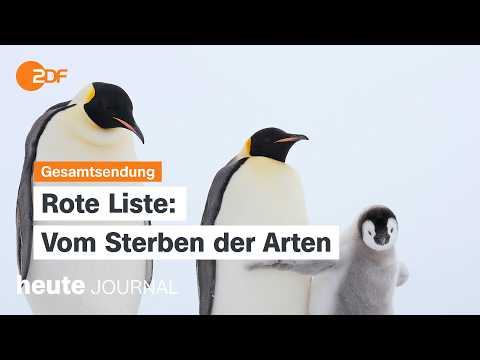
Source material: heute journal vom 09.04.2026 Iran-Waffenruhe, Energiekrise in Pakistan, Kaiserpinguine in Gefahr
Summary
Israel has intensified military operations against Hezbollah in Lebanon, raising concerns about the effectiveness of the recent ceasefire. President Trump is pressuring NATO allies for military support in the Strait of Hormuz, complicating international relations within the alliance. European leaders express reluctance to engage militarily, advocating for a cautious approach tied to conflict resolution.
Chancellor Merz's shift towards engaging Iran indicates a need for diplomatic dialogue amidst ongoing tensions. Meanwhile, Pakistan faces a severe energy crisis, with millions lacking access to electricity due to rising prices and insufficient foreign currency for energy purchases. Citizens are increasingly investing in solar energy solutions to achieve energy independence.
The red list of endangered species highlights a significant decline in various species, with climate change as a major contributing factor. Urgent conservation efforts are necessary to address both biodiversity loss and the impacts of climate change. Germany's public debt has increased, raising questions about the sustainability of its financial strategies.
The assumption that conservation efforts alone can reverse the decline of species overlooks the broader systemic issues of climate change and habitat loss. The ongoing military actions in the Middle East suggest that underlying grievances and power struggles remain unresolved, which could lead to further escalations unless addressed.
Perspectives
summary of geopolitical tensions and energy crises
Pro-military engagement
- Demands military contributions from NATO allies for operations in the Strait of Hormuz
- Intensifies military actions against Hezbollah, indicating a commitment to regional security
- Advocates for a strong response to perceived threats from Iran
Cautious diplomatic approach
- Expresses reluctance to engage militarily, advocating for conflict resolution
- Calls for a diplomatic dialogue with Iran to stabilize the region
- Highlights the need for international mandates before military action
Neutral / Shared
- Notes the severe energy crisis in Pakistan, prompting citizens to invest in solar energy
- Reports on the increase in Germanys public debt and its implications for financial sustainability
Metrics
other
5 billion dollars USD
total spending by citizens on solar panels
This reflects the urgency and determination of citizens to achieve energy autonomy.
The Pakistani have 5 billion dollars from their own roof, to import solar panels.
other
40 million people
number of people without access to electricity
This highlights the scale of the energy crisis in Pakistan.
about 40 million people have no access to electricity.
other
60 euros EUR
cost of a solar panel
Affordable solar solutions are crucial for families coping with high energy prices.
About 60 euros cost a panel and cover the electricity.
Key entities
Timeline highlights
00:00–05:00
Israel is increasing military actions against Hezbollah, raising concerns about the ceasefire's effectiveness. President Trump is demanding military contributions from NATO allies for operations in the Strait of Hormuz, straining relations within the alliance.
- Israel is intensifying its military actions against Hezbollah in Lebanon, raising concerns about the true nature of the declared ceasefire
- President Trump is insisting on specific military contributions from NATO allies for operations in the Strait of Hormuz, reflecting increasing tensions within the alliance
- European countries are reluctant to engage militarily due to fears of being drawn into a larger conflict, compounded by a lack of clarity on U.S. objectives
- Trumps demands are straining NATO relations, as he expresses dissatisfaction with the alliances response to his requests
- There are indications that Trump may impose significant repercussions on NATO members who fail to meet his demands, potentially including troop withdrawals from Europe
- The regional situation remains unstable, with ongoing threats from Hezbollah and the risk of further military escalation affecting U.S. interests
05:00–10:00
European NATO allies are hesitant to provide immediate military support in the Strait of Hormuz, advocating for a cautious approach tied to conflict resolution. The disparity in expectations between President Trump and European leaders highlights the complexities of international military cooperation within NATO.
- European NATO allies are reluctant to fulfill President Trumps requests for immediate military support in the Strait of Hormuz, preferring to wait for a conflict resolution and international mandates before any military engagement
- Germany, France, the UK, and Italy are emphasizing a cautious and unified approach to avoid entering a war without clear justification, reflecting their concerns about escalating tensions
- The German Chancellor is focused on maintaining NATO unity amid rising pressures, but the alliances credibility is already challenged by varying responses to Trumps demands
- Israels Prime Minister is working to stabilize a fragile ceasefire with Lebanon, which is threatened by ongoing military actions, influenced by U.S. pressure
- Recent talks between the German Chancellor and President Trump highlight a significant disparity in expectations regarding military involvement, with Trump seeking immediate action while Germany calls for a more cautious approach based on international agreements
- The situation illustrates the complexities of international military cooperation within NATO, as differing priorities among member states may lead to further divisions and challenges in collective defense strategies
10:00–15:00
German leaders emphasize NATO unity in light of the ongoing conflict, while Chancellor Merz's shift towards engaging Iran suggests a need for diplomatic dialogue. The economic situation in Pakistan is dire, with energy shortages prompting drastic measures like a four-day workweek.
- German leaders stress the importance of NATO unity in response to the ongoing conflict, recognizing the challenges it poses to collective security
- Chancellor Merz acknowledges disagreements among his ministers on relief measures for rising fuel prices, indicating that immediate solutions are unlikely
- Merzs new approach to engage with Iran marks a significant shift from his previous stance of strict sanctions, highlighting the need for diplomatic dialogue
- The Chancellor argues that the conflicts impacts are felt in Germany, necessitating a strategic response rather than hasty market interventions
- In Pakistan, energy shortages worsened by the conflict have led to drastic measures like a four-day workweek, while citizens invest in solar energy to cope
- The economic situation in Pakistan is critical, with many living below the poverty line, underscoring the urgent need for effective policy responses
15:00–20:00
Pakistan is facing a severe energy crisis, with approximately 40 million people lacking access to electricity due to rising prices and insufficient dollars for energy purchases. Citizens are increasingly investing in solar energy solutions, collectively spending 5 billion dollars to import solar panels as a means to achieve energy independence.
- The ongoing conflict in the Gulf has severely impacted Pakistans ability to purchase energy on international markets. With insufficient dollars to cover rising prices, the country faces a dire energy crisis
- Approximately 40 million people in Pakistan lack access to electricity, and the situation is worsening due to the war. If conditions do not improve, the country risks widespread unrest and systemic collapse
- In response to soaring energy costs, many Pakistanis are taking matters into their own hands by investing in solar energy solutions. This shift towards solar power is seen as a necessary step for achieving energy independence amidst escalating prices
- The market for solar panels has surged since the outbreak of the Gulf war, with many citizens opting for affordable solar solutions. These panels, costing around 60 euros, provide essential power for basic needs, helping families cope with the energy crisis
- Pakistani citizens have collectively spent 5 billion dollars to import solar panels, reflecting their determination to create energy autonomy. This independence offers a buffer against the unpredictable outcomes of ongoing peace negotiations
- The Bundeskartellamt has urged oil companies to lower fuel prices in light of decreasing oil costs due to the ceasefire in Iran. This regulatory pressure highlights the governments concern over the economic impact of high fuel prices on citizens
20:00–25:00
The red list of endangered species indicates a significant decline in various species, with climate change as a major contributing factor. Urgent conservation efforts are necessary to address both biodiversity loss and the impacts of climate change.
- The latest red list of endangered species reveals a concerning decline in various species, with climate change significantly contributing to this crisis. Urgent conservation efforts are needed to tackle both biodiversity loss and climate change
- Emperor penguins are now critically endangered due to rapid ice loss in Antarctica, threatening their breeding and survival. Without sufficient ice, their population could be halved in the next 50 years
- Accelerating ice melt in Antarctica directly affects emperor penguins reproductive success. If current trends persist, their ability to thrive in their habitat will be severely compromised
- The link between climate change and biodiversity loss is clear, as both issues arise from similar underlying causes. Addressing them together is essential for effective solutions
- Successful conservation efforts, like those for green sea turtles, show that international cooperation can yield positive results for endangered species. This offers hope for other at-risk species, including those in Germany
- The rapid pace of climate change is outpacing the ability of many species, including emperor penguins, to adapt. Immediate action is necessary to mitigate climate impacts and protect vulnerable ecosystems
25:00–30:00
Germany's public debt increased by 6% last year, totaling 2.66 trillion euros. Development aid from industrialized nations fell by over 23% in 2025, allowing Germany to surpass the United States as the largest donor.
- Germanys public debt increased by 6% last year, totaling 2.66 trillion euros, driven by additional borrowing in special funds amid ongoing financial challenges
- In 2025, development aid from industrialized nations fell by over 23%, allowing Germany to become the largest donor, surpassing the United States for the first time
- The significant decline in U.S. contributions was a key factor in Germanys rise as the top donor in absolute terms
- Mario Adolf, a celebrated actor with a career spanning over 200 film and television productions, passed away at 95, marking a notable loss for the entertainment industry
- A tribute to Mario Adolf will air after the news, featuring his most iconic scene, reflecting the deep connection audiences had with his work
- Weather forecasts predict a transition from recent high-pressure systems to a cold front from the northwest, bringing rain, thunderstorms, and lower temperatures across Germany