Politics / Germany
Germany's Climate Action Challenges
Germany has made significant strides in its green transition, with wind and solar energy becoming integral to its energy mix. However, recent developments raise concerns about the country's commitment to climate goals, particularly under Chancellor Friedrich Mertz's leadership. Emissions reductions have slowed, and some sectors have even seen increases in greenhouse gas emissions.
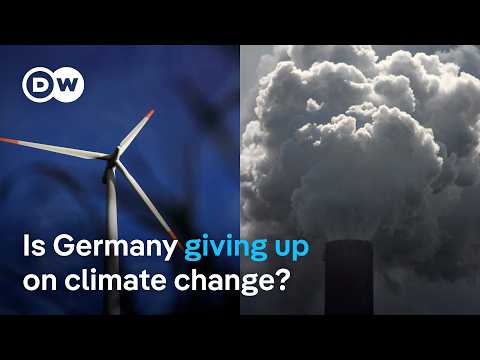
Source material: Is Germany turning its back on climate action? | DW News
Summary
Germany has made significant strides in its green transition, with wind and solar energy becoming integral to its energy mix. However, recent developments raise concerns about the country's commitment to climate goals, particularly under Chancellor Friedrich Mertz's leadership. Emissions reductions have slowed, and some sectors have even seen increases in greenhouse gas emissions.
Experts highlight that Germany's climate protection plan has significant shortcomings, with independent reviews indicating that the government may be overestimating the effectiveness of its proposed measures. The plan includes ambitious targets, such as a 65% reduction in emissions by 2030, but doubts persist regarding its feasibility.
The government's mixed messaging further complicates the situation. While officials publicly support ambitious climate goals, proposed policy changes, such as relaxing renewable energy requirements and cutting solar subsidies, signal a potential shift away from these commitments. Such inconsistencies could undermine public trust and market expectations.
Despite these challenges, Germany still maintains a relatively strong position in the global context of climate action. The country has strict climate laws and a significant share of its electricity generated from renewable sources. However, performance in sectors like transport and buildings lags behind other nations, indicating room for improvement.
Perspectives
short
Proponents of Germany's Climate Goals
- Highlight Germanys significant strides in renewable energy adoption
- Emphasize the importance of ambitious climate targets for future sustainability
- Point out Germanys strict climate laws and oversight mechanisms
- Acknowledge the high percentage of electricity generated from renewables
- Argue that Germany remains a leader in the global context despite challenges
Critics of Germany's Climate Strategy
- Warn that emissions reductions have slowed and some sectors are increasing emissions
- Claim the governments climate protection plan has significant flaws and lacks innovation
- Question the feasibility of achieving ambitious targets given proposed policy changes
- Highlight the risk of market participants adjusting strategies based on perceived leniency
Neutral / Shared
- Recognize that Germanys performance varies across different sectors
Metrics
emissions
0.1%
reduction in greenhouse gas emissions compared to 2024
This minimal reduction raises concerns about meeting future climate targets.
Last year's figures did just 0.1% on 2024
emissions_target
65%
Germany's legally enshrined emissions cut by 2030
Failure to meet this target could have significant environmental repercussions.
Germany enshrined in law a 65% cut in emissions by 2030
investment
8 billion euros EUR
additional green investment included in the climate protection program
This investment is crucial for facilitating the transition to renewable energy.
an extra 8 billion euros in green investment
wind_turbines
2000 units
additional wind turbines planned as part of the climate protection program
Increasing wind energy capacity is essential for reducing reliance on fossil fuels.
2000 additional wind turbines
renewable_energy_percentage
60%
percentage of electricity coming from renewables
This indicates Germany's progress in renewable energy adoption.
60% of electricity is now coming from renewables
heating_system_requirement
65%
requirement for new heating systems to use renewable energy
This requirement is crucial for meeting climate objectives.
the requirement that 65% of all newly installed heating must come from renewables
Key entities
Timeline highlights
00:00–05:00
Germany's green transition is jeopardized by inadequate emissions reductions and conflicting government policies. Experts express skepticism about the effectiveness of the government's climate protection plan and its commitment to climate goals.
- Germanys progress in its green transition is at risk, as the war in Iran underscores the need to shift from fossil fuels for climate and energy security
- The country has seen minimal reductions in greenhouse gas emissions, raising doubts about its ability to meet ambitious climate goals
- Experts argue that the governments climate protection plan is inadequate, highlighting significant gaps that could hinder effective emissions reductions
- Conflicting statements from Chancellor Friedrich Mertzs coalition have created uncertainty about Germanys commitment to climate objectives, potentially eroding public trust
- The independent climate advisory board has expressed doubts about the effectiveness of proposed measures, warning that the government may be overestimating their impact on emissions
- Concerns have been raised that policies like easing climate-neutral heating requirements and delaying the phase-out of combustion engine cars could lead to higher emissions, obstructing climate progress
05:00–10:00
The German government is considering removing the requirement for 65% of new heating systems to utilize renewable energy, which may hinder its climate objectives. Economy Minister Katarina Reiche's proposals to ease methane emission regulations and cut solar subsidies raise concerns about the government's commitment to climate goals.
- The German government is contemplating eliminating the requirement for 65% of new heating systems to use renewable energy, which could put pressure on its climate objectives
- Economy Minister Katarina Reiche has indicated that current emission targets may be too strict and is promoting long-term contracts for natural gas, raising doubts about Germanys commitment to climate goals
- Reiches proposal to ease methane emission regulations could complicate Germanys climate strategy, potentially creating a perception of leniency that might influence market behavior
- The governments inconsistent messaging on climate policy is troubling, as it may erode confidence among businesses, leading them to adjust strategies that could impede progress
- Germany still has a strong climate law and a growing renewable energy sector, but its performance in reducing transport and building emissions lags behind other nations
- While Germany is not failing in climate action, it is experiencing setbacks in certain areas and needs to clarify its signals and improve strategies to fulfill its climate commitments