Politics / Germany
Geopolitical Tensions in the Strait of Hormuz
A potential Bundeswehr deployment in the Strait of Hormuz is under discussion, contingent on a fragile ceasefire between Israel and Lebanon. The German government is considering military involvement as tensions in the region escalate, particularly following recent announcements regarding the reopening of the strait.
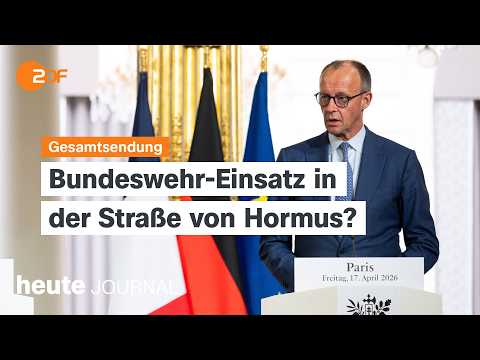
Source material: Today Journal from April 17, 2026: Hormuz Deployment, Falling Oil Prices, Ceasefire Israel-Lebanon
Summary
A potential Bundeswehr deployment in the Strait of Hormuz is under discussion, contingent on a fragile ceasefire between Israel and Lebanon. The German government is considering military involvement as tensions in the region escalate, particularly following recent announcements regarding the reopening of the strait.
Oil prices have dropped significantly, reflecting the economic implications of these geopolitical developments. The reopening of the strait has led to a notable decrease in oil prices, indicating the market's sensitivity to political events in the region.
Despite the ceasefire between Israel and Lebanon, reports indicate ongoing violations, suggesting that the situation remains volatile. The fragile nature of the ceasefire raises concerns about the stability of the region and the potential for renewed conflict.
Chancellor Merz's discussions in Paris highlight the complexities of international military cooperation and the need for a clear strategy. The proposed deployment is linked to broader geopolitical dynamics, including U.S. and Iranian relations.
Perspectives
Analysis of geopolitical tensions and economic impacts in the Strait of Hormuz.
Support for Bundeswehr Deployment
- Highlights the need for international military cooperation to ensure stability in the Strait of Hormuz
Opposition to Military Involvement
- Expresses skepticism about the effectiveness of military deployment in resolving geopolitical tensions
- Notes public opposition to military involvement, emphasizing concerns over rising energy prices
Neutral / Shared
- Acknowledges the fragile nature of the ceasefire between Israel and Lebanon
- Recognizes the significant drop in oil prices following announcements regarding the reopening of the Strait
Metrics
other
500 points
DAX index rise in response to geopolitical events
A sharp rise in the DAX indicates market optimism or volatility linked to political developments
the day is 500 points straight to the top
other
$90 USD
current price of North-East brand oil
The price of oil is a critical indicator of market stability and geopolitical tensions
The North-East brand of $90
other
doubled since 2020 %
increase in digital violence incidents
The rise in digital violence highlights the urgent need for legal reforms
the number of the most terrible cases of digital violence has been doubled since 2020
other
22,200 units
of apartments taken in February
An increase in building permits indicates potential economic growth despite geopolitical tensions
22,200 apartments were taken, which are around 24% more than one year before
Key entities
Timeline highlights
00:00–05:00
A potential Bundeswehr deployment in the Strait of Hormuz is under discussion, contingent on a ceasefire in Lebanon. The oil price has dropped significantly following announcements regarding the reopening of the strait.
- A tentative agreement has been reached between the U.S. and Iran regarding the reopening of the Strait of Hormuz, dependent on a ceasefire in Lebanon, though Iran has threatened to close the strait again if U.S
- European leaders, including representatives from France and the UK, are forming a coalition to enhance maritime security in the Strait of Hormuz, stressing the importance of a complete and unconditional reopening of the strait
- While U.S. President Trump expresses optimism about a potential peace deal with Iran, conflicting reports suggest that Irans agreement to open the strait may only be temporary and subject to specific shipping route restrictions
- Chancellor Merz of Germany is promoting a cautious stance on military involvement in the region, linking any German participation to the end of hostilities and the existence of a feasible military strategy
- The situation remains dynamic, with U.S. and Iranian officials providing inconsistent information about the status of the Strait of Hormuz, underscoring the complexities of the geopolitical environment
05:00–10:00
A potential Bundeswehr deployment in the Strait of Hormuz is being discussed, contingent on a fragile ceasefire between Israel and Lebanon. Following announcements regarding the reopening of the strait, oil prices have dropped significantly.
- Donald Trump is facing domestic pressure to finalize a deal with Iran, expecting a quicker concession from Iran than has occurred
- The U.S. intends to transport enriched uranium from Iran without offering financial compensation, while Iran refutes the existence of any new agreement
- The reopening of the Strait of Hormuz is linked to a fragile ceasefire between Israel and Lebanon, which is already showing signs of strain
- Market reactions to Trumps announcements were immediate, with the DAX index rising sharply and oil prices falling significantly, reflecting volatility in response to geopolitical events
- Concerns persist regarding the safety of shipping routes in the Strait of Hormuz, as many vessels are hesitant to navigate due to potential threats, including mines
10:00–15:00
A potential Bundeswehr deployment in the Strait of Hormuz is being discussed, contingent on a fragile ceasefire between Israel and Lebanon. Following announcements regarding the reopening of the strait, oil prices have dropped significantly.
- The ceasefire between Israel and Lebanon remains fragile, with ongoing tensions and reports of Israeli drone strikes despite the agreement
- Israeli Prime Minister Benjamin Netanyahu stresses the necessity of continued security measures in southern Lebanon, highlighting the persistent threat from Hezbollah
- The Lebanese government is attempting to negotiate with Israel while facing pressure from Hezbollah, complicating the peace process
- Concerns arise that the current agreement is more about temporary de-escalation than a genuine ceasefire, favoring Israeli operational freedom
- External influences, including Saudi Arabias efforts to mediate disarmament discussions with Iran regarding Hezbollah, further complicate the situation
15:00–20:00
The German government is considering a Bundeswehr deployment in the Strait of Hormuz, contingent on a fragile ceasefire between Israel and Lebanon. Oil prices have dropped significantly following announcements regarding the reopening of the strait, reflecting the economic implications of these geopolitical developments.
- The German government is contemplating a Bundeswehr deployment in the Strait of Hormuz, as discussed by Chancellor Merz during a coalition meeting in Paris, contingent on specific conditions
- Oil prices have dropped by over ten percent following announcements of a temporary opening of the Strait of Hormuz, reflecting the economic impact of geopolitical developments
- The ceasefire between Israel and Lebanon is fragile, with reports of violations from both sides, indicating ongoing tensions despite the official truce
- Justice Minister Hubig has proposed new legislation to enhance protections for victims of digital violence, addressing a significant rise in incidents since 2020
- The proposed law aims to criminalize various forms of digital abuse, including unauthorized sharing of intimate images and the creation of deepfake pornography, marking a shift in legal frameworks to tackle modern challenges
20:00–25:00
The German government is contemplating a Bundeswehr deployment in the Strait of Hormuz, dependent on a fragile ceasefire between Israel and Lebanon. Oil prices have significantly decreased following announcements regarding the reopening of the strait, indicating economic repercussions tied to geopolitical events.
- Jacqueline Bergmann expresses a personal connection to the stranded humpback whale named Hope, emphasizing the emotional toll on visitors who feel powerless regarding its situation
- The whales plight has ignited protests against mass animal farming and climate change, while also exposing online threats aimed at those involved in its rescue
- Hope has become a symbol of both fascination and concern, drawing attention due to the dramatic rescue efforts, which include plans to lift the whale with a crane and relocate it to deeper waters
- Despite an increase in building permits in Germany, experts remain cautious about the impact of the ongoing Iran conflict on construction activity, highlighting broader economic uncertainties
25:00–30:00
The German government is considering a Bundeswehr deployment in the Strait of Hormuz, contingent on a fragile ceasefire between Israel and Lebanon. Oil prices have dropped significantly following announcements regarding the reopening of the strait, reflecting the economic implications of these geopolitical developments.
- Chancellor Merzs approval ratings have dropped significantly, with only 27% of citizens satisfied with the coalition governments performance, down from 34% in March
- Public dissatisfaction is evident, as 63% of respondents rate the governments performance negatively, and only 30% believe the Chancellor is doing well
- Internal conflicts within the coalition have diminished public confidence in their collaboration, with just 18% viewing the coalitions cooperation positively
- A significant 81% of Germans feel the government is insufficiently addressing rising energy prices, expressing skepticism about the effectiveness of measures like the fuel discount and crisis premium
- Concerns about the ongoing conflict in Iran are high, with 87% of respondents not expecting a resolution soon, and 93% opposing any proposed military involvement by Germany
- The recent removal of EU-skeptic Viktor Orban in Hungary has sparked optimism regarding improved cooperation within the EU, with 74% of respondents anticipating positive changes