Politics / France
France politics page with daily media monitoring across AFP, Le Monde and Le Figaro, structured summaries of domestic political developments and a country-level press overview.
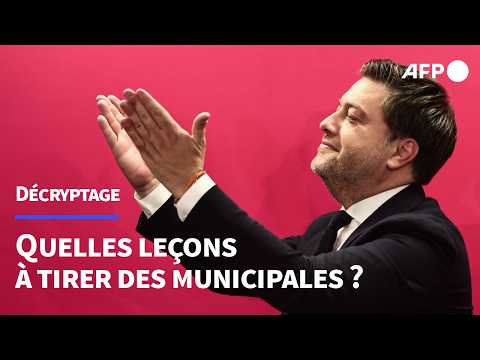
Municipales : qui sort vraiment gagnant ? | AFP
Summary
The left achieved significant victories in major cities such as Paris, Lyon, and Marseille, yet struggled to form effective alliances, particularly with the Socialists. The National Rally (RN) is gaining traction in rural areas, indicating a shift in voter preferences that may influence future elections. The fragmentation among leftist parties raises concerns about their electoral viability, especially in cities like Toulouse, where disunity could lead to a loss of support.
Discussions of a joint candidacy between Renaissance and the Republicans are emerging, potentially reshaping the political landscape for future elections. Voter participation has reached historically low levels, reflecting a growing disconnection between the public and political institutions. This decline in engagement may stem from two years of political instability and a crisis of confidence in politicians.
Perspectives
short
Left Parties
- Achieved victories in major cities like Paris, Lyon, and Marseille
- Struggled to form effective alliances, particularly with the Socialists
- Faced fragmentation that raises concerns about electoral viability
Right and Center Parties
- Discussed potential joint candidacy between Renaissance and Republicans
- Maintained a strong presence despite some losses in cities
- Exhibited a capacity to strengthen their position for upcoming elections
Neutral / Shared
- Voter participation reached historically low levels
- Political instability contributed to public disillusionment
Metrics
participation
historically weak %
voter participation levels
This reflects a significant crisis of confidence in political institutions.
the most weak of the 5th Republic
Key entities
Timeline highlights
00:00–05:00
The left made notable gains in major cities like Paris, Lyon, and Marseille, but struggled to form effective alliances, particularly with the Socialists. The National Rally is gaining traction in rural areas, indicating a shift in voter preferences that may influence future elections.
- The left achieved significant victories in Paris, Lyon, and Marseille, but failed to form effective alliances, particularly between La France Insoumise and the Socialists, complicating their overall success
- The National Rally is expanding its influence in medium-sized and rural towns, indicating a shift in voter preferences that could impact future elections
- La France Insoumise made gains in suburban areas like Saint-Denis and La Courneuve, reflecting increasing support for leftist policies among urban voters
- The Republican Party won key cities such as Brest and Le Havre, signaling a resurgence that positions them favorably for upcoming national elections
- The breakdown of alliances among leftist parties in cities like Toulouse and Limoges highlights their difficulties in uniting against common opponents, potentially undermining their electoral strength
- The environmentalist party suffered losses in cities like Bordeaux and Strasbourg, raising concerns about their political viability and strategy for future elections
05:00–10:00
The political landscape is shifting as discussions of a joint candidacy between Renaissance and the Republicans emerge, potentially reshaping future elections. Voter participation has reached historically low levels, indicating a growing disconnection between the public and political institutions.
- The potential for a joint candidacy is expected to ignite discussions among political factions, particularly between Renaissance and the Republicans. This could reshape the political landscape as candidates prepare for the upcoming presidential campaign
- Renaissance, led by Gabriel Atal, has seen a decline in city wins compared to the right, despite some notable victories. This suggests a weakening position for the party as it heads into future elections
- The left is experiencing unprecedented disunity, complicating its ability to present a cohesive front. This fragmentation could hinder their effectiveness in upcoming political contests
- The right, while losing some cities, has also secured significant victories, indicating a mixed but resilient performance. This duality adds to doubts about their overall strength moving forward
- Voter participation has reached historically low levels, reflecting a growing disconnection between the public and political institutions. This trend signals a broader crisis of confidence that could impact future electoral engagement
- The political instability of the past two years, exacerbated by international events, has contributed to this erosion of trust. As local elections are affected, the implications for future governance and policy-making are significant