Politics / Croatia
Jasenovac Commemoration and Historical Awareness
Jasenovac serves as a significant site of remembrance for the victims of the Ustaša concentration camp, where individuals were targeted based on their differences. The commemoration emphasizes the importance of acknowledging the atrocities committed during World War II and the need for educational reforms to address historical awareness.
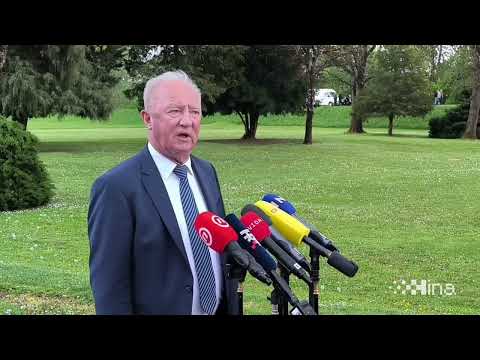
Source material: Jasenovac: Statements for the Media by Stipe Mesić and Franjo Habulin
Summary
Jasenovac serves as a significant site of remembrance for the victims of the Ustaša concentration camp, where individuals were targeted based on their differences. The commemoration emphasizes the importance of acknowledging the atrocities committed during World War II and the need for educational reforms to address historical awareness.
Speakers at the event condemned the Ustaša regime for its severe crimes, highlighting the necessity of confronting this dark chapter in Croatian history. The discussion raised concerns about the lack of awareness among youth regarding the Ustaša's actions and the implications of misinformation.
A call for educational reforms was made to ensure future generations understand the historical significance of Jasenovac and the broader implications of the Ustaša regime's actions. The importance of commemorating the victims was emphasized as a crucial step in addressing the legacy of these events.
The narrative surrounding Jasenovac also touches on the complexities of collective memory and the need for a nuanced understanding of history. The speakers argued against equating the Ustaša regime with the Croatian people, stressing the importance of recognizing the distinct roles of perpetrators and victims.
Perspectives
short
Support for Educational Reform
- Advocates for educational reforms to address historical awareness regarding the Ustaša regime
- Emphasizes the importance of commemorating victims to confront the legacy of past atrocities
Critique of Historical Equivalence
- Rejects the notion of equating the Ustaša regime with the Croatian people as unfounded
- Calls for a nuanced understanding of history that distinguishes between perpetrators and victims
Neutral / Shared
- Highlights the need for a cultural shift in understanding the historical context of World War II
- Raises concerns about the misinterpretation of history among youth
Key entities
Timeline highlights
00:00–05:00
Jasenovac is recognized as a site of mass murder, where individuals were targeted based on their differences. The Ustaša regime is condemned for its severe atrocities during World War II, highlighting the need for educational reforms to address historical awareness.
- Jasenovac is highlighted as a site of mass murder, where individuals were targeted for their differences, including religion and ethnicity, rather than a conventional concentration camp
- The Ustaša regime is condemned as a criminal entity responsible for severe atrocities during World War II, including the creation of concentration camps
- Concerns are raised about the lack of awareness and education regarding the Ustašas crimes, suggesting that misinformation contributes to a troubling nostalgia for this dark chapter in history
- There is a call for educational reforms to ensure that future generations grasp the historical significance of Jasenovac and the broader implications of the Ustašas actions
- The importance of commemorating the victims is emphasized, along with the necessity to confront the legacy of the Ustaša regime in modern Croatian society
05:00–10:00
The commemoration at Jasenovac focused on remembering the victims of the Ustaša concentration camp and emphasized the need for educational reforms regarding historical narratives. Speakers highlighted the involvement of Croatian citizens in the liberation struggle and condemned the atrocities committed by the Ustaša regime.
- Against equating the Ustaša regime with the Croatian people, stating that such comparisons are unfounded and do not support claims of genocide against the Croatian nation
- He highlights the significant involvement of approximately 210,000 Croatian citizens in the liberation struggle against Nazi occupation
- The need for a cultural shift in understanding the historical context of World War II and the Ustaša regime is emphasized, with the speaker suggesting that achieving a normalized perspective will take time
- Concerns are raised about the misinterpretation of history among the youth, prompting a call for educational reforms to better address these issues
- The importance of remembering the victims of the Jasenovac concentration camp is underscored, along with a condemnation of the Ustaša regimes crimes, advocating for collective acknowledgment of this dark chapter in history