Politics / Croatia
Exploring Cosmic Phenomena and Space Exploration
The discussion emphasizes the significance of skill and strategy in competition, likening it to a tournament. It highlights the cyclical nature of time, particularly Jupiter's 305-day year, and the need for preparedness in space exploration.
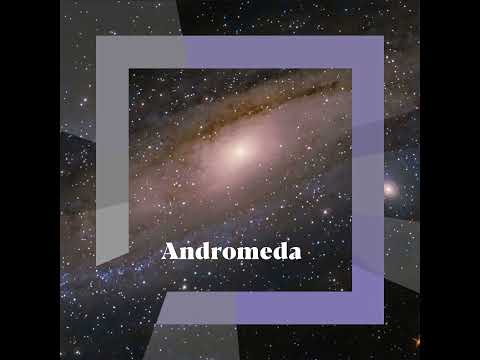
Source material: Andromeda, 21.04.2026.
Summary
The discussion emphasizes the significance of skill and strategy in competition, likening it to a tournament. It highlights the cyclical nature of time, particularly Jupiter's 305-day year, and the need for preparedness in space exploration.
The relationship between gravity and magnetic energy is explored, particularly their influence on celestial movements. Historical beliefs about galactic emptiness have been challenged by recent findings, prompting enthusiasm for future discoveries in physics.
The importance of astronomical research and key historical milestones in astrophysics is highlighted. Upcoming events aim to enhance public awareness and education about solar energy and celestial phenomena.
The Nebiosk peninsula is recognized as a prime location for astronomical observation, especially in winter. Technological advancements in energy generation are explored, focusing on radio-resistant thermoelectric generators.
Perspectives
Analysis of cosmic phenomena and space exploration.
Supporters of Space Exploration
- Emphasize the importance of technological advancements in understanding cosmic phenomena
- Highlight the necessity of preparedness for challenges in space exploration
Skeptics of Current Models
- Question the reliability of existing gravitational models and their assumptions
- Raise concerns about the implications of dark energy and its measurement
Neutral / Shared
- Acknowledge the historical context of astronomical research and its evolution
- Recognize the role of public awareness in advancing space exploration initiatives
Metrics
other
40th and 8 years of age in the atmosphere
historical evolution of energy sources
Understanding the timeline of energy development is crucial for contextualizing current advancements
These are the 40th and 8 years of age in the atmosphere.
other
15 kilometers per second km/s
speed of Major 2
This speed is relevant for understanding the dynamics of celestial movements
Major 2 has about 15 kilometers per second
other
30-12 kilometers in a second km/s
speed range mentioned
This range indicates variability in celestial speeds that could affect exploration
somewhere between 30-12 kilometers in a second
other
50 million galaxies units
of galaxies observed by the telescope
This represents a significant increase in observational capacity compared to previous efforts
we are talking about 50 million galaxies, which is definitely the biggest success.
other
20 million stars units
of stars categorized by the telescope's algorithm
This contributes to a deeper understanding of stellar populations and their characteristics
they have a 20 million star in our current way.
other
10,000 seats
internet infrastructure capacity
This indicates significant potential for internet access expansion
We have two doors that have about 10,000 seats for the Internet.
Key entities
Timeline highlights
00:00–05:00
The discussion emphasizes the importance of skill and strategy in competition, likening it to a tournament. It also highlights the cyclical nature of time, particularly Jupiter's 305-day year, and the need for preparedness in space exploration.
- The discussion compares competition to a tournament, highlighting the significance of skill and strategy in determining the best players
- Attention is drawn to the cyclical nature of time, particularly Jupiters 305-day year, which aids in understanding celestial phenomena
- The speaker emphasizes the need for preparedness in addressing challenges of life in space, underlining the role of technology and innovation
- The development of the NEMI is discussed, linking it to historical contexts and the advancement of human capabilities in space exploration
- There is a call for individuals to be ready for the realities of living in space, reflecting broader concerns about humanitys future in extraterrestrial environments
05:00–10:00
The discussion focuses on the relationship between gravity and magnetic energy, particularly their influence on celestial movements. Historical beliefs about galactic emptiness have been challenged by recent findings, prompting enthusiasm for future discoveries in physics.
- The relationship between gravity and magnetic energy, particularly how they influence the movements of celestial bodies
- Understanding the effects of gravity on astronomical phenomena is emphasized, including the behavior of clouds in space and the spherical shape of celestial objects
- Historical perspectives on gravity studies are highlighted, revealing that earlier beliefs about the emptiness of certain galactic regions have been contradicted by recent findings
- Participants express enthusiasm for future discoveries in physics, especially regarding how gravity studies can enhance our understanding of different light spectrums
- The implications of these findings for our comprehension of the universe and reality are explored, indicating a need for further investigation into these subjects
10:00–15:00
The discussion highlights the importance of astronomical research and key historical milestones in astrophysics. Upcoming events aim to enhance public awareness and education about solar energy and celestial phenomena.
- The significance of engaging in astronomical research, particularly advancements made since the early 1990s
- Ante Radonic points out key historical milestones in astrophysics, notably the impact of telescopes on our understanding of solar radiation and celestial bodies
- An upcoming 10-day astronomy program in Darvaro will focus on showcasing the suns energy and radiance
- A solar radiation project is planned at a castle observatory to boost public awareness and education about astronomy
- The narrative also references the historical importance of the Metoreo area and its association with notable astronomical events
15:00–20:00
The Nebiosk peninsula, established in the 19th century, is a prime location for astronomical observation, especially in winter. Technological advancements in energy generation are explored, focusing on radio-resistant thermoelectric generators.
- The Nebiosk peninsula, established in the 19th century, is recognized as a prime location for astronomical observation, especially in winter when the sun is nearer
- This region is esteemed in the astronomy community, particularly due to the Great Dalis proximity to stars, making it a favored spot for stargazers
- The visibility of celestial events, such as comets, stressing the significance of timing and location for optimal viewing
- Technological advancements in energy generation are explored, focusing on radio-resistant thermoelectric generators that use concrete and dioxide for fuel production
- The historical evolution of energy sources is traced from 1797 to the present, detailing the development of instruments for measuring energy and electricity
20:00–25:00
The discussion emphasizes the significance of the Sun's visibility in enhancing global awareness and understanding of space. It highlights the challenges posed by distance in communication with distant populations, specifically those 170 Austerlomian units away.
- The visibility of the Sun plays a crucial role in enhancing global awareness, as its position can improve clarity for observers on Earth
- Judges emphasize that understanding space and energy is vital for future advancements, particularly regarding electric energy and its effects on communication
- Distance is a significant factor, with estimates suggesting it could take thousands of years to reach the old people, who are currently 170 Austerlomian units away
- A unified approach is necessary for successful exploration, highlighting the importance of collaboration and strategic planning
- Technological innovations, such as a new German telescope, are essential for deepening our understanding of the universe, particularly due to its advanced energy capabilities
25:00–30:00
The discussion centers on a 4-meter telescope capable of observing around 50 million galaxies, significantly enhancing previous astronomical surveys. It employs advanced robotic controls and sophisticated algorithms to categorize approximately 20 million stars and analyze the chemical composition of celestial bodies through spectroscopy.
- The discussed telescope is a 4-meter instrument that captures high-precision images of galaxies using advanced robotic controls
- It can observe multiple galaxies simultaneously, successfully surveying around 50 million galaxies, significantly surpassing previous efforts
- A sophisticated algorithm is utilized to identify and categorize stars and galaxies, contributing to a database of approximately 20 million stars
- Spectroscopy is emphasized as a vital technique for analyzing the chemical composition of celestial bodies, enabling the detection of various elements
- Measuring light absorption in distant celestial objects is crucial for diagnosing their chemical makeup and understanding temperature variations