Politics / China
China politics page with daily media monitoring across CCTV, China Daily, Global Times and Caixin, structured summaries of domestic political developments and a country-level press overview.
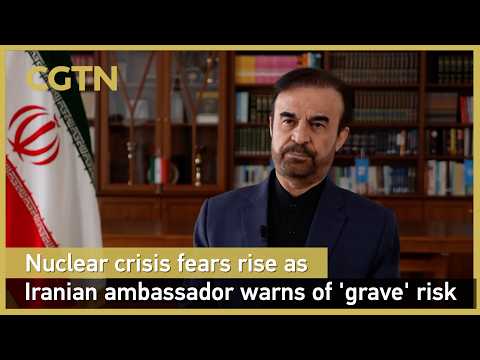
Nuclear crisis fears rise as Iranian ambassador warns of 'grave' risk #worldnow
Summary
Iran's ambassador to the IAEA warns of severe consequences if the U.S. targets its nuclear power plants, particularly the Bushehr facility. He emphasizes that such actions would violate international law and could lead to widespread environmental contamination in the Persian Gulf. The ambassador claims that the U.S. has already committed acts of aggression against Iran, which he categorizes as war crimes.
The ambassador asserts that Iran will respond decisively to any attacks on its infrastructure, indicating a policy of zero restraint. He highlights the importance of the Bushehr power plant for electricity supply not only in Iran but also for neighboring countries, stressing that any disruption could have grave implications for millions.
Despite reports of damage to the Bushehr facility, authorities have not detected increased radiation levels, suggesting current safety measures are effective. The ambassador expresses skepticism about the U.S.'s intentions, suggesting that threats may be aimed at creating instability in the region.
Iran demands compensation for damages caused by foreign aggression and rejects any temporary ceasefire that does not ensure long-term peace. The ambassador criticizes the IAEA for its inaction in addressing attacks on Iran's nuclear facilities, calling for a special session to condemn aggressors.
Perspectives
short
Iran
- Warns of grave consequences if U.S. attacks nuclear power plants
- Claims U.S. actions violate international law and constitute aggression
- Asserts commitment to defend against any attacks on infrastructure
- Highlights potential environmental contamination from nuclear incidents
- Demands compensation for damages caused by foreign aggression
- Rejects temporary ceasefires that do not ensure long-term peace
United States
- Threatens to target Iranian nuclear facilities
- Accused of committing acts of aggression against Iran
- Engages in military actions that Iran claims violate international law
- Reportedly seeks to create instability in the region
Neutral / Shared
- Reports indicate damage to the Bushehr facility but no increase in radiation levels
- IAEA emphasizes the need to protect nuclear facilities during wartime
Metrics
casualties
more than 160 students
casualties from the first day of attacks
This highlights the severe impact of military actions on civilians.
they attacked the primary school, killing more than 160 students.
radiation_level
there hasn't been any increase in the radiation level in that area units
current safety status of the Bushehr power plant
This indicates that immediate threats to public safety are being managed.
there hasn't been any increase in the radiation level in that area
damage_report
the building being destroyed is very close to the reactor units
proximity of damage to the reactor at Bushehr
Proximity to the reactor raises concerns about potential radiological consequences.
the building being destroyed is very close to the reactor
other
any attack on the nuclear facilities are prohibited
IAEA resolutions regarding nuclear facility attacks
This highlights the international legal framework surrounding nuclear safety.
any attack on the nuclear facilities are prohibited and it will cause the damages to the environment and the health of the people.
other
the ships, the owners of the ships are afraid of the danger of crossing the straight-off amuse
Impact of military threats on maritime navigation
This indicates a significant risk to international shipping routes.
the owners of the ships are afraid of the danger of crossing the straight-off amuse.
other
official letters exchanged
communication between Iran and the IAEA
This indicates ongoing dialogue despite tensions.
We have exchange of the official letters
other
no nuclear facility should be attacked
IAEA's stance on nuclear facility protection
This reflects a global consensus on nuclear safety.
no nuclear facility should be attacked even during the wartime
other
no possibility for any kind of implementation
Iran's safety measures under current conditions
This highlights the challenges faced in ensuring nuclear safety.
there is no possibility for any kind of implementation of the safe-carrying Iran because of the war situation
Key entities
Timeline highlights
00:00–05:00
U.S. threats against Iran's Bushehr power plant are perceived as violations of international law and acts of aggression.
- U.S. threats against Irans Bushehr power plant are viewed as violations of international law and acts of aggression
- Irans ambassador warns that attacks on nuclear facilities could lead to widespread radiation contamination, impacting drinking water and requiring evacuations
- The ongoing conflict has caused significant civilian casualties and infrastructure damage in Iran, which the ambassador claims violates international humanitarian law
- Iran has adopted a policy of zero restraint against attacks on its infrastructure, signaling a commitment to defend its sovereignty
- The ambassador suggests that the U.S. may not grasp the serious consequences of its threats or may be intentionally escalating regional tensions
- An attack on the Bushehr power plant is framed as a potential crime against humanity, prompting calls for international awareness and restraint
05:00–10:00
Iran emphasizes the necessity of deterrence against attacks on its infrastructure, asserting that it will respond decisively to any aggression. The Bushehr power plant remains under scrutiny due to reported damage, but authorities have not detected increased radiation levels, indicating current safety measures are effective.
- Iran asserts it will respond decisively to any attacks on its infrastructure, emphasizing the importance of deterrence for regional stability
- The Bushehr power plant is under heightened scrutiny due to reported damage near the reactor, raising concerns about potential radioactive releases
- Authorities have not detected increased radiation levels at the Bushehr site, suggesting that immediate threats are currently managed, but safety measures are in place
- Irans Natanz facility has experienced attacks without significant radiation increases, underscoring vulnerabilities in its nuclear infrastructure amid rising tensions
- No negotiations have taken place between Iran and the U.S, despite claims of productive discussions
- Iran believes a comprehensive peace agreement is essential for long-term regional stability, aiming to address the root causes of ongoing conflicts
10:00–15:00
Iran asserts its commitment to defend its nuclear facilities against military actions, emphasizing the potential environmental and health repercussions of such attacks. The IAEA is criticized for its perceived inaction regarding aggressions against Iran's nuclear infrastructure.
- Iran warns that any military action against its nuclear facilities will provoke a strong defense, indicating a commitment to ongoing conflict rather than negotiations
- The IAEA has urged military restraint to avoid nuclear accidents, but Iran believes the agency should take stronger action against aggressors
- Iran claims that U.S. and Israeli attacks on its nuclear sites have created a hazardous situation for maritime navigation in the Strait of Hormuz
- The Iranian ambassador criticizes U.S. foreign policy as deceptive, complicating the prospects for peace in the region
- Iran has expressed dissatisfaction with the IAEAs lack of response to previous attacks on its nuclear facilities, calling for a special session to address these issues
- The ambassador warns that any attack on Irans nuclear infrastructure could lead to severe environmental and health repercussions for the region
15:00–20:00
Iran has communicated with the IAEA regarding threats to its nuclear facilities, highlighting the risks to nuclear safety amid ongoing conflicts. The IAEA's Director General has reiterated the importance of protecting nuclear facilities during wartime, but Iran's ability to implement safety measures is severely limited by the conflict.
- Iran has communicated with the IAEA about threats to its nuclear facilities, emphasizing the risks to nuclear safety amid ongoing conflicts
- The IAEAs Director General has stressed the need to protect nuclear facilities during wartime, reflecting a global consensus on preventing nuclear incidents
- Irans ongoing conflict severely limits its ability to implement safety measures at its nuclear sites, raising concerns about potential disasters
- Iran is willing to engage in future discussions with the IAEA if peace is established, but current hostilities hinder meaningful dialogue on nuclear safety
- The correspondence between Iranian officials and the IAEA shows Irans commitment to nuclear safety, though tensions undermine the effectiveness of these communications
- The situation remains unstable, with escalating attacks on nuclear sites highlighting the urgent need for diplomatic efforts to protect nuclear infrastructure