Politics / China
China politics page with daily media monitoring across CCTV, China Daily, Global Times and Caixin, structured summaries of domestic political developments and a country-level press overview.
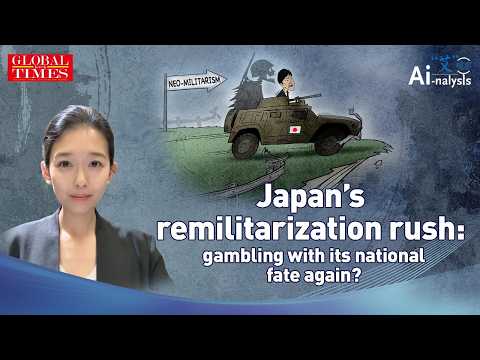
Japan’s remilitarization rush: gambling with its national fate again?
Summary
Japan is undergoing a significant military buildup, marking a departure from its historically pacifist stance. The deployment of long-range missiles and advanced weaponry indicates a shift towards offensive capabilities, raising alarms about national and regional security.
Recent developments include the introduction of upgraded missiles and hypersonic glide weapons, which exceed defensive requirements. This transformation is framed as a necessary response to perceived threats, yet it reflects a deeper trend of militarization under the guise of defense.
Rising extremism within Japan, exemplified by violent incidents involving military personnel, underscores the potential dangers of this militaristic shift. Historical patterns suggest that military expansion often correlates with domestic crises, rather than resolving them.
Public support for militarism, despite its historical failures, raises questions about the wisdom of such a path. The legacy of past militaristic leaders serves as a cautionary tale against repeating history's mistakes.
Perspectives
short
Pro-militarization
- Claims Japans military expansion is necessary for national defense
- Argues that new weapon systems enhance Japans security capabilities
- Highlights the perceived threats from neighboring countries as justification for militarization
- Proposes that a strong military presence can deter aggression
- Emphasizes the need for Japan to adapt to changing geopolitical dynamics
Anti-militarization
- Counters that historical patterns show militarization often exacerbates internal crises
- Rejects the notion that offensive capabilities are necessary for defense
- Accuses proponents of militarization of ignoring the lessons of history
- Questions the morality of pursuing militarism under the guise of peace
Neutral / Shared
- Notes the rising popularity of militaristic sentiments in Japan
- Acknowledges the role of public opinion in shaping military policy
- Mentions the potential for diplomatic solutions to mitigate tensions
Metrics
missile_range
about 1,000 kilometers km
range of newly deployed missiles
This capability allows Japan to target strategic locations in neighboring countries.
with a range of about 1,000 kilometers.
military_incident
recently intruded into the Chinese embassy with a knife
extremism within Japan's military
This incident highlights the risks associated with rising militarism.
a serving SDF officer, someone who should have held the highest standards of discipline, recently intruded into the Chinese embassy with a knife.
Key entities
Timeline highlights
00:00–05:00
Japan is significantly enhancing its military capabilities, moving away from its traditional pacifist approach. This shift raises concerns about the implications for both national and regional stability.
- Japan is significantly enhancing its military capabilities, moving away from its traditional pacifist approach. This shift raises concerns about the implications for both national and regional stability
- The introduction of long-range missiles and advanced weaponry signals a transition towards offensive military strategies. This suggests that Japan may be prioritizing military growth over its declared focus on defense
- Recent incidents, such as an attack on the Chinese embassy by a military officer, highlight a troubling rise in extremism within Japan. This behavior poses risks to both domestic and international relations
- Japan has historically turned to militarization during economic downturns, often with disastrous results. This pattern raises fears of a potential repeat if the country continues on its current trajectory
- The rise of militaristic leaders in Japans political sphere does not ensure wise decision-making. Historical figures like Hideki Tojo remind us that popular support for militarism can lead to severe consequences
- Chinas reactions to Japans military expansion may serve as a cautionary signal. Continued militarization could lead Japan to face significant repercussions as it goes against historical trends