Politics / Brazil
Cármen Lúcia's Call for Transparency
Cármen Lúcia, a minister of Brazil's Supreme Court, emphasized the need for increased transparency to enhance the court's public image and internal relations. She highlighted the personal challenges faced by women in high-profile positions, particularly regarding sexism and public scrutiny.
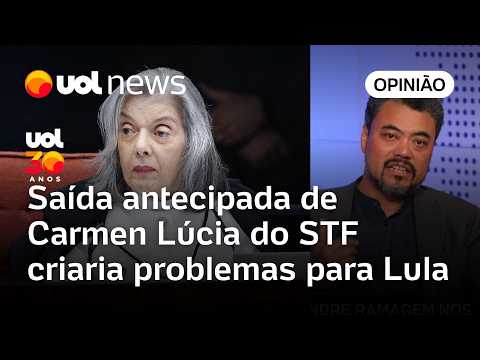
Source material: Saída antecipada de Carmen Lúcia do STF criaria problemas para Lula | Sakamoto
Summary
Cármen Lúcia, a minister of Brazil's Supreme Court, emphasized the need for increased transparency to enhance the court's public image and internal relations. She highlighted the personal challenges faced by women in high-profile positions, particularly regarding sexism and public scrutiny.
Lúcia is under significant pressure related to the Magnitsky Law, and her potential resignation could complicate President Lula's administration. She advocates for transparency to combat corruption and improve public trust, amidst severe misogynistic attacks that have affected her position.
Criticism directed at Lúcia reflects broader societal issues, including misogyny and political maneuvering within the court. The fragmentation within the Supreme Court indicates diverse political pressures, leading to dissatisfaction among justices.
Lúcia's call for transparency assumes that public access to information will inherently lead to accountability, yet it overlooks the complexities of influence and power dynamics within the system. Without addressing the underlying culture of sexism and potential corruption, merely documenting judges' activities may not suffice to restore trust.
Perspectives
short
Cármen Lúcia's Advocacy for Transparency
- Calls for increased transparency to improve the Supreme Courts public image
- Highlights personal challenges faced by women in high-profile positions
- Advocates for transparency to combat corruption and enhance public trust
Criticism and Challenges Faced by Cármen Lúcia
- Faces significant pressures related to the Magnitsky Law
- Experiences severe misogynistic attacks affecting her position
Neutral / Shared
- Criticism directed at Lúcia reflects broader societal issues
- Fragmentation within the Supreme Court indicates diverse political pressures
Key entities
Timeline highlights
00:00–05:00
Cármen Lúcia, a minister of Brazil's Supreme Court, called for increased transparency to improve the court's public image and internal relations. She highlighted the personal challenges faced by women in high-profile positions, particularly regarding sexism and public scrutiny.
- Cármen Lúcia, a minister of Brazils Supreme Court, emphasized the need for greater transparency to enhance the courts public image and internal relations. This call for openness is crucial for restoring trust in the judiciary
- She revealed that her family has urged her to resign due to the sexist attacks she faces. This highlights the personal toll that public service can take, especially for women in high-profile positions
- Lúcia criticized the current lack of transparency in the Supreme Court, arguing that public access to information about judges activities is essential. Without this transparency, the integrity of the judiciary could be compromised
- The minister pointed out that all meetings and interactions of judges should be documented and made public. This would allow civil society and the media to hold the judiciary accountable and ensure that judges are not influenced by outside pressures
- Concerns were raised about the potential for corruption and undue influence within the judiciary if transparency is not prioritized. The absence of clear records can lead to a lack of trust in judicial decisions
- Lúcias statements reflect a broader issue of gender discrimination in politics, as she noted the pervasive culture of sexism. Addressing these challenges is vital for fostering a more equitable environment in public service
05:00–10:00
Cármen Lúcia is facing significant pressures within the Supreme Court, particularly related to the Magnitsky Law, and her potential resignation could complicate President Lula's administration. She advocates for increased transparency to combat corruption and improve public trust, amidst severe misogynistic attacks that have affected her position.
- Cármen Lúcia is weary of the pressures from the Supreme Court, especially concerning the Magnitsky Law, and her potential resignation could pose significant challenges for President Lula
- The minister has endured severe misogynistic attacks, prompting her family to encourage her to resign, highlighting the pervasive gender-based hostility in public office
- Lúcia advocates for greater transparency within the Supreme Court to enhance its public image and internal relations, which is crucial for preventing corruption and upholding democratic integrity
- Critics contend that the current lack of transparency in judicial activities facilitates undue influence and lobbying, undermining public trust in the judiciary
- Internal tensions in the Supreme Court are intensified by external criticisms, particularly regarding recent electoral decisions, indicating a growing divide among the justices
- Lúcias possible departure could trigger a scramble for her position, complicating the political landscape for Lulas administration
10:00–15:00
Cármen Lúcia is considering resignation from the Supreme Court due to internal and external pressures, which may pose challenges for President Lula. The fragmentation within the court reflects diverse political pressures and has led to dissatisfaction among justices.
- Cármen Lúcia is contemplating resignation from the Supreme Court due to frustrations with colleagues and external attacks, which could create political challenges for President Lula
- The Supreme Court is fragmented into various factions, complicating decision-making and reflecting diverse political pressures
- Lúcias experiences with misogynistic attacks have contributed to her dissatisfaction, highlighting broader issues of gender discrimination in public office
- External criticisms are escalating tensions within the Supreme Court, undermining its cohesion and effectiveness
- Recent electoral decisions by the Supreme Court have led to discontent among justices, prompting calls for clearer guidelines in future rulings
- Lúcias potential resignation could trigger a scramble for her position, impacting the political landscape and benefiting rivals