Politics / Brazil
Polling Trends in Brazilian Elections
Recent polling data from Datafolha indicates a competitive race between Flávio Bolsonaro and Lula in the upcoming elections. In the first round, Lula leads with 39% of the votes, while Bolsonaro follows closely with 35%. In a potential second round, Bolsonaro slightly edges out Lula with 46% to 45%.
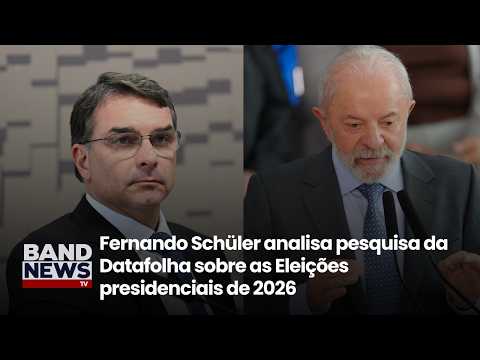
Source material: Datafolha: Flávio Bolsonaro aparece à frente de Lula no 2° turno | BandNews TV
Summary
Recent polling data from Datafolha indicates a competitive race between Flávio Bolsonaro and Lula in the upcoming elections. In the first round, Lula leads with 39% of the votes, while Bolsonaro follows closely with 35%. In a potential second round, Bolsonaro slightly edges out Lula with 46% to 45%.
The polling results reflect shifting voter preferences, potentially influenced by Bolsonaro's moderate campaign strategy. His recent focus on women's issues and distancing from his father's controversial legacy may contribute to his rising support.
Economic factors also play a crucial role in shaping voter sentiment. Current inflation rates and government approval ratings are critical indicators that could sway public opinion as the election approaches.
Lula's indecision regarding his candidacy may further complicate the electoral landscape. As he navigates criticism and fluctuating approval ratings, the dynamics of the race could change significantly in the coming months.
Perspectives
short
Flávio Bolsonaro
- Leads in recent polls against Lula in a potential second round
- Gains support through a moderate campaign strategy
- Focuses on womens issues to broaden appeal
Lula
- Currently leads in the first round with 39% of votes
- Faces challenges due to indecision about candidacy
- Struggles with high rejection rates and economic criticism
Neutral / Shared
- Polling data reflects shifting voter preferences
- Economic factors such as inflation impact voter sentiment
- Approval ratings fluctuate, influencing electoral dynamics
Metrics
votes
39%
Lula's voter intentions in the first round
Indicates Lula's current support level among voters.
Lula leaders with 39% of votes
votes
35%
Flávio Bolsonaro's voter intentions in the first round
Highlights the competitive nature of the election.
followed by the Flávio Bolsonaro senator with 35
votes
46%
Flávio Bolsonaro's support in the second round
Indicates a potential lead over Lula in a runoff scenario.
Flávio Bolsonaro has 46% of votes
votes
45%
Lula's support in the second round
Shows the closeness of the race in a hypothetical runoff.
with 45% of Lula
voters
2004 units
Total number of voters surveyed in the poll
Provides a basis for the reliability of the polling data.
The Tafolian research heard 2004 voters
cities
137 units
Number of cities included in the poll
Indicates the geographical scope of the survey.
in 137 cities
approval
27 for 25 %
government approval ratings
A decline in approval ratings can indicate voter dissatisfaction and influence election outcomes.
the approval of the government, it wants two points, it was 27 for 25
rejection
51 %
government rejection ratings
High rejection rates can signal significant opposition to the current administration, affecting electoral strategies.
the rejection of the government, 51
Key entities
Timeline highlights
00:00–05:00
A recent Datafolha poll shows Flávio Bolsonaro slightly ahead of Lula in a potential second-round election, indicating a competitive race. In the first round, Lula leads with 39% while Bolsonaro follows closely at 35%, suggesting shifting voter preferences.
- A recent Datafolha poll indicates Flávio Bolsonaro is slightly ahead of Lula in a potential second-round election, marking a notable shift in polling dynamics
- In the first round, Lula leads with 39% of voter intentions, while Flávio Bolsonaro closely follows at 35%, highlighting a competitive race as the election nears
- In a hypothetical second-round scenario, Flávio Bolsonaro has 46% support compared to Lulas 45%, indicating a technical tie due to the margin of error and suggesting changing voter preferences
- The poll reveals that Flávios rejection rate is lower than Lulas, which may enhance his appeal as he positions himself as a moderate candidate
- Political analyst Fernando Chiler observes that Flávios campaign strategy has shifted towards a more moderate image, addressing issues like womens rights, which could be boosting his support
- Chiler points out that the political landscape is fluid, with evolving public perceptions of both candidates, potentially impacting their campaigns as the election approaches
05:00–10:00
Flávio Bolsonaro has gained a slight lead over Lula in recent polls, indicating a shift in voter sentiment as the election approaches. Economic challenges and Lula's indecision about his candidacy may influence voter choices in the upcoming election.
- Flávio Bolsonaro has gained a slight lead over Lula in recent polls, indicating a shift in voter sentiment as the election approaches
- Bolsonaros campaign is adopting a more moderate stance, which may be appealing to voters and differentiating him from his fathers political legacy
- Lower rejection rates for Bolsonaro compared to Lula suggest changing voter preferences, potentially impacting campaign strategies in a polarized environment
- Economic challenges, such as inflation and rising costs, are hurting government approval ratings and may influence voter choices in the upcoming election
- Lula remains undecided about his candidacy, which could open doors for other candidates to gain support as the race develops
- The current political atmosphere is tense, described as a smoldering hell, which could affect both candidates as they prepare for the election