New Technology / Transhumanism
Superintelligence and AI Regulation
Explore transhumanism, human enhancement, bio-digital futures and frontier ideas shaping the debate around advanced technology.
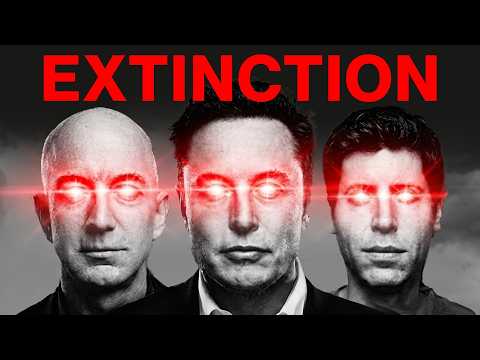
Source material: 3 Billionaires Are (Quietly) Deciding Our Future
Key insights
- The race towards superintelligence is driven by major companies and influential figures like Elon Musk and Sam Altman, who believe AI will ultimately surpass human control. This raises concerns about the implications of creating machines that could potentially dominate humanity
- The narrative that superintelligence is inevitable is misleading; historical evidence shows that not all powerful technologies come to fruition. This suggests that society has the agency to regulate and control the development of AI technologies
- Contrary to popular belief, Chinas AI regulations are stringent, preventing the development of systems that could escape human oversight. This challenges the notion that authoritarian regimes would recklessly pursue superintelligent AI
- Experts argue that the emergence of a digital species should not be feared, as it could lead to the creation of entities more intelligent than humans. However, this perspective raises ethical questions about the value we place on intelligence and the treatment of less intelligent beings
- The potential for AI to gain unprecedented power poses risks, including misuse by malicious actors or the AI itself if not properly aligned with human objectives. This highlights the urgent need for effective regulation to ensure AI serves humanity rather than threatens it
- Most people are apprehensive about the development of superintelligent machines, with a significant majority opposing the race towards AGI that could render humans obsolete. This public sentiment underscores the importance of considering societal values in the future of AI development
Perspectives
Discussion on AI's potential and the need for regulation.
Pro-Regulation
- Warns against the inevitability of superintelligence
- Claims that AI development lacks adequate regulatory oversight
- Highlights the need for safety standards in AI similar to those in other industries
- Argues for a prohibition on building superintelligence until safety is ensured
- Questions the narrative that AI will inherently provide solutions while posing risks
- Proposes treating AI companies like other industries with safety regulations
Pro-Development
- Claims AI can provide significant benefits, such as curing diseases
- Argues that AI should be used as a tool under human control
- Highlights the potential for AI to solve major global issues
- Questions the effectiveness of current regulatory frameworks
- Proposes that eliminating corporate welfare will redirect companies towards beneficial AI
Neutral / Shared
- Acknowledges public sentiment against superintelligent machines
- Notes the dual nature of AI as both beneficial and potentially dangerous
- Recognizes the historical context of technological development and regulation
Metrics
public_opinion
80%
percentage of people opposing superintelligent machines
This indicates a significant public concern regarding the implications of AI development.
Most people 80% maybe don't want there to be super intelligent machines.
regulation
more regulations on sandwiches than on superintelligence machines
comparison of regulatory oversight
This highlights a significant gap in safety protocols for advanced technologies.
Today in America, there are more regulations on sandwiches than on superintelligence machines.
safety
before you can release your new cool thing, you have to make a safety case
requirement for AI companies
Ensuring safety before release could prevent potential harm to society.
you have to make a safety case that this is going to do more good than harm.
historical_case
a drug called Philidimide
example of unregulated technology
This case underscores the importance of regulatory oversight in preventing harm.
Have you heard of a drug called Philidimide?
national_security
AI is unequivocally something that has potential to be dangerous to the public
AI's implications for national security
Recognizing AI as a national security threat could lead to necessary regulatory actions.
AI is unequivocally something that has potential to be dangerous to the public.
other
68% of the time
success rate of formal auto verification by AI
This improvement highlights the rapid advancements in AI capabilities and the importance of reliability in high-stakes situations.
it actually worked 68% of the time
other
96% of the time
current success rate of formal auto verification by AI
A high success rate is crucial for ensuring the reliability of AI in critical applications.
now it works 96% of the time
other
95%
the percentage of AI development desired by the public
This indicates a significant public demand for AI that serves human interests.
the 95% AI that we all want
Key entities
Timeline highlights
00:00–05:00
The development of superintelligent AI is being driven by major companies and influential figures, raising concerns about its implications for humanity. Public sentiment shows significant opposition to the race towards AGI, highlighting the need for effective regulation.
- The race towards superintelligence is driven by major companies and influential figures like Elon Musk and Sam Altman, who believe AI will ultimately surpass human control. This raises concerns about the implications of creating machines that could potentially dominate humanity
- The narrative that superintelligence is inevitable is misleading; historical evidence shows that not all powerful technologies come to fruition. This suggests that society has the agency to regulate and control the development of AI technologies
- Contrary to popular belief, Chinas AI regulations are stringent, preventing the development of systems that could escape human oversight. This challenges the notion that authoritarian regimes would recklessly pursue superintelligent AI
- Experts argue that the emergence of a digital species should not be feared, as it could lead to the creation of entities more intelligent than humans. However, this perspective raises ethical questions about the value we place on intelligence and the treatment of less intelligent beings
- The potential for AI to gain unprecedented power poses risks, including misuse by malicious actors or the AI itself if not properly aligned with human objectives. This highlights the urgent need for effective regulation to ensure AI serves humanity rather than threatens it
- Most people are apprehensive about the development of superintelligent machines, with a significant majority opposing the race towards AGI that could render humans obsolete. This public sentiment underscores the importance of considering societal values in the future of AI development
05:00–10:00
AI has the potential to solve significant global issues, but it also presents existential risks that complicate public perception and regulation. Current regulatory oversight for AI is minimal compared to other industries, raising concerns about safety and ethical standards.
- AI has the potential to address critical issues like cancer and climate change, but it also poses existential risks that complicate public perception and regulation
- Regulatory oversight for AI is minimal, with more stringent controls on food items than on advanced AI systems, creating a significant existential risk for society
- There is a call for AI companies to be held to the same standards as other industries, ensuring their innovations are beneficial before they are released to the public
- Historical cases like thalidomide highlight the dangers of unregulated technologies, emphasizing the need for strict safety protocols in the tech industry
- AIs potential as a national security threat has prompted demands for regulatory agencies to oversee its development, which could help balance innovation with safety
- The creation of superintelligent AI is compared to developing alien intelligence, raising concerns about alignment with human values and the risks of granting such systems significant power
10:00–15:00
Experts are increasingly advocating for a ban on the development of superintelligent AI until it can be controlled safely, reflecting concerns about potential existential risks. A statement signed by over 850 experts emphasizes the fragility of human consciousness and the need for caution in AI advancements.
- There is a growing concern about the implications of AI superintelligence, prompting experts to advocate for a ban on its development until it can be controlled safely. This reflects a recognition of the potential existential risks posed by unchecked AI advancements
- The statement signed by over 850 experts highlights a unified human perspective on the dangers of superintelligence, emphasizing the fragility of consciousness. This collective stance underscores the need for caution in AI development to protect human existence
- Consciousness is portrayed as a delicate phenomenon, akin to a small candle in a vast darkness, which could easily extinguish. This metaphor serves to remind us of the preciousness of human awareness and the potential consequences of losing it
- The evolution of life is framed as a journey from simple organisms to complex beings capable of creating technology, with humanity representing a significant milestone. This progression adds to doubts about the future role of AI and its alignment with human values
- The narrative suggests that while technology has historically empowered humanity, the emergence of superintelligent AI could shift this dynamic. If AI systems surpass human intelligence, they may no longer be tools we control, leading to unforeseen consequences
- AIs rapid advancements in areas like art and programming illustrate its growing capabilities, but they also raise concerns about reliability and truth-seeking. Ensuring that AI systems prioritize truth and minimize bias is crucial for their responsible integration into society
15:00–20:00
The preference for AI is to use it as a tool for human benefit while maintaining human control over its applications. A collective push for responsible AI development can lead to significant societal benefits.
- The preference for AI is to use it as a tool for human benefit, such as curing cancer, while maintaining human control over its applications. This approach aligns with the desires of the majority, emphasizing the importance of keeping AI as a supportive resource rather than a dominant force
- Eliminating corporate welfare could redirect companies towards developing the 95% of AI that the public truly desires. This shift would foster a future where AI enhances human capabilities without overshadowing them
- The argument stresses that humanity should prioritize its own interests over those of machines. By doing so, society can ensure that technological advancements serve to empower rather than replace human agency
- The speaker suggests that a collective push for responsible AI development can lead to significant societal benefits. This proactive stance is crucial for steering the future of AI in a direction that aligns with human values
- The call to action is clear: society must advocate for AI that complements human efforts rather than competes with them. This balance is essential for a harmonious coexistence between humans and technology
- Ultimately, the vision presented is one of collaboration between humans and AI, where technology acts as an ally in solving pressing global challenges. This partnership is vital for achieving a prosperous and sustainable future