New Technology / Military Ai
Unclear topic
Track military AI, defense automation, battlefield technology and strategic innovation signals across security and advanced systems.
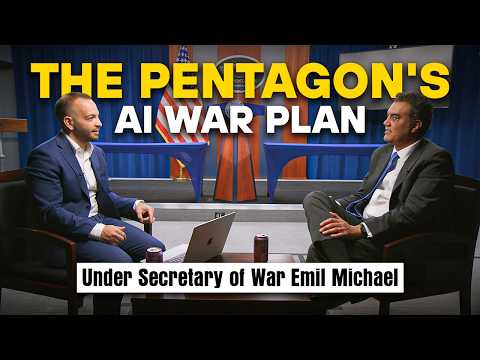
Source material: The Pentagon's AI Plan + Behind the Anthropic Fight — With Under Secretary of War Emil Michael
Key insights
- The Pentagon is wary of incorporating AI from companies like Anthropic due to trust issues and decision-making concerns, reflecting a broader reluctance to depend on AI systems that may not align with U.S. interests
- AI is anticipated to greatly improve military operations by enhancing precision and decision-making, enabling better differentiation between threats and non-threats
- The Maven Smart System demonstrates AIs ability to optimize target selection and operational planning by processing large data sets, which aids human operators in making informed decisions
- Integrating AI into military operations seeks to enhance decision-making efficiency in complex situations, potentially minimizing human error and improving outcomes in critical scenarios
- Showcasing AI capabilities by the Department of Wars chief digital and AI officer emphasizes the practical uses of these technologies, which is essential for fostering public trust in military AI efforts
- The discourse on AI in warfare raises significant ethical questions regarding the future of military engagement, highlighting the need for careful evaluation of autonomous systems implications for national security
Perspectives
LLM output invalid; stored Stage4 blocks + metrics only.
Metrics
other
the Pentagon banned anthropic earlier this year
Pentagon's decision regarding AI companies
This reflects significant concerns about AI's role in national security.
the Pentagon banned anthropic earlier this year
other
AI's capabilities are increasing exceptionally fast
General observation about AI development
Rapid advancements necessitate careful oversight and ethical considerations.
AI's capabilities are increasing exceptionally fast
efficiency
the power of 10 people
AI's impact on individual operator capabilities
This illustrates the significant enhancement in operational efficiency through AI.
the idea of taking one person and giving them the power of 10 people makes them better at what they do by by order of magnitude.
data analysis
the amount of information that you could absorb is almost infinite
AI's capability in data processing
This highlights the vast potential of AI in enhancing military intelligence.
the amount of information that you could absorb is almost infinite.
decision-making
more precise way
AI's role in decision-making
Precision in decision-making is crucial for successful military operations.
react in a more precise way.
other
99%
effectiveness of AI in military decision-making
This indicates a high reliance on AI capabilities in military contexts.
LM is getting me 99% of the way there
cost
30 thousand dollars USD
cost of a one-way attack drone
Affordable drones can be deployed without significant financial risk.
the bigger drones shall we say yeah so there's a program here Lucas right cost 30 thousand dollars a pop
other
two Ukrainian companies units
collaboration in the drone dominance program
This indicates a strategic partnership aimed at enhancing U.S. military capabilities.
I think there was two Ukrainian companies in it
Key entities
Timeline highlights
00:00–05:00
The Pentagon is cautious about integrating AI from companies like Anthropic due to trust and decision-making concerns. AI is expected to enhance military operations by improving precision and decision-making in complex scenarios.
- The Pentagon is wary of incorporating AI from companies like Anthropic due to trust issues and decision-making concerns, reflecting a broader reluctance to depend on AI systems that may not align with U.S. interests
- AI is anticipated to greatly improve military operations by enhancing precision and decision-making, enabling better differentiation between threats and non-threats
- The Maven Smart System demonstrates AIs ability to optimize target selection and operational planning by processing large data sets, which aids human operators in making informed decisions
- Integrating AI into military operations seeks to enhance decision-making efficiency in complex situations, potentially minimizing human error and improving outcomes in critical scenarios
- Showcasing AI capabilities by the Department of Wars chief digital and AI officer emphasizes the practical uses of these technologies, which is essential for fostering public trust in military AI efforts
- The discourse on AI in warfare raises significant ethical questions regarding the future of military engagement, highlighting the need for careful evaluation of autonomous systems implications for national security
05:00–10:00
AI integration in military operations enhances decision-making by processing large data sets, allowing a single operator to accomplish tasks that once required multiple personnel. While AI improves operational efficiency, human oversight remains essential in critical decision-making to ensure accountability and responsibility.
- AI integration in military operations enhances decision-making by processing large data sets, allowing a single operator to accomplish tasks that once required multiple personnel, thus improving efficiency
- Military missions can be optimized by adjusting parameters like fuel consumption and target distance, leading to better strategic planning and resource management
- The shift from outdated methods like PowerPoint to digital targeting processes has improved coordination, increasing the accuracy and speed of military responses
- AI tools synthesize data from diverse sources, providing military analysts with insights that enhance anomaly detection and situational awareness for effective intelligence gathering
- While AI improves operational efficiency, human oversight remains essential in critical decision-making to ensure accountability and responsibility
- The conversation about AI in warfare underscores the importance of understanding its capabilities and limitations to prevent misconceptions about its role in military operations
10:00–15:00
AI integration in military operations enhances efficiency by streamlining paperwork and simulations, enabling faster and more accurate responses in warfare. While AI can boost operational speed and data analysis, it is not a complete solution for the complexities of human conflict, relying on integration with human judgment.
- AI integration in military operations enhances efficiency by streamlining paperwork and simulations, enabling faster and more accurate responses in warfare
- Understanding AIs role in military contexts is crucial, particularly for tech hubs like Silicon Valley, as the militarys efficiency strategies resemble those of large organizations
- Large language models are utilized in the military for summarizing and synthesizing reports, which is essential for compliance with legal and ethical standards
- There is concern that reducing friction in decision-making may lead to rash actions in critical situations, highlighting the need for a balance between speed and thoroughness
- AI enhances decision-making through improved data aggregation, aiming for clear objectives while minimizing collateral damage and optimizing resource use
- While AI can boost operational speed and data analysis, it is not a complete solution for the complexities of human conflict, relying on integration with human judgment
15:00–20:00
The U.S. military emphasizes the importance of human oversight in decision-making processes, contrasting with adversaries that may leverage AI to bypass human judgment.
- The U.S. militarys command structure prioritizes decisions by elected leaders, contrasting with adversaries that may use AI to bypass human oversight
- Concerns exist about adversaries potentially using AI to remove human decision-making, which could diminish accountability in military operations. This raises significant trust issues regarding their actions
- Chinas military expansion and internal purges highlight the complexities of their command and control systems, especially with AI integration. Understanding these factors is essential for developing effective counter-strategies
- Current military AI applications focus on information synthesis and decision support rather than full automation of warfare. This approach reinforces the necessity of human judgment in critical military decisions
- While automation can improve specific military tasks like mine detection, fully automating combat scenarios poses risks. The U.S
- The Pentagon aims to enhance operational efficiency through AI while keeping human judgment central to decision-making. This balance is crucial for maintaining ethical standards in military governance
20:00–25:00
The Pentagon is implementing guidelines to ensure human oversight in AI systems for military applications, aiming to prevent over-reliance on technology in critical situations. This includes enhancing data analysis capabilities to support human judgment in military operations.
- The Pentagon is establishing guidelines to maintain human oversight in AI systems, ensuring ethical decision-making in military contexts. This strategy aims to avoid over-reliance on AI in critical situations
- AI can enhance data analysis prior to military strikes, identifying targets that may need to be avoided. This capability emphasizes the role of AI in supporting, rather than replacing, human judgment
- Lessons from drone usage in Ukraine and Iran reveal a significant cost disparity between inexpensive drones and costly countermeasures. This imbalance adds to doubts about the effectiveness of current military strategies against low-cost threats
- The Pentagon is prioritizing the development of affordable, mass-producible drones to counter threats without incurring heavy financial losses. This approach seeks to improve the cost-effectiveness of drone warfare
- The introduction of one-way attack drones, designed for low-cost production, represents a strategic adaptation to modern warfare. These drones are versatile, capable of fulfilling both offensive and defensive roles
- The ongoing advancements in drone technology highlight the urgent need for the U.S. military to innovate quickly in response to evolving adversary capabilities
25:00–30:00
The Pentagon's drone dominance program is collaborating with Ukrainian firms to enhance domestic manufacturing and reduce reliance on foreign supply chains. The U.S.
- The Pentagons drone dominance program collaborates with Ukrainian firms to boost domestic manufacturing, reducing dependence on foreign supply chains for drone technology
- Smaller drones, similar to consumer models, are being deployed in land warfare, raising concerns about defense against advanced tactics from adversaries like China
- Chinas use of coordinated drone swarms presents new challenges, requiring the U.S. to develop advanced countermeasures
- The U.S. is focusing on both offensive and defensive strategies to effectively manage drone warfare
- AI is increasingly vital in warfare, particularly for targeting and cybersecurity, highlighting the need for careful selection of AI vendors to meet military goals
- The discussion around Anthropic reveals significant cultural differences between AI firms and government, which is essential for successful military AI collaboration