Intel / Ukraine Russia
Real-time monitoring of security incidents, escalation signals and threat indicators across global hotspots, focusing on rapid alerts and emerging risk developments. Topic: Ukraine-Russia. Updated briefs and structured summaries from curated sources.
![Rosjanie masowo werbują dorosłych i nastolatków do przeprowadzania dywersji i sabotaży [PODCAST]](https://i.ytimg.com/vi/_qvf1Z65ajs/hqdefault.jpg)
Rosjanie masowo werbują dorosłych i nastolatków do przeprowadzania dywersji i sabotaży [PODCAST]
Summary
The podcast explores the resilience of Ukrainians against Russian sabotage efforts, focusing on the recruitment of vulnerable individuals for criminal activities. It highlights the organized nature of these recruitment strategies and the societal implications of such actions.
Syrgiej, a young Ukrainian, becomes embroiled in a dangerous scheme involving illegal tasks that escalate to handling explosives. This trend underscores the psychological and societal impacts of exploiting vulnerable youth for sabotage.
Ukrainian security services have intercepted individuals like Sergiy, who were being recruited for sabotage operations, revealing the risks associated with such exploitation. The proactive measures taken by authorities aim to prevent potential attacks.
Recruitment tactics increasingly target teenagers from patriotic backgrounds, manipulating their vulnerabilities through social media. This trend raises significant ethical concerns regarding the involvement of youth in criminal activities.
Perspectives
short
Ukrainian resilience and security measures
- Highlights the organized nature of Russian recruitment strategies
- Emphasizes the proactive measures taken by Ukrainian authorities
- Discusses the societal implications of exploiting vulnerable individuals
Russian recruitment tactics
- Exploits vulnerabilities of youth for sabotage
- Targets teenagers from patriotic backgrounds
- Utilizes social media to manipulate and recruit individuals
Neutral / Shared
- Raises ethical concerns regarding youth involvement in criminal activities
- Discusses the legal consequences faced by recruited individuals
- Calls for public education on the dangers of online recruitment
Metrics
other
the phenomenon of the non-profit vandalism became very common in the United States
describing the spread of vandalism linked to recruitment
This indicates a potential shift in social dynamics and security concerns.
the phenomenon of the non-profit vandalism became very common in the United States.
other
the scale of this action is very diverse
referring to the varied recruitment efforts
Diversity in recruitment methods complicates counteraction strategies.
the scale of this action is very diverse.
revenue
80,000 rubles RUB
reward for illegal tasks
This amount reflects the financial lure that can lead vulnerable individuals into dangerous activities.
the reward of 80,000 rubles, which was around 1,5,000 euros
cost
15,000 rubles RUB
cost of a real working iPhone model
This highlights the financial pressures that may drive individuals to engage in illegal activities.
the real working model cost 15,000 rubles
daily_earnings
500, 600 rubles RUB
daily earnings from a job
This low income illustrates the economic vulnerability that can lead to exploitation.
For 500, 600 rubles a day
food_cost
250 rubles RUB
cost of food purchased
This amount indicates the limited financial resources available to individuals like Syrgiej.
In sum, 250 rubles
legal_fees
120,000 rubles RUB
legal fees incurred by Sergiy's family
This financial burden reflects the significant impact of legal troubles on families involved in criminal activities.
the lawyer paid 120,000 rubles
bail_cost
240,000 rubles RUB
bail amount for Sergiy
High bail costs can exacerbate financial strain on families, further entrenching them in cycles of poverty and crime.
The process was conducted 240000 rubles
Key entities
Timeline highlights
00:00–05:00
The podcast discusses the resilience of Ukrainians against Russian sabotage efforts, highlighting the recruitment of vulnerable individuals for criminal activities. It emphasizes the need for societal unity and coordinated law enforcement responses to counter these threats.
- The podcast examines social resilience against Russian sabotage efforts in Ukraine, emphasizing the importance of understanding these tactics for societal unity and security
- Russian intelligence is recruiting vulnerable Ukrainians for sabotage and terrorism, undermining local stability and posing a threat to European security
- Desperate citizens, including refugees, are targeted with promises of easy money for criminal activities, which deepens social divisions and anti-refugee sentiments
- Recruitment methods for sabotage operations are consistent, often using social media to attract young individuals, highlighting the need for vigilance against these tactics
- Recent attacks in Ukraine demonstrate the increasing frequency of incidents involving recruited individuals, raising concerns for public safety and the need for coordinated law enforcement responses
- The podcast includes interviews with recruited individuals and Ukrainian security personnel, providing insights into recruitment networks that are essential for developing effective countermeasures
05:00–10:00
Syrgiej, a young Ukrainian, is drawn into a dangerous scheme involving illegal tasks that escalate to handling explosives. This trend of exploiting vulnerable youth for sabotage highlights the psychological and societal impacts of such recruitment strategies.
- Syrgiej, a young Ukrainian, is lured into a risky scheme by his neighbor, Artyom, who offers easy money for illegal tasks, reflecting a troubling trend of recruiting vulnerable youth for sabotage
- The tasks given to Syrgiej quickly escalate to handling grenades and building explosive devices, showcasing the dangerous disregard for human life by those behind these operations
- Syrgiejs initial thrill about earning a large sum shifts to fear as he comprehends the seriousness of his actions, highlighting the psychological impact on individuals forced into crime
- Recruitment strategies often exploit socially vulnerable individuals, deepening financial desperation and undermining social cohesion in affected communities
- The integration of technology, like mobile phones, in sabotage operations introduces significant risks, including accidental detonations from alerts, raising public safety concerns
- As Syrgiej considers withdrawing from the operation, he grapples with the conflict between his reputation among peers and the moral implications of his involvement, reflecting the broader challenges faced by individuals in criminal networks
10:00–15:00
Ukrainian security services intercepted a young man, Sergiy, who was being recruited for a dangerous sabotage operation. This incident highlights the risks associated with exploiting vulnerable individuals for criminal activities and the proactive measures taken by authorities to prevent potential attacks.
- Sergiy was intercepted by Ukrainian security services after a wrong turn, preventing his involvement in a dangerous operation. This incident underscores the risks associated with recruitment for sabotage activities
- Authorities tracked a package of phones intended for explosive devices but only identified Sergiy as the recipient later. This allowed them to monitor his actions closely and intervene before a potential attack
- Sergiys purchase of a SIM card indicated he was preparing to assemble a bomb, prompting authorities to apprehend him to avert a possible terrorist act. This proactive measure helped prevent potential casualties
- Had the security services delayed action until after Sergiy assembled the bomb, the legal consequences would have been much more severe. This approach minimized the risk of an explosion and protected lives
- Sergiy faced lesser charges for illegal possession of explosive materials due to his cooperation with the investigation, which led to the dismantling of a network recruiting teenagers for sabotage. This highlights the broader implications of such recruitment schemes on families and communities
- The financial impact of Sergiys legal troubles was significant, with his family incurring high bail and legal fees. This situation reflects the strain that recruitment for illegal activities places on families in Ukraine
15:00–20:00
Russian operatives coordinated sabotage efforts through SMS, dividing tasks among untrained individuals, which increased the likelihood of errors. Ukrainian security services have intercepted and arrested many involved in these networks, achieving a detection rate of about 70%.
- In the initial months of the invasion, Russian operatives coordinated sabotage through SMS, dividing tasks into smaller parts, which increased the chances of errors due to the inexperience of participants
- A Ukrainian security service employee detailed the multi-stage process of sabotage, emphasizing that each phase carries risks, especially when untrained individuals are involved
- Telegram channels disseminate reports of sabotage, attracting thousands of subscribers, including those supportive of the war, creating a community for individuals engaged in these risky activities
- Ukrainian security forces have effectively identified and arrested many sabotage networks, achieving a detection rate of about 70%, which reflects a systematic effort to counter these threats
- Sabotage incidents have led to tragic outcomes, such as a teenager losing both legs in a failed detonation, underscoring the severe dangers associated with these activities
- The participation of minors in sabotage raises ethical and legal issues, highlighted by a case of a 15-year-old caught transporting explosives, indicating the need for protective measures against exploitation
20:00–25:00
Recruitment for sabotage operations is increasingly targeting vulnerable youth, often with promises of quick financial rewards. The involvement of minors in such activities raises significant ethical and legal concerns, necessitating public education on the dangers of online recruitment.
- Recruitment for sabotage is prevalent, particularly targeting vulnerable youth with promises of quick financial rewards, highlighting their susceptibility to manipulation
- A teenagers attempt to detonate explosives resulted in severe injuries, showcasing the life-altering risks associated with such recruitment efforts
- The involvement of minors in sabotage raises ethical and legal issues, prompting authorities to educate the public about the dangers of online recruitment
- Recruiters exploit social media to lure young individuals with seemingly innocuous tasks that can escalate into serious criminal activities, necessitating increased vigilance
- A young mans mistake in setting fire to the wrong vehicle illustrates the chaotic nature of sabotage operations, complicating law enforcements ability to manage these incidents
- The ongoing conflict has fostered a climate where individuals are willing to take extreme risks for financial gain, challenging law enforcement to adapt their strategies against recruitment tactics
25:00–30:00
Dima's financial incentives led him to engage in dangerous activities, including attempts to create a bomb. This situation underscores the alarming trend of youth being exploited for criminal purposes in conflict zones.
- Dimas receipt of a large sum of money marked a shift in his involvement in dangerous activities, as he used it to settle debts and impress peers. This financial incentive illustrates how easily young individuals can be drawn into risky behaviors
- He was offered high-risk tasks like sabotaging trains and vehicles for significant payments, highlighting the dangerous appeal of quick financial rewards in conflict zones. Such offers exploit the vulnerabilities of youth, posing a threat to societal stability
- The ease of recruiting teenagers for sabotage operations is alarming, as many lack critical thinking skills and are attracted to fast money. This vulnerability threatens both individual safety and community security
- Dimas attempt to create a bomb with materials from his Russian curator reflects the troubling trend of youth being manipulated into criminal activities for financial gain. His actions underscore the lengths to which some will go under pressure
- The failed plan to detonate a bomb on a specific vehicle heightened anxiety among those involved, showcasing the unpredictable nature of sabotage efforts. This incident illustrates the chaos that can arise from such reckless undertakings
- Maxims reluctant involvement in Dimas plans exposes him to potential legal consequences, as the investigation into their activities reveals the broader implications of youth entangled in criminal networks. This situation raises concerns about the long-term impact on their lives
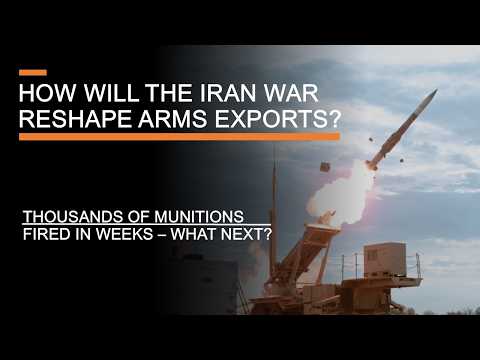
How will the Iran War Reshape Arms Exports? - Missile Consumption, Emergency Sales & the Supply Gap
Summary
The invasion of Ukraine by Russia in 2022 significantly disrupted the international arms market, leading to a surge in global demand for munitions. As major suppliers like Russia faded from the market, countries turned to the U.S. for their military needs. Recent conflicts in the Middle East have further strained supply chains, compelling nations to seek replacements for expended munitions.
The backlog for French fighter deliveries has reached nine years, prompting countries to explore alternative suppliers for immediate military needs. The U.S. has emerged as a primary arms export winner during this period, with record sales driven by geopolitical tensions and the urgent demand for advanced military systems.
Iran's military operations have led to a high consumption of missiles and drones, impacting the availability of interceptors for U.S. allies. The ongoing conflict has created a significant demand for air defense systems, with countries like the UAE making substantial investments to bolster their defenses against Iranian threats.
The U.S. defense production is shifting to meet the urgent demands of allies facing missile threats and depleted stockpiles. Emergency arms sales have been expedited to countries in the region, indicating a rapid response to the evolving security landscape.
Perspectives
Analysis of the impact of the Iran War on global arms exports and defense procurement strategies.
Pro-U.S. Arms Exports
- Highlights the surge in U.S. arms exports due to geopolitical tensions
- Claims that U.S. production is shifting to meet urgent demands from allies
- Argues that the U.S. is seen as a reliable supplier amidst global instability
Concerns Over Supply Chain and Production
- Questions the sustainability of U.S. stockpiles amidst rapid consumption
- Denies the assumption that increased demand will benefit established suppliers without addressing production challenges
Neutral / Shared
- Notes the significant backlog for French fighter deliveries
- Observes the increasing military equipment demand from U.S. allies
- Mentions the complexities of supply chain logistics affecting production capabilities
Metrics
deliveries
26 units
annual plan of refile deliveries by Tsosil
This indicates an increase in production capacity amidst rising demand.
the French manufacturer Tsosil surpassed its annual plan of 25 refile deliveries by handing over 26.
new orders
26 units
new orders for refiles in 2025
This reflects ongoing demand despite production challenges.
the country recorded new orders for about, you guessed it, 26 additional refiles.
revenue
$319 billion USD
US arms sales in fiscal year 2024
This indicates a significant increase in military spending and reliance on U.S. arms.
In fiscal year 2024, US sales reached nearly $319 billion US dollars.
launches
1,530 units
total Iranian missile launches
Indicates the scale of Iran's military capabilities.
In total, that data tracks a total of 1,530 cruise and ballistic missiles
interceptors
80%
percentage of Israel's Arrow interceptors deployed
Reflects the high demand for defensive capabilities in the conflict.
the first 16 days of the war consumed about 80% of Israel's arrow two and three interceptors
interceptors
500 units
ground-based higher tier interceptors fired
Demonstrates the scale of military engagement and resource use.
allied forces are fired nearly 500 ground-based higher tier interceptors
interceptors
2000 units
ground-based mid-tier interceptors fired
Indicates the extensive use of mid-tier defense systems.
about 2000 ground-based mid-tier interceptors
sales
$650 million USD
emergency sale to Israel
This sale indicates the U.S. commitment to supporting allies under missile threat.
$650 million worth of munitions to Israel.
Key entities
Timeline highlights
00:00–05:00
The Russian invasion of Ukraine has drastically altered the global arms market, leading to a surge in demand for munitions as major suppliers like Russia withdraw. Concurrently, recent conflicts in the Middle East have further strained the supply chain, compelling countries to seek replacements, particularly from the U.S.
- The Russian invasion of Ukraine has significantly impacted the global arms market, increasing the demand for munitions as major suppliers like Russia reduce their market presence
- Recent Middle Eastern conflicts have escalated munitions consumption, prompting countries to urgently seek replacements, especially from the U.S
- The U.S. defense industrial base is struggling to fulfill both domestic and international munitions demands
- Supply chain disruptions from the COVID-19 pandemic have already pressured the arms market, leading to slower production and higher costs in the defense sector
- Countries are reevaluating their defense strategies amid global tensions, resulting in a need for larger stockpiles and increased production to address current and future demands
- The air defense sector is under particular strain due to rising demand and limited supply, presenting an opportunity for European and Korean manufacturers to fill market gaps
05:00–10:00
The backlog for French fighter deliveries has reached nine years, prompting countries to seek alternative suppliers for immediate military needs. The U.S.
- The backlog for French fighter deliveries has reached nine years, forcing countries to seek alternative suppliers for immediate military needs
- The U.S. has become a leading arms exporter during the Ukraine and Middle East conflicts, indicating a growing dependence on American military equipment among global buyers
- Demand for specific munitions, especially ballistic missiles and drones, has surged due to the ongoing Middle Eastern conflict, reflecting a shift in warfare priorities
- The Pentagons stockpiles are being quickly depleted from high munitions consumption in the current conflict, raising concerns about future U.S. military readiness
- Countries are reassessing their defense strategies in response to recent conflicts, which is likely to intensify competition among suppliers to meet urgent demands
- The conflict presents an opportunity for suppliers like the U.S, France, and Korea to increase their market share as demand for arms escalates
10:00–15:00
Iran has launched a total of 1,530 missiles and 4,115 drones, indicating a stabilized operational tempo. The high usage of interceptors by U.S.
- Iran has launched 1,530 missiles and 4,115 drones, indicating a stabilized operational tempo that may influence regional military strategies
- In the first 16 days of the conflict, U.S. and allied forces consumed a significant amount of munitions, with nearly 80% of Israels Arrow interceptors deployed
- The high usage of interceptors by U.S. and allied forces raises concerns about the sustainability of their munitions stockpiles
- Despite a reduction in Iranian missile launches, the continued high rate of interceptor deployment suggests ongoing defensive operations, prompting a potential reassessment of military resource allocation
- While the U.S. may not deplete its munitions stockpiles rapidly, overall consumption levels remain critically high
- The conflict reveals a notable difference in munitions usage between Iran and its adversaries, with Iran launching fewer drones than Russia in Ukraine, which could affect future military engagements
15:00–20:00
The U.S. defense production is shifting to meet the urgent demands of allies facing missile threats and depleted stockpiles.
- The ongoing conflict has prompted a major shift in U.S. defense production priorities as allies contend with missile threats and dwindling stockpiles
- Emergency arms sales have surged, with the U.S. reportedly matching or exceeding its own munitions consumption through these sales
- The U.S. has initiated significant emergency sales, including a $650 million package to Israel and over $20 billion to Gulf Cooperation Council countries
- Kuwaits order for advanced missile defense systems, each costing around $1 billion, emphasizes the high stakes in regional defense. These systems are vital for bolstering air defense against potential Iranian threats
- The United Arab Emirates has made substantial purchases, including 400 advanced air-to-air missiles, signaling a shift towards more proactive defense strategies. This indicates that regional powers are preparing for prolonged military engagement
- The introduction of offensive munitions packages for the UAE raises concerns about future military intentions and potential escalation. The strategic implications of these sales could significantly alter the regional balance of power
20:00–25:00
The ongoing conflict in the Middle East has led to increased military equipment demand from U.S. allies, particularly the UAE, which is making substantial investments in advanced missile and drone systems.
- The ongoing conflict in the Middle East has significantly increased military equipment demand, particularly from U.S. allies like the UAE
- Recent UAE purchases of advanced missile and drone systems underscore the seriousness of their security concerns. Their substantial investments indicate a proactive approach to regional defense
- The U.S. military is experiencing heightened demand for munitions, which may create competition for resources between domestic needs and foreign sales
- A proposed $200 billion supplemental funding request for the U.S. military highlights the critical need to address munitions shortages caused by the conflict
- The rapid consumption of munitions in the conflict is generating unexpected demand across various nations, including NATO members. Countries like France are responding by increasing their military budgets to enhance security
- Some nations may be compelled to explore alternatives to U.S. suppliers if timely deliveries cannot be secured
25:00–30:00
The ongoing conflict in the Middle East is significantly increasing military equipment demand, particularly impacting U.S. supply chains.
- The ongoing conflict in the Middle East is driving a surge in military equipment demand, particularly affecting U.S. supply chains
- Allied nations are quickly exhausting their ammunition reserves, creating an urgent need for replacements that may lead them to consider alternatives to U.S. suppliers
- European countries are shifting their defense procurement strategies to reduce dependence on American systems, aiming to strengthen local defense industries
- Initiatives like the EUs SAFE plan require a significant portion of defense spending to be allocated to European suppliers, potentially limiting U.S. market share in Europe
- Investment in military categories such as frigates and conventional submarines is increasing among European nations, where U.S. offerings are less competitive
- Despite efforts to localize defense production, U.S. products like the F-35 continue to win contracts in various markets
![Wyczerpujący się zasób. Czy Rosji wystarczy żołnierzy i pieniędzy, by kontynuować wojnę [PODCAST]](https://i.ytimg.com/vi/Xns6VWuH5F0/hqdefault.jpg)
Wyczerpujący się zasób. Czy Rosji wystarczy żołnierzy i pieniędzy, by kontynuować wojnę [PODCAST]
Summary
The war in Ukraine has persisted for five years, with Russia struggling to achieve its military objectives. Recruitment for the Russian military is declining, raising concerns about its long-term operational viability. Many experts highlight that the Kremlin may face a critical shortage of willing combatants, potentially undermining its military strategy.
Recruitment challenges are exacerbated by rising military casualties, which may exceed 400,000 by the end of 2025. The reliance on financial incentives for recruitment assumes that economic motivations are sufficient, overlooking psychological and social factors that may deter enlistment. The declining willingness to join the military could indicate broader disillusionment with its objectives.
The Russian military is currently recruiting 30,000 to 40,000 contract soldiers monthly, but rising costs are straining regional budgets. New campaigns targeting students and drone operators aim to address the need for skilled personnel, yet the effectiveness of these strategies remains uncertain. The assumption that financial incentives alone can sustain recruitment overlooks the potential impact of motivation and skill on military performance.
Cuts to veteran benefits and communal services in Russia are raising concerns about the long-term viability of essential infrastructure. Reports indicate that 66 regions have reduced their housing and communal services budgets, leading to increased service failures. The ongoing reduction in funding may lead to a critical failure of infrastructure, exacerbating public dissatisfaction.
Perspectives
short
Proponents of Military Continuation
- Argues that Russia can sustain military efforts despite recruitment challenges
- Claims that financial incentives will attract new soldiers
- Highlights the ongoing military campaigns as necessary for national security
Critics of Military Strategy
- Warns that declining recruitment undermines military effectiveness
- Questions the sustainability of military funding amidst rising casualties
- Rejects the notion that financial incentives alone can ensure enlistment
Neutral / Shared
- Notes that recruitment numbers are currently low
- Observes that regional budgets are strained due to military spending
- Mentions the impact of infrastructure neglect on public services
Metrics
casualties
300 people
reported losses of the Sondowian post-polleges
Indicates ongoing personnel losses amidst the conflict.
The Sondowian post-polleges lost about 300 people.
payment
2.10 million rubles RUB
monthly income of military personnel
This indicates a significant financial disparity compared to the average income in Russia.
Their monthly income is at the height of 2.10 million rubles, with the average amount of money in Russia, 3.2 million rubles.
payment
4.5 million rubles RUB
monthly income in some regions
This suggests that military personnel in certain areas are receiving disproportionately high compensation.
And in some regions, 4.5 million rubles.
payment
3.5 million rubles RUB
payments for military personnel involved in operations
Substantial payments are necessary to support military personnel and their families.
the participants of the special operation and the member of his family will receive many other significant payment of the ULG.
compensation
450,000 rubles RUB
compensation for military personnel
Compensation is vital for addressing the needs of military personnel.
the compensation for the high amount of 450,000 rubles.
other
225.4 billion rubles RUB
projected budget for communal service in 2026
Reflects ongoing financial challenges in infrastructure.
the project is appointed to the next 225.4 billion rubles
other
13.3%
increase in utility prices in December 2025
Highlights the financial strain on residents.
prices were the average of 13.3% higher than in the previous year
Key entities
Timeline highlights
00:00–05:00
The war in Ukraine has persisted for five years, with Russia struggling to achieve its military objectives. Recruitment for the Russian military is declining, raising concerns about its long-term operational viability.
- The war in Ukraine has entered its fifth year, raising concerns about Russias capacity to maintain its military operations amid a lack of peace negotiations
- Military experts indicate that Russia is failing to meet its political goals, such as seizing critical Ukrainian regions and changing the leadership in Kyiv, with recent negotiations suggesting a possible reduction in ambitions
- While the Russian military is still able to recruit soldiers, there is a noticeable decline in the number of individuals willing to enlist for financial rewards, raising questions about the long-term viability of its forces
- Casualty estimates for Russian forces vary significantly, with some projections suggesting losses could surpass one million by 2026, though the accuracy of these figures is often disputed due to inconsistent methodologies
- Independent analysts are utilizing various data sources, including death records and satellite images, to better understand the extent of Russian military casualties in the ongoing conflict
- As of late summer 2025, reports indicated around 220,000 confirmed deaths among Russian military personnel, not accounting for foreign fighters, highlighting the severe impact of the war on Russias military strength
05:00–10:00
The Russian military is facing challenges in recruitment, with fewer individuals willing to enlist for financial incentives. Estimates suggest that military casualties may exceed 400,000 by the end of 2025, highlighting the severe human cost of the conflict.
- The Russian military is still recruiting contract soldiers, but fewer individuals are willing to enlist for financial incentives, raising concerns about long-term troop sustainability
- Recent estimates indicate that Russian military casualties may exceed 400,000 by the end of 2025, underscoring the severe human cost of the conflict and the challenges in maintaining military strength
- Changes in the process for officially recognizing soldiers as deceased have led to a spike in reported casualties, potentially skewing public perception of actual losses
- Legal adjustments have streamlined the recognition of missing soldiers as deceased, resulting in a significant increase in reported fatalities, reflecting difficulties in managing personnel losses
- Despite high casualty rates, the Russian military has not implemented widespread mobilization, suggesting a reliance on current recruitment methods to sustain operations
- The conflict has caused a notable rise in soldiers discharged for health reasons, but reliable data on this category is limited, complicating assessments of overall military losses
10:00–15:00
The Russian military is currently recruiting 30,000 to 40,000 contract soldiers monthly, but rising costs are straining regional budgets. Recruitment challenges persist, with new campaigns targeting students and drone operators to address the need for skilled personnel.
- The Russian military recruits 30,000 to 40,000 contract soldiers monthly, but rising recruitment costs are straining regional budgets
- New recruits often come from disadvantaged backgrounds, leading to concerns about their motivation and skills, which are critical for modern warfare
- A campaign to recruit drone operators includes a one-year demobilization option, potentially attracting more candidates but risking the quality of traditional ground units
- Despite recruitment challenges, the current system remains operational, and a new mobilization effort is unlikely to significantly increase troop numbers due to limited resources
- Recent reports show a significant drop in equipment losses, indicating a shift in combat needs towards infantry and specialized roles, which simplifies recruitment but emphasizes the need for skilled personnel
- Russian authorities are considering unconventional recruitment methods, such as targeting students, to create a new generation of soldiers trained for modern combat
15:00–20:00
The recruitment of contract soldiers in Russia is becoming increasingly costly, with federal authorities doubling payments in 2024. Despite budget strains, regions are raising recruitment bonuses, indicating a renewed effort to attract new soldiers.
- The recruitment of contract soldiers in Russia has become increasingly expensive, with federal authorities doubling payments in 2024. This financial strain on regional budgets raises concerns about the sustainability of recruitment efforts
- Despite the rising costs, many regions have recently increased their recruitment bonuses after initially cutting them. This indicates a renewed optimism about attracting new soldiers, even as budget deficits loom
- The average payment for contract soldiers has seen fluctuations for the first time since the war began, suggesting a shift in financial dynamics. This could impact the overall recruitment strategy and the quality of soldiers being enlisted
- Regions are establishing additional compensations for injuries and deaths, alongside expanding benefits for veterans. This reflects an effort to support military personnel, but it also places further financial burdens on regional budgets
- Participants in the military operation often receive significantly higher compensation than the average regional income, which can be up to 4.5 times greater. This disparity highlights the preferential treatment given to military personnel compared to other vulnerable social groups
- The government is likely to cover budget shortfalls through federal support, which may mask the underlying financial issues faced by regions. This reliance on federal assistance could lead to long-term fiscal instability for local governments
20:00–25:00
Doctors relocating to remote areas can receive benefits exceeding 2.4 million rubles, which is essential for attracting healthcare professionals to underserved regions. Military personnel involved in operations are offered substantial one-time payments and various benefits, including loans and land certificates, to support them and their families.
- Doctors relocating to remote areas can receive benefits exceeding 2.4 million rubles, which is essential for attracting healthcare professionals to underserved regions
- Military personnel involved in operations are offered substantial one-time payments and various benefits, including loans and land certificates, to support them and their families
- An analysis of regional benefits shows significant disparities in support for different social groups, raising questions about the effectiveness of government social policies
- Experts contend that many benefits are largely symbolic and fail to address systemic issues, indicating that government support may not resolve the real challenges faced by veterans and their families
- The long-term care costs for disabled veterans are anticipated to become a major financial challenge for the state, especially as the number of veterans needing support increases amid economic difficulties
- Historically, the government has reduced financial benefits for veterans during times of budget constraints, suggesting a risk of future disappointments if economic conditions deteriorate
25:00–30:00
Cuts to veteran benefits and communal services in Russia are raising concerns about the long-term viability of essential infrastructure. Reports indicate that 66 regions have reduced their housing and communal services budgets, leading to increased service failures.
- Cuts to veteran benefits due to economic pressures may lead to future surprises for veterans, highlighting the risk of diminished support as financial conditions decline
- During the war, many Russian regions have drastically reduced funding for communal services, resulting in increased infrastructure failures and leaving residents without essential services in severe winter conditions
- A report reveals that 66 regions in Russia have cut their housing and communal services budgets at least once since the war began, raising concerns about the maintenance and reliability of these essential services
- Some regions have consistently decreased their communal spending over the years, which threatens the long-term viability of infrastructure and public services
- In 2026, 15 regions further reduced their communal services budgets, with the Krasnodar region facing the most severe cuts, leading to frequent service failures that impact thousands of residents
- Many regions report critical wear on their infrastructure, with some areas indicating up to 80% usage of their heating networks, significantly increasing the risk of ongoing failures and service disruptions
![Ile zarabiają rosyjscy generałowie i jak wzbogacają się na wojnie [PODCAST]](https://i.ytimg.com/vi/Hy_hTzC6wj8/hqdefault.jpg)
Ile zarabiają rosyjscy generałowie i jak wzbogacają się na wojnie [PODCAST]
Summary
General Roman Dmurczyw's financial records reveal significant unofficial earnings, indicating systemic corruption within the Russian military hierarchy. His income, which approached 4 million rubles over ten months, raises serious concerns about the ethical implications of military funding amidst the ongoing war in Ukraine.
Dmurczyw's financial dealings highlight a troubling correlation between rank and income, suggesting that military promotions may be influenced by financial incentives rather than merit. This dynamic fosters a culture of corruption that undermines the effectiveness of military operations and accountability.
The investigation into General Popov, who faced allegations of embezzling over 130 million rubles, underscores the pervasive corruption within the military. His arrest and sentencing reflect serious consequences for high-ranking officials involved in financial misconduct.
Dmurczyw's actions exemplify nepotism within the Russian military, as he secured a position for his cousin despite the risks involved. This favoritism raises concerns about the integrity and morale of military personnel who lack similar connections.
Perspectives
Analysis of corruption and nepotism within the Russian military.
Corruption and Nepotism
- Reveals significant unofficial earnings of General Dmurczyw
- Highlights troubling correlation between rank and income
- Exemplifies nepotism in securing positions for relatives
- Indicates acceptance of violence and torture against soldiers
- Demonstrates disconnect between personal gain and military operations
Support for Military Operations
- Claims that military promotions are based on merit
- Argues that financial misconduct is an isolated incident
Neutral / Shared
- Investigates financial dynamics within the Russian military
- Raises questions about accountability and ethical standards
Metrics
income
3 million, 924,000 rubles RUB
Dmurczyw's earnings over ten months
Highlights the financial incentives within military ranks.
the general made 3 million, 924,000 rubles
bribe_amount
100,000 rubles RUB
bribe paid to avoid military service
This highlights the normalization of bribery within the military.
the driver paid his battalion for 100,000 rubles to not send it to the military
debt
130,000 rubles RUB
Debt related to Popow's financial issues
Indicates the financial pressures contributing to corruption.
the debt for the debtors is 130,000
other
a hundred thousand rubles for each RUB
financial gains during military service
Indicates the financial rewards tied to military service, potentially linked to nepotism.
About a hundred thousand rubles for each.
other
62 dollars a day USD
daily earnings during military service
Reflects the compensation structure within the military.
62 dollars a day.
loss
5 million rubles RUB
state assistance for Demurczyw's apartment
This amount raises further questions about the legitimacy of military funding and personal enrichment.
He himself said that the area was 5 million rubles
other
30 million rubles RUB
amount paid by the general for properties
This figure illustrates the financial maneuvers of military leaders amidst conflict.
paid 30 million rubles.
other
1,300,000 PLN
currency mentioned in relation to the general's financial dealings
This amount indicates the scale of financial transactions associated with military leaders.
1,300,000 PLN.
Key entities
Timeline highlights
00:00–05:00
Major General Roman Dmurczyw's income over ten months approached 4 million rubles, revealing significant unofficial earnings. This situation underscores systemic corruption within the Russian military hierarchy, particularly amidst the ongoing war in Ukraine.
- High-ranking Russian military commanders, such as Major General Roman Dmurczyw, have significant earnings that are often overlooked in discussions focused on lower-ranking soldiers. This disparity highlights the need to understand the financial dynamics within the military hierarchy
- Investigations into Dmurczyws finances reveal that his income, which approached 4 million rubles over ten months, includes substantial unofficial earnings. This points to a systemic corruption issue within the Russian military
- The ongoing war in Ukraine has led to the emergence of a new middle class in Russia, driven by increased military salaries. This economic shift raises important questions about the broader socio-economic effects of the conflict
- Dmurczyws promotions and salary increases illustrate a direct link between military success and financial rewards. This relationship incentivizes commanders to pursue aggressive military strategies
- The analysis of Dmurczyws communications uncovers a pervasive culture of corruption among Russian generals. This environment not only impacts military operations but also threatens the integrity of the armed forces
05:00–10:00
General Roman Dmurczyw's financial records indicate substantial earnings from military allowances and bonuses, highlighting a significant disparity in compensation within the Russian military. His income, which includes around 630,000 rubles monthly, raises concerns about corruption and the ethical implications of military funding.
- The financial records of General Roman Dmurczyw reveal substantial earnings from various military allowances and bonuses. This indicates that high-ranking Russian military officials can earn significantly more than average soldiers, highlighting a disparity in military compensation
- Dmurczyws income includes multiple allowances for rank, service, and combat conditions, totaling around 630,000 rubles monthly. Such earnings are noteworthy, especially when compared to the average monthly salary of regular soldiers, which is considerably lower
- In November 2023, Dmurczyws earnings reached 551,000 rubles, reflecting his rising career and the financial benefits associated with military promotions. This trend suggests that military advancement in Russia is closely tied to increased financial rewards
- The generals lifestyle in Moscow necessitates substantial financial resources, which he reportedly covers through unofficial means. This reliance on informal income sources raises concerns about corruption and the ethical implications of military funding
- Dmurczyws correspondence reveals a network of support among military personnel, where favors and financial assistance are exchanged. This system of informal transactions underscores the pervasive nature of corruption within the Russian military hierarchy
- The generals complaints about the high cost of living in Moscow illustrate the pressures faced by military leaders despite their substantial incomes. This situation may lead to further reliance on corrupt practices to maintain their lifestyles
10:00–15:00
General Roman Dmurczyw's financial struggles highlight systemic issues in the Russian military's pay structure, revealing a reliance on informal assistance among personnel. This culture of corruption raises serious concerns about the integrity of military operations and personnel management.
- Demurczyws financial struggles reveal the systemic issues in the Russian militarys pay structure, as he frequently seeks informal assistance. This reliance on unofficial channels highlights the broader challenges faced by military personnel in securing adequate compensation
- The flow of money between ranks in the military indicates a culture of corruption, raising serious concerns about the integrity of operations and personnel management. Such practices undermine trust within the military hierarchy
- Demurczyws connections with his former adjutant illustrate a network of financial support among officers, which can compromise command authority. This dynamic fosters favoritism in personnel decisions, affecting overall military effectiveness
- The normalization of bribery for personnel transfers poses significant risks to soldier morale and military leadership effectiveness. This troubling trend reflects deeper issues within the militarys operational integrity
- General Popows removal for reporting military failures underscores the dangers of transparency in the Russian military. His experience highlights a culture that discourages accountability and punishes those who raise concerns
- The financial interactions among military leaders point to broader issues of resource allocation within the Russian armed forces. This mismanagement could adversely affect operational readiness and strategic effectiveness
15:00–20:00
General Roman Dmurczyw's financial dealings reveal systemic corruption within the Russian military, particularly regarding coercive financial practices among personnel. Investigations into military leaders, including allegations of large-scale fraud, highlight the ethical implications of these financial dynamics.
- Demurczyws concerns about front line challenges contrast with his friends description of life in Syria, highlighting the varied experiences of military personnel in different conflict zones
- Demurczyws sharing of graphic images from the Ukrainian front with Popow underscores the harsh realities and emotional toll of war on soldiers
- By December 2023, Demurczyw was aware of investigations into military leaders, including Popow, indicating potential legal consequences for corruption within the ranks
- Popows correct intuition about being summoned for questioning reveals serious allegations of large-scale fraud, reflecting systemic corruption in the military
- Demurczyws interrogation exposed the pressure he faced regarding financial dealings with Popow, illustrating the complexities of loyalty and accountability among military leaders
- The investigation showed that Popow received money from subordinates under coercive conditions, highlighting corruption and the fear experienced by lower-ranking personnel
20:00–25:00
General Popov faced allegations of embezzling over 130 million rubles, highlighting pervasive corruption within the Russian military hierarchy. His arrest and subsequent sentencing to five years in a general regime colony reflect serious consequences for corruption among high-ranking officials.
- General Popov faced allegations of embezzling over 130 million rubles, raising suspicions among his colleagues about his extravagant lifestyle. This situation highlights the pervasive corruption within the Russian military hierarchy
- In the months leading up to his arrest, Popovs wife expressed fears for his safety, drawing parallels to the suspicious death of political opposition leader Alexei Navalny. This indicates a climate of fear and potential retribution against those involved in corruption
- Demurczyw, a colleague of Popov, attempted to secure assurances from high-ranking officials that Popovs legal troubles would be resolved. However, these promises proved unreliable, reflecting the instability and unpredictability of political alliances in Russia
- After his arrest, Popovs family sought help from influential figures, including Kadyrov, but received no assistance. This illustrates the isolation and abandonment faced by individuals once they fall from grace within the military establishment
- Popov was sentenced to five years in a general regime colony, a significant punishment that underscores the serious consequences of corruption in the military. His case is part of a broader crackdown on corruption among high-ranking officials in the Russian armed forces
- The investigation into Popovs actions coincided with a wave of corruption cases against military leaders, particularly following the change in defense ministers. This suggests a systemic issue within the military that extends beyond individual cases to a culture of corruption
25:00–30:00
General Demurczyw's actions exemplify nepotism within the Russian military, as he secured a position for his cousin despite the risks involved. This favoritism raises concerns about the integrity and morale of military personnel who lack similar connections.
- Demurczyw used his influence to secure a military position for his cousin, highlighting the nepotism that undermines merit-based advancement in the Russian armed forces
- Despite the dangers in Ukraine, Demurczyws cousin was given a safer role, suggesting favoritism that could demoralize other soldiers without similar connections
- The state award received by Demurczyws cousin illustrates how personal relationships can blur the lines of official recognition and career progression in the military
- Demurczyw criticized the military academy he attended, indicating dissatisfaction with its standards and reflecting broader issues in military training in Russia
- Comments from Demurczyw about his cousins financial gains during service point to widespread corruption and misuse of military resources, raising concerns about accountability
- The situation reveals a systemic culture of nepotism and corruption in the Russian military, where personal ties can dictate both career opportunities and financial rewards
![Niesamowita historia rosyjskiego dezertera, który był białoruskim więźniem politycznym [PODCAST]](https://i.ytimg.com/vi/5MHc_LTSsyQ/hqdefault.jpg)
Niesamowita historia rosyjskiego dezertera, który był białoruskim więźniem politycznym [PODCAST]
Summary
Anton, a Russian deserter, navigates a perilous journey that begins with his decision to escape military service. His story unfolds against the backdrop of political repression in Belarus, where he becomes a political prisoner. The narrative highlights the severe consequences of his choices, driven by a desire for financial stability and freedom.
After committing arson, Anton faces arrest and reflects on the complexities of his situation. His experiences in prison and during military deployment reveal the harsh realities of dissent in Belarus, where individuals are often caught in a web of political oppression. The narrative illustrates how personal motivations can lead to dire consequences in an authoritarian regime.
As Anton grapples with the aftermath of a drone explosion, he confronts severe physical and mental challenges. His hallucinations and desperate attempts to survive underscore the psychological toll of war and the exploitation of vulnerable individuals in conflict zones. The narrative emphasizes the systemic issues that exacerbate personal crises.
Anton’s critical decision to escape military service marks a turning point in his journey. His navigation through military bureaucracy and eventual acquisition of a new passport reflect the complexities of evading oppressive systems. The story raises questions about individual agency in the face of overwhelming systemic pressures.
Perspectives
Analysis of a complex narrative involving political repression and individual agency.
Anton Lysov's Perspective
- Describes the harsh realities of being a political prisoner in Belarus
- Highlights the psychological toll of war and repression
- Emphasizes the complexities of individual choices in oppressive environments
- Illustrates the dire consequences of seeking financial stability
- Details the bureaucratic challenges faced by soldiers attempting to escape
Belarusian and Russian Regimes
- Exemplifies the cruelty of the Belarusian regime compared to the Russian government
- Demonstrates the systemic oppression faced by dissenters
- Indicates the normalization of dangerous military tasks
- Highlights the dangers posed by military bureaucracy
Neutral / Shared
- Notes the complexities of individual agency in authoritarian contexts
- Acknowledges the psychological impact of military service on soldiers
- Recognizes the systemic factors influencing personal decisions
Metrics
population
about 8, 10 people units
number of prisoners during relocation
This indicates the scale of the prison population affected by wartime policies.
About 8, 10 people.
population
about 500 people units
total number of prisoners in a specific area
This reflects the significant number of individuals caught in the conflict.
About 500 people.
distance
about 5 kilometers
distance from the border with Russia
This proximity highlights the strategic significance of the location in the conflict.
From far away, about 5 kilometers from the border with Russia.
distance
7 kilometers
distance Anton walked during his escape
This distance highlights the physical challenges faced during his ordeal.
he was making a distance of 7 kilometers
other
1952,033
hospital visit
This number indicates a significant historical reference point in Anton's narrative.
He met his soldiers from the hospital in 1952,033.
other
12 euros EUR
size of data sent to a Ukrainian organization
This highlights the financial aspects of conflict-related activities.
the flight was watched on the phone and found a powerful data in the size of 12 euros
Key entities
Timeline highlights
00:00–05:00
The narrative follows Anton, a Russian deserter turned political prisoner in Belarus, highlighting the severe consequences of political repression. His journey illustrates the complexities of individual choices in oppressive environments, particularly when motivated by financial need.
- The story follows a Russian deserter who became a political prisoner in Belarus, illustrating the unpredictable outcomes of seemingly simple choices
- The protagonists shift from political prisoner to deserter highlights the severe consequences of political repression in Belarus and serves as a warning about the dangers of seeking quick financial gain
- Anton, the main character, was reported missing during a military operation, raising concerns about the treatment of soldiers and the realities of military service in conflict zones
- Initially motivated by financial need rather than political beliefs, Antons experience underscores the complexity of individual decisions in oppressive environments
- Anton’s unsuccessful attempt to set fire to a government officials vehicle resulted in his arrest and classification as a political prisoner, showcasing the harsh repercussions for dissenters
- The narrative points to the absence of a fair judicial process in Belarus, as Antons trial was marred by procedural violations, reflecting broader human rights issues in the country
05:00–10:00
Anton Lysow's actions, driven by a desire for quick financial gain, led to his arrest shortly after committing arson. His subsequent legal journey reflects the complexities of political repression and the harsh realities faced by dissenters in Belarus.
- Anton Lysows decision to set a car on fire, believing he would evade capture, resulted in his arrest and a lengthy prison sentence, illustrating the dangers of seeking quick financial gain through illegal activities
- His arrest occurred just hours after the arson, highlighting the rapid response of Belarusian law enforcement and the governments crackdown on dissent
- Initially sentenced to ten years for terrorism, Antons charge was later downgraded, reflecting the complexities and inconsistencies of legal proceedings in politically sensitive cases
- During his time in prison, Anton endured severe treatment and was labeled an extremist, demonstrating the regimes harsh stance against any form of dissent, regardless of intent
- In March 2023, Antons application for extradition to Russia was unexpectedly approved, suggesting that his case was perceived differently due to his lack of political ties
- Following his extradition, Antons sentence was reduced to seven and a half years, yet he remained classified as a flight risk, highlighting the ongoing struggles faced by individuals entangled in political repression
10:00–15:00
Anton faced a personal crisis that led him to confess and seek a transfer to a special unit. His experiences in prison and during deployment in Ukraine highlight the severe consequences of political repression and the exploitation of vulnerable individuals.
- Anton faced a personal crisis upon learning of his girlfriends marriage, prompting him to confess and seek a transfer to a special unit
- On May 6, 2025, Anton and a small group of inmates were moved from a nearly empty detention center, reflecting a trend of reduced prison populations during wartime
- In prison, Anton encountered military recruiters promoting enlistment as a way out, exploiting the desperation of inmates
- After being relocated to a temporary deployment point, Anton received a stark warning that escape attempts would lead to immediate execution, highlighting the dangers faced by military prisoners
- During his deployment in Ukraine, Anton witnessed widespread chaos and destruction, with constant threats from enemy fire and drone attacks
- Anton was injured by shrapnel from a drone strike while seeking cover, marking a critical moment that underscored the harsh realities of combat
15:00–20:00
Anton faced severe physical and mental challenges after a drone explosion left him trapped and hallucinating in a destroyed basement. His eventual extraction and desire for better medical treatment reflect the harsh realities of survival in a conflict zone.
- After a drone explosion, Anton discovered he was physically unharmed except for his face, marking a critical moment in his fight for survival amid war chaos
- Trapped in a destroyed basement, Anton faced starvation and hallucinations, leading to a decline in his mental state as he imagined rescuers bringing food and water that never came
- Days later, Anton found a shortwave radio and attempted to reach out for help, but military frequency changes hindered his efforts, leaving him feeling despondent
- A chance communication with a soldier allowed Anton to convey his dire situation, resulting in a plan for his extraction after enduring weeks of isolation
- Once safe, Anton was taken to a hospital but quickly plotted an escape to a Moscow facility for better medical treatment, reflecting his strong desire for freedom
- In the military unit, Anton observed harsh penalties for disobedience, including executions, highlighting the oppressive environment faced by soldiers in the conflict
20:00–25:00
Anton faced a critical decision to escape from the military, which marked a turning point in his journey towards freedom. His eventual evasion of orders and navigation through military bureaucracy allowed him to obtain a new passport and leave the country.
- Anton realized that the military was sending him back to the front lines, prompting him to consider escape. This decision marked a critical turning point in his journey towards freedom
- Upon leaving the forest, Anton encountered military police who recognized him. Instead of facing immediate execution, he was detained, which provided him a temporary reprieve from the chaos of war
- While in custody, Anton felt relieved to be among former commanders, as the atmosphere had shifted to one of caution. This change in the units dynamics meant he was less likely to be killed outright
- After a brief detention, Anton was ordered to undertake a dangerous mission, which he refused. His refusal highlighted the growing tension between his desire for survival and the militarys demands
- Anton managed to escape from a perilous situation by cleverly evading his orders and seeking refuge. This act of defiance underscored his determination to survive against overwhelming odds
- Once he reached safety, Anton learned that the military had declared him missing in action, allowing him to navigate the bureaucratic system without immediate threat. This loophole in military protocol enabled him to obtain a new passport and leave the country
25:00–30:00
The Belarusian regime is characterized by a higher level of cruelty towards its citizens compared to the Russian government, creating a more oppressive environment. Concerns about the recruitment of individuals for dangerous tasks and the normalization of sabotage indicate a troubling trend that could destabilize the region further.
- The Belarusian regime exhibits greater cruelty towards its citizens than the Russian government, indicating a more oppressive environment for the Belarusian people
- The narrative points to a troubling normalization of sabotage and infrastructure attacks, which could destabilize the region further
- Concerns arise over the recruitment of individuals for dangerous tasks like arson, highlighting the ethical issues of exploiting vulnerable people for military purposes
- There is a notable lack of detailed accounts on how individuals manage to cross heavily monitored borders, which is essential for understanding conflict and migration dynamics
- A personal story illustrates the bureaucratic challenges faced by a Russian citizen returning home, reflecting the precariousness of navigating conflicting national interests
- Experiences of being treated as expendable in the military reveal the dehumanizing aspects of modern warfare, emphasizing the personal costs of military service
![Garść bardzo złych wiadomości gospodarczych z Rosji. Wzrost ubóstwa i tęsknota za ZSRR [PODCAST]](https://i.ytimg.com/vi/xGwwSyFHtH8/hqdefault.jpg)
Garść bardzo złych wiadomości gospodarczych z Rosji. Wzrost ubóstwa i tęsknota za ZSRR [PODCAST]
Summary
The Russian economy is facing significant challenges, particularly in the civilian sector, despite rising oil prices. Public skepticism about government claims of stability is growing, driven by increasing inflation and a disconnect between official statistics and citizens' experiences.
Inflation in Russia is expected to rise, challenging government claims of economic stability and indicating ongoing hardships for citizens. The reported poverty level has approached 40%, highlighting a significant disparity between actual economic conditions and official statistics.
A communist deputy's experiment to live on the official poverty threshold of 800 PLN per month resulted in a weight loss of 10 kg, highlighting the dire living conditions for many Russians. Public sentiment is shifting towards a desire for a self-sufficient economy reminiscent of the Soviet model, as many believe inflation is driven by corporate greed.
Proposed legislation in regions like Irkutsk reflects the state's inability to meet financial obligations, raising concerns about public welfare and safety. The reliance on federal budget allocations, which are significantly lower than necessary, suggests a lack of accountability and transparency in addressing these urgent issues.
Perspectives
short
Critics of the Russian Economy
- Highlights rising inflation and public skepticism about government statistics
- Questions the reliability of official poverty levels and economic claims
- Accuses the government of failing to address dire living conditions
- Warns of potential civil unrest due to budget cuts and service failures
- Denounces the reliance on oil sales as a primary economic driver
Supporters of the Russian Government
- Claims that rising oil prices will stabilize the economy
- Argues that government statistics reflect a recovering economy
- Proposes that inflation is a temporary issue that will resolve
- Defends government actions as necessary for long-term stability
Neutral / Shared
- Notes the ongoing economic challenges faced by the civilian sector
- Acknowledges the impact of inflation on public sentiment and purchasing power
- Recognizes the complexity of the economic situation amid global market fluctuations
Metrics
inflation
5 and 91 percent %
current inflation rate reported
High inflation rates can erode purchasing power and lead to economic instability.
the inflation fell to 5 and 91 percent of the population
inflation
14.5 percent %
previous inflation rate before recent changes
A significant increase in inflation can lead to public unrest and economic challenges.
the inflatio of the Russian defense inflation from 14.5 percent to 15.6 percent
public opinion
55 percent %
percentage of people who believe inflation is very high
High public concern about inflation can undermine government legitimacy.
55 percent of the response to the COO said that inflation is very high
public opinion
28 percent %
percentage of population that feels inflation is recovering
Low confidence in economic recovery can lead to decreased consumer spending.
28 percent of the population was recovered
other
60-66%
percentage of Russians feeling peace on their finances
This suggests a minority of the population feels secure, contrasting sharply with the majority's anxiety.
Two to three Russians feel peace on their own finances, and from the day of the growth of 60-66%.
valuation
US$1.84 billion USD
real PKB of New York in 2024
This valuation highlights the economic disparity between New York and Russia.
The real PKB of the New York in 2024, the US$1.84 billion
valuation
US$17 billion USD
PKB of Russia
This figure raises skepticism about Russia's economic health compared to global standards.
and the US$17 billion in Russia
cash_withdrawals
2.1 billion rubles RUB
record cash withdrawals from banks
High cash withdrawals indicate a lack of confidence in the banking system.
When it paid for 2.1 billion rubles
Key entities
Timeline highlights
00:00–05:00
The Russian economy is facing significant challenges, particularly in the civilian sector, despite rising oil prices. Public skepticism about government claims of stability is growing, driven by increasing inflation and a disconnect between official statistics and citizens' experiences.
- Despite rising oil prices, the Russian economy is struggling with deepening issues in the civilian sector, indicating that financial gains from the conflict are not benefiting society
- Inflation is a major concern for Russians, with citizens feeling a disconnect from government claims of stability, leading to rising public skepticism about official statistics
- Recent surveys reveal a significant increase in perceived inflation among the population, contrasting sharply with government reports, which suggests a growing gap between official narratives and everyday experiences
- Expectations for future inflation are increasing, especially among asset holders, raising fears of currency devaluation and geopolitical instability, which could exacerbate economic challenges
- Analysts caution that while inflation may decelerate temporarily, various factors, including currency depreciation and rising costs, pose a high risk of renewed inflationary pressures
- The current economic climate in Russia reflects a deepening lack of public confidence, as survey data shows rising anxiety about inflation, which could threaten social stability and government credibility
05:00–10:00
Inflation in Russia is expected to rise, challenging government claims of economic stability and indicating ongoing hardships for citizens. The reported poverty level has approached 40%, highlighting a significant disparity between actual economic conditions and official statistics.
- Inflation in Russia is projected to rise, contradicting government assertions of economic stability, which suggests ongoing hardships for citizens
- The reported poverty level in Russia has neared 40%, indicating a significant gap between actual economic distress and official statistics
- Surveys indicate many Russians feel their income is inadequate for basic living needs, reflecting a deeper economic crisis not captured by government data
- The average monthly income required for a decent standard of living has surged by 21% in the past year, intensifying financial pressure on households
- The Russian government aims to reduce poverty to below 7% by 2030, but current economic trends raise doubts about the feasibility of these targets
- Consumer habits are shifting as Russians increasingly choose cheaper products and older models, highlighting a trend of economic caution and diminished purchasing power
10:00–15:00
A communist deputy's experiment to live on the official poverty threshold of 800 PLN per month resulted in a weight loss of 10 kg, highlighting the dire living conditions for many Russians. Public sentiment is shifting towards a desire for a self-sufficient economy reminiscent of the Soviet model, as many believe inflation is driven by corporate greed.
- A communist deputy conducted an experiment to see if one could survive on the official poverty threshold of 800 PLN per month, ultimately losing 10 kg due to poor food quality. This highlights the stark reality of living conditions for many in Russia, raising questions about the validity of official poverty statistics
- The Central Bank of Russia noted a growing nostalgia among citizens for the Soviet economic model, where domestic production was prioritized and inflation was controlled through state price regulation. This sentiment reflects a desire for a self-sufficient economy that can shield citizens from external economic
- Respondents in a recent survey described an ideal economy as one that is self-sufficient and independent from external support, similar to the Soviet Union or modern China. This indicates a significant shift in public perception towards valuing national production capabilities over reliance on foreign goods
- Many Russians believe that inflation is driven by corporate greed and excessive profit margins, advocating for strict government intervention to regulate prices. This perspective suggests a widespread demand for policies that protect consumers from rising costs, particularly for essential goods
- The closure of Soviet-era factories has left many citizens feeling disconnected from their industrial past, with a longing for the days when domestic production was robust. This nostalgia is coupled with a belief that the country has the potential to revive its manufacturing capabilities
- Respondents expressed pride in domestic production and a belief that revitalizing industry could help lower inflation rates. This reflects a broader concern about economic stability and the need for a return to a more production-oriented economy
15:00–20:00
The Russian economy is facing significant challenges, particularly in the civilian sector, despite rising oil prices. A proposed travel tax aims to redirect funds from foreign vacations to bolster domestic tourism and create jobs.
- To combat inflation, the economy must be reoriented to enhance competitiveness and localize production. This shift is essential to ensure that prices remain competitive and sustainable
- A proposal has emerged in the State Duma to impose a tax on Russians traveling abroad, aimed at promoting domestic tourism. This initiative could redirect significant funds back into the national economy, potentially creating new jobs and increasing tax revenues
- In 2024, Russians spent approximately 700 billion rubles on foreign vacations, funds that could have supported local tourism development. The deputy emphasized the importance of utilizing all available mechanisms to bolster the domestic tourism sector
- The introduction of a travel tax could also establish a compensation fund for emergencies, such as conflicts that necessitate the evacuation of citizens. This fund would provide a safety net for Russians traveling abroad during crises
- Recent studies indicate a significant rise in depression and anxiety among Russians due to economic challenges and the ongoing war. The psychological well-being of citizens is deteriorating, particularly among younger individuals and those in urban areas
- The findings reveal that 42% of respondents experience depressive symptoms, while 27% report anxiety, highlighting a widespread mental health crisis. This situation underscores the urgent need for economic stability and support for mental health services
20:00–25:00
A significant portion of the Russian population expresses anxiety about their financial situation, with inflation being the primary concern for 84% of respondents. Public skepticism is growing regarding government claims about the economy's valuation, particularly in light of rising prices and budget deficits.
- Two-thirds of Russians report anxiety about their finances, with public sector workers and urban residents feeling the most concern since December
- Inflation is the top worry for 84% of respondents, indicating that economic fears are now overshadowing concerns about the ongoing war
- Almost 50% of those surveyed expect their familys financial situation to worsen, particularly among older individuals who depend more on state support
- Public sector employees are more likely to predict worsening economic conditions, reflecting a lack of confidence in government stability amid increasing sanctions
- The economic outlook is now more influenced by rising prices and budget deficits than by the potential end of the war, signaling a growing long-term pessimism
- Government claims about Russias economic valuation, equating it to New York City, have raised public skepticism about the true state of the economy
25:00–30:00
The Russian economy is experiencing significant distress, particularly in the civilian sector, despite rising oil prices. Public sentiment reflects growing pessimism about financial futures, with many opting for cash transactions due to banking issues.
- The Russian economy is deteriorating despite rising oil prices, particularly in the civilian sector, indicating a fragile economic stability
- A majority of Russians are expressing growing pessimism about their financial futures, reflecting widespread economic distress
- Comparisons of Russias economic valuation to New York City raise skepticism about the nations true economic health amid serious struggles
- Russians are increasingly opting for cash transactions due to banking issues and internet disruptions, which could destabilize the banking system and worsen inflation
- Government anti-fraud measures have heightened scrutiny of bank accounts, leading to public concern over financial privacy and increased cash withdrawals
- Experts caution that ongoing cash withdrawal trends may pose significant challenges for the banking system, impacting monetary policy and economic recovery
![Zaniepokojony Girkin komentuje wojnę w Iranie, sytuację na froncie i stan rosyjskich elit [PODCAST]](https://i.ytimg.com/vi/rjxYLEbCSMA/hqdefault.jpg)
Zaniepokojony Girkin komentuje wojnę w Iranie, sytuację na froncie i stan rosyjskich elit [PODCAST]
Summary
Recent military operations have yielded negative results for Russian forces, with minimal territorial gains reported. The ongoing conflict appears to be misunderstood by leadership, leading to a grim outlook for future military efforts.
Current military operations in Ukraine are marked by a lack of significant achievements for Russian forces, raising doubts about their operational effectiveness. Reports indicate that Russian forces have made minimal territorial gains, leading to a stagnation in their strategy.
The leadership's focus on minor territorial gains reflects a dangerous complacency that could lead to severe consequences. The ongoing conflict is viewed as a distraction, indicating a detachment from reality and a lack of effective regrouping.
The United States is currently unprepared for a full-scale military operation against Iran, which may allow Iran to stabilize politically. Russian support for Iran through intelligence could hinder U.S. military effectiveness.
Perspectives
Analysis of military strategies and geopolitical implications.
Pro-Russian Perspective
- Highlights the negative results of military operations for Russian forces
- Argues that leadership misunderstands the ongoing conflict
- Warns of the complacency in focusing on minor territorial gains
- Claims that U.S. military readiness is flawed without considering Iranian resilience
- Critiques the Russian elites lack of intelligence affecting governance
- Emphasizes the importance of cultural identity for national integrity
Critique of Russian Strategy
- Questions the effectiveness of Russian military operations in Ukraine
- Denies the potential for significant achievements under current strategies
- Rejects the notion that minor territorial gains are sufficient for success
- Accuses Russian leadership of detachment from reality
- Challenges the strategic value of financial commitments to foreign regimes
- Critiques the reliance on outdated geopolitical strategies
Neutral / Shared
- Notes the potential for mass casualties and humanitarian crises in Iran
- Observes the complexities of regional geopolitics affecting military actions
Metrics
territorial_gain
19.5 meters
daily territorial advancement on the front lines
This minimal gain indicates significant challenges in military operations.
about 19.5 meters a day in the direction of the enemy
territorial_gain
19.5 meters per day meters
rate of territorial gain by Russian forces
This slow progress indicates significant operational challenges for the Russian military.
the total value was only 19.5 meters per day
investment
30 billion rubles RUB
investment in the Armenian army
This investment raises questions about the effectiveness and returns of Russian military commitments.
In the last 20 years, Rosia invested in the Armenian army over 30 billion rubles.
revenue
3 billion rubles RUB
potential earnings from energy prices
This indicates limited financial relief for Russia amidst ongoing sanctions.
you can earn 3 billion rubles.
loss
8 billion rubles RUB
financial challenges faced by Russia
This highlights the significant economic strain on Russia due to sanctions.
leaving 8 billion rubles.
casualties
hundreds of thousands of people
potential casualties in Iran due to conflict
This highlights the severe humanitarian impact of military actions.
The state will be able to kill dozens of people, and then hundreds of thousands of people.
timeframe
30-60 days
time for Iranian refugees to reach safety
This indicates the urgency and potential scale of the refugee crisis.
It takes up to 30-60 days to get to long.
Key entities
Timeline highlights
00:00–05:00
Recent military operations have yielded negative results for Russian forces, with minimal territorial gains reported. The ongoing conflict appears to be misunderstood by leadership, leading to a grim outlook for future military efforts.
- Recent months have seen significant military events, emphasizing the need for a strategic reassessment among Russian leaders
- Four years into the military operation, the results have been largely negative, with recent attacks on critical infrastructure exposing serious vulnerabilities
- The front lines show minimal territorial gains, with only 19.5 meters advanced daily, indicating troubling trends for future military operations
- Russian leaders seem to misunderstand the conflict as a war of attrition, which could prolong suffering and resource depletion for both sides
- The outlook for victory appears grim, with current trajectories suggesting a bleak future for Russian military efforts due to inadequate leadership
- Negotiations with Ukraine have failed to produce positive outcomes, complicating Russias situation and potentially worsening civilian suffering
05:00–10:00
The current military operations in Ukraine are marked by a lack of significant achievements for Russian forces, leading to a grim outlook. Reports indicate that Russian forces have made minimal territorial gains, raising doubts about their operational effectiveness.
- The ongoing situation in Iran is being closely monitored, with no urgency to expedite negotiations regarding Ukraine. This reflects a strategic advantage for the U.S
- The current military operations are characterized by a lack of significant achievements on the front lines, leading to a grim outlook for Russian forces. This stagnation undermines Russias strategic objectives and raises concerns about the effectiveness of its military leadership
- The absence of clear strategic goals has led to a disconnection between the militarys public narrative and the reality on the ground. This discrepancy complicates the understanding of the conflict for both the public and military authorities
- Reports indicate that Russian forces have made minimal territorial gains over the past year, raising doubts about their operational effectiveness. The slow progress of just 19.5 meters per day highlights the challenges faced by the military
- The ongoing conflict is marked by a cycle of misinformation, with military leaders providing misleading reports to the government. This creates a false sense of progress and obscures the true state of affairs on the battlefield
- The potential for a ceasefire without preconditions is unlikely, as it could lead to further escalation of the conflict. The U.S
10:00–15:00
The leadership's focus on minor territorial gains reflects a dangerous complacency that could lead to severe consequences. The ongoing conflict is viewed as a distraction, indicating a detachment from reality and a lack of effective regrouping.
- The leadership has a general grasp of the situation, but the focus on minor territorial gains reflects a dangerous complacency that could lead to severe consequences
- There is a belief that military leadership should prioritize loyalty over popularity, which risks catastrophic outcomes for the nation
- The ongoing conflict is viewed as a distraction, with little chance for the leadership to effectively regroup, indicating a detachment from reality
- Recent military actions by the U.S. and Israel against Iran are expected to escalate, aiming for complete destabilization and potentially impacting regional stability
- The anticipated airstrikes are part of a sustained campaign to weaken Irans military and incite internal unrest, threatening the current regime
- High civilian casualties are acknowledged, but they do not concern the attacking nations, as their strategic objectives take precedence
15:00–20:00
The United States is currently unprepared for a full-scale military operation against Iran, which may allow Iran to stabilize politically. Russian support for Iran through intelligence could hinder U.S.
- The United States is currently unprepared for a full-scale military operation against Iran, which may allow Iran to stabilize politically and resist potential attacks
- Irans ability to endure upcoming military strikes is crucial, as its success could hinder U.S. objectives in the region
- The conflict is seen as a proxy war, with Russia allegedly aiding Iran through intelligence support, which is essential for Irans defense against U.S. threats
- Military resistance against the U.S. is considered justified, as Iran is confronting a shared enemy
- Russian elites are viewed as self-serving and disconnected from Russias historical context, which could have significant repercussions for the nations future
- Maintaining a robust naval presence in key maritime areas is deemed vital for Russia to protect its national interests and assert its global influence
20:00–25:00
The Russian naval forces have not shown significant improvement over the past three decades, raising concerns about their military effectiveness. Recent threats from Russian leaders regarding European vessels appear to lack substance, reflecting a dismissive attitude towards Western military capabilities.
- The current Russian naval forces have not improved significantly after three decades of leadership, raising concerns about their effectiveness in military operations
- The Russian fleet is more recognized for its losses than victories, retreating to safer waters instead of confronting the enemy, indicating poor strategic planning
- There are doubts about the feasibility of establishing a strong naval presence soon, as reliance on outdated strategies may prevent adaptation to modern warfare
- Recent threats from Russian leaders regarding European vessels seem more like empty rhetoric than viable plans, given the lack of a solid naval base
- The commentary on Western military operations reflects a dismissive attitude, which could dangerously underestimate Western capabilities and resolve
- Russias investments in foreign infrastructure, such as railways in Armenia, raise questions about the effectiveness and returns of these financial commitments
25:00–30:00
Russia's financial commitments to foreign regimes could reach tens of billions of dollars, raising concerns about their strategic value. The current Russian elite's lack of intelligence and education undermines effective governance, potentially leading to detrimental decision-making.
- Russias financial commitments to foreign regimes, especially in Africa and the Middle East, could reach tens of billions of dollars, raising concerns about their strategic value for national interests
- The military and humanitarian efforts proposed by Russian officials seem misguided, as they prioritize foreign conflicts over pressing domestic issues, potentially leading to increased instability within Russia
- The current Russian elite lacks intelligence and education, which undermines effective governance and could result in detrimental decision-making for the countrys future
- Leadership selection within the Russian elite appears driven by political convenience rather than merit, indicating a systemic issue that may perpetuate incompetence in governance
- Outdated bureaucratic structures hinder innovation among leaders, making it difficult for Russia to adapt to new domestic and international challenges
- Critiques of the elites incompetence reflect broader concerns about the political system in Russia, suggesting that without significant reform, the country may face further decline in global standing and internal cohesion
![Rekrutacja studentów i widmo kolejnej mobilizacji. Rosja zaczyna mieć problem z siłą żywą [PODCAST]](https://i.ytimg.com/vi/YPGnrqTj78A/hqdefault.jpg)
Rekrutacja studentów i widmo kolejnej mobilizacji. Rosja zaczyna mieć problem z siłą żywą [PODCAST]
Summary
Russian universities are facing significant pressure to recruit students for military service amid a personnel crisis. The Ministry of Defense is employing aggressive tactics, including coercive recruitment strategies that threaten academic standing for non-compliance. This situation raises ethical concerns regarding the integrity of educational institutions and the rights of students. Reports indicate that many students are reluctant to enlist, reflecting a broader societal discontent with military engagement.
Recruitment efforts are particularly focused on students from over 80 universities, with promises of financial incentives and career opportunities. However, these strategies often involve coercive measures, such as threats of expulsion or academic penalties for those who refuse to sign contracts. The reliance on students for military personnel highlights the desperation within the Russian military as volunteer numbers dwindle.
Students report feeling pressured to sign contracts, fearing repercussions for refusal. Many express skepticism about the military's promises and the risks associated with service, particularly given the high casualty rates reported. This disconnect between government expectations and student realities may lead to increased resistance against recruitment efforts.
Legal experts warn that contracts signed under pressure may not provide the protections students expect, raising questions about the ethical implications of such recruitment tactics. The normalization of military service as an option for students could lead to forced conscription, undermining educational integrity and student rights.
Perspectives
short
Support for Military Recruitment
- Promotes financial incentives for students to join military service
- Highlights the need for personnel amid declining volunteer numbers
- Frames military service as a viable career path for students
Opposition to Coercive Recruitment Tactics
- Criticizes the ethical implications of pressuring students into military contracts
- Raises concerns about the integrity of educational institutions
- Questions the long-term impact on student morale and rights
Neutral / Shared
- Acknowledges the militarys personnel crisis and the need for recruitment
- Recognizes the financial challenges faced by students in higher education
Metrics
recruitment
24,500 people
recruits in Moscow
Demonstrates the decline in recruitment numbers.
the Moscow was recruited about 24,5,000 people.
recruitment decline
25 %
decline in recruitment compared to 2024
Highlights the challenges faced in attracting new recruits.
25% less than in 2024.
casualties
more than 200,000 units
estimated casualties of Russian soldiers
This figure highlights the severe impact of the conflict on Russian military personnel.
the death of more than 200,000 Russian soldiers
salary
50,000 rubles per month RUB
monthly salary offered to students
This financial incentive is part of the recruitment strategy to attract students.
50,000 rubles per month
salary
23,000 gold RUB
additional financial incentive mentioned
This figure indicates the potential earnings for students involved in military service.
23,000 gold
universities
over 80 universities units
number of universities involved in recruitment
This widespread recruitment effort highlights the scale of the military's personnel crisis.
over 80 universities
casualties
200,000 people
estimated military casualties
High casualty rates contribute to the urgency of recruitment efforts.
200,000 people
recruitment
32 people have been planned to finish the fight units
planned military enlistments at a specific university
This indicates a systematic approach to military recruitment within educational institutions.
32 people have been planned to finish the fight.
Key entities
Timeline highlights
00:00–05:00
The Russian military is facing a significant personnel shortage, with estimates of casualties exceeding 200,000 and potentially reaching 400,000. Recruitment efforts targeting university students have seen low interest, raising concerns about the sustainability of military operations without further mobilization.
- The Russian military is experiencing a critical personnel shortage, leading to declining recruitment numbers that threaten the viability of ongoing military operations
- Recent estimates suggest Russian military casualties have surpassed 200,000, with actual losses potentially reaching around 400,000, underscoring the severe impact of the conflict on Russian forces
- In an effort to boost recruitment, the Russian government is targeting university students with offers for contracts in drone units, but initial interest has been low, reflecting a hesitance to join the military
- Experts caution that without a new mobilization, Russia may find it difficult to sustain its military efforts, which is essential for achieving territorial objectives
- The Kremlin faces pressure to showcase military achievements to both domestic and international audiences, which may prompt a reevaluation of mobilization strategies soon
- Despite attempts to enhance recruitment through increased financial incentives, the success of these measures is uncertain, potentially jeopardizing Russias military goals
05:00–10:00
Russia is experiencing a significant personnel shortage in its military, prompting recruitment efforts targeting university students. This strategy reflects a broader desperation within the military, raising concerns about its effectiveness and sustainability.
- Russia is struggling with a personnel shortage on the battlefield, raising concerns about the effectiveness of its military strategy
- The Russian Ministry of Defenses recruitment of students for military service indicates a desperate attempt to find willing soldiers amid declining interest
- Mobilization poses a political risk for Putin, as it could harm his domestic standing despite potential military advantages
- Fortified industrial areas in contested regions hinder current military operations, complicating Russias efforts to achieve territorial gains
- Analysts warn that without mobilization, Russia may find it increasingly difficult to sustain its military operations, risking an unfavorable shift in the balance of forces
- The campaign to recruit students reflects a broader desperation within the Russian military, but students awareness of the situation may lead to resistance against enlistment
10:00–15:00
The Russian Ministry of Defense is recruiting students from over 80 universities to fill personnel shortages in military drone units. This recruitment strategy includes coercive tactics, such as threats of expulsion for non-participation, reflecting a desperate need for military personnel amid rising casualties.
- The Russian Ministry of Defense is actively recruiting students at over 80 universities for drone units, reflecting a critical need for military personnel amid increasing casualties and fewer volunteers
- Students are enticed with offers of high salaries and educational benefits, but some universities threaten expulsion for those who decline to enlist, indicating coercive tactics in recruitment
- Recruitment strategies include informational sessions and promotional materials, aiming to integrate military service into the educational framework and normalize military obligations
- Many students report feeling pressured during recruitment events, with faculty warning of academic repercussions for non-participation, fostering a climate of fear regarding military service
- The campaign not only seeks to fill military ranks but also aims to cultivate a future workforce skilled in military technology, targeting tech-savvy youth already engaged with modern technology
- Despite aggressive recruitment efforts, a significant number of students resist joining the military, highlighting a disconnect between government military needs and the younger generations willingness to serve
15:00–20:00
Russian educational institutions are increasingly promoting military contracts to students, emphasizing financial incentives and career prospects. This recruitment strategy raises ethical concerns about coercive tactics amid dwindling volunteer numbers.
- Russian educational institutions are increasingly promoting military contracts to students, emphasizing financial incentives and career prospects as volunteer numbers dwindle
- Presentations at colleges indicate potential earnings of up to 6 million rubles in the first year, alongside promises of job security, aiming to attract students amid rising military enlistment pressure
- University directors are encouraging students to sign contracts, presenting them as quick paths to graduation and high salaries, raising ethical concerns about coercive recruitment tactics
- Recruitment meetings often include military representatives who focus on the benefits of service, attempting to foster a positive view of military involvement while minimizing threats
- Individual discussions with students reveal detailed offers, including potential loans and ongoing support from university staff, but concerns about contract conditions and forced transfers remain unaddressed
- The administrations push for student enrollment in drone operation courses suggests a strategy to meet recruitment quotas, raising questions about the integrity of educational programs aligned with military goals
20:00–25:00
The Russian Ministry of Defense is intensifying recruitment efforts at universities to address military personnel shortages, particularly targeting students facing academic challenges. This strategy raises ethical concerns regarding coercive tactics and the implications for educational institutions.
- Military recruitment efforts at universities have escalated as the Ministry of Defense seeks to address personnel shortages due to increasing casualties. This strategy reflects a significant shift in how educational institutions are being utilized to fulfill military needs
- Students facing academic difficulties are being specifically targeted for enlistment, often with the threat of expulsion looming over them. This raises serious ethical questions about the coercive tactics being employed within educational settings
- Certain universities have established clear recruitment goals, indicating a systematic approach to enlisting students. This coordinated effort across institutions highlights the militarys urgent need for personnel
- Despite the mounting pressure, a significant number of students are disinterested in military service, viewing their education primarily as a means to postpone conscription. This disconnect could lead to a backlash against the governments recruitment initiatives
- Reports of harassment and peer pressure regarding military contracts among students have surfaced, creating a challenging environment for decision-making about their futures. Such incidents complicate the already difficult choices students face
- The recruitment campaign has generated shock and concern among students, especially in institutions where military initiatives were previously uncommon. This change may prompt increased scrutiny of university policies and their alignment with military objectives
25:00–30:00
The Russian government is intensifying recruitment efforts in response to a decline in military volunteers, targeting students across numerous educational institutions. This strategy raises ethical concerns due to the coercive tactics employed, including threats of academic penalties for non-participation.
- The Russian government is ramping up recruitment efforts due to a decline in volunteers for military service, indicating a growing urgency to address personnel shortages amid rising casualties
- Recruitment campaigns are reportedly taking place in at least 83 higher education institutions and 24 secondary schools across 36 regions, including Crimea, suggesting a widespread initiative
- Students are being pressured to sign military service contracts under the threat of academic penalties, raising ethical concerns about the impact on academic freedom
- The recruitment strategy now targets both male and female students, reflecting a more aggressive mobilization approach as the conflict persists
- Human rights advocates highlight the difficulty in proving coercion in these recruitment efforts, emphasizing the need for vigilance and documentation of any undue pressure on students
- Students are encouraged to resist signing contracts under pressure and to seek legal help if they encounter coercive tactics, as such agreements could severely restrict their educational and personal freedoms
!["Drama ekonomiczna". Jak rosyjscy ekonomiści skoczyli sobie do gardeł [PODCAST]](https://i.ytimg.com/vi/9459ePFVYBI/hqdefault.jpg)
"Drama ekonomiczna". Jak rosyjscy ekonomiści skoczyli sobie do gardeł [PODCAST]
Summary
The debate surrounding Dmitry Nekrasov's economic article has ignited significant controversy among economists, particularly with Igor Liepszyc emerging as a prominent critic. This conflict underscores the divergent views within the economic community regarding the reliability of economic forecasts and the complexities of the Russian economy. Soviet military spending exceeded 130 billion rubles by the late 1980s, indicating a sustained military operation until the Soviet Union's collapse. Current economic conditions in Russia are significantly strained compared to 2009, complicating military funding and operations.
The Russian arms industry faces limitations in production growth due to sanctions and resource shortages, despite an increase in labor supply. The National Wealth Fund's liquid assets have significantly decreased, raising concerns about the sustainability of Russia's financial resources amid ongoing economic challenges. The central bank of Russia is utilizing short-term loans to commercial banks secured by federal bonds to indirectly finance the government. This method raises concerns about the sustainability of the economy and potential inflationary pressures as government spending increases without a corresponding rise in production.
Perspectives
LLM output invalid; stored Stage4 blocks + metrics only.
Metrics
other
8%
PKB Russia fell
This historical data point is crucial for understanding economic trends.
In 2009, the PKB Russia fell by about 8%
other
15%
rate comparison
This comparison highlights potential future economic scenarios.
the rate is 15%, as in 1992
federal_budget_deficit
65 billion rubles RUB
Federal budget deficit in 2025
A significant deficit complicates military funding and overall economic stability.
In 2025, the Federal Federal Government was elected by 65 billion rubles
economic_loss
10% lower off of the sales
Sales decline for small companies, banks, and state-owned companies
This decline indicates worsening economic conditions affecting military and civilian sectors.
the small companies, banks, and state-owned companies were around 10% lower off of the sales
company_loss
28.8% of the company was lost
Losses in company sales from 2016-2025
High loss percentages reflect severe economic challenges impacting military funding.
28.8% of the company was lost
contract_extension
over 3.26 billion rubles per month RUB
Monthly contract extension with CETs
This financial commitment indicates ongoing military expenditures amidst economic strain.
The extension of the contract with the CETs was over 3.26 billion rubles per month
liquid_assets
131.5 billion rubles RUB
National Wealth Fund's liquid assets
A decrease in liquid assets indicates potential financial instability.
the Fondus National Goods did not only reduce, but even from 119 billion to 131.5 billion rubles
budget_deficit
record-deficit budget
Russian government's budget financing
Financing a record deficit may lead to long-term economic challenges.
the Russian government was able to finance the record-deficit budget
Key entities
Timeline highlights
00:00–05:00
The debate surrounding Dmitry Nekrasov's economic article has ignited significant controversy among economists, particularly with Igor Liepszyc emerging as a prominent critic. This conflict underscores the divergent views within the economic community regarding the reliability of economic forecasts and the complexities of the Russian economy.
- The discussion centers on the backlash against Dmitry Nekrasovs recent economic article, which sparked significant controversy among economists. This conflict highlights the differing perspectives within the economic community regarding the state of the Russian economy
- Igor Liepszyc, known for his confrontational style, has emerged as a key critic of Nekrasovs conclusions. His aggressive approach to debate has previously led to disputes with other economists, indicating a pattern of contentious exchanges
- The critique published in Demosco Times questions the reliability of Nekrasovs forecasts about the economic crisis. This skepticism is rooted in a belief that his arguments lack the rigor expected from credible economic analysis
- Liepszyc argues that Nekrasovs linear thinking and reliance on flawed analogies undermine his credibility. He emphasizes that such reasoning fails to account for the complexities of economic dynamics, particularly in the context of Russias current situation
- The debate raises important questions about the validity of economic predictions based on historical analogies. Liepszyc warns that relying on past events to forecast future outcomes can lead to misguided conclusions
- Ultimately, the ongoing discourse reflects broader tensions within the field of economics regarding the interpretation of data and the implications for policy. The outcome of this debate may influence how economic forecasts are perceived and utilized in future discussions
05:00–10:00
Soviet military spending exceeded 130 billion rubles by the late 1980s, indicating a sustained military operation until the Soviet Union's collapse. Current economic conditions in Russia are significantly strained compared to 2009, complicating military funding and operations.
- Soviet military spending exceeded 130 billion rubles by the late 1980s, indicating a sustained military operation until the Soviet Unions collapse, which may parallel Russias current military situation
- Russias economic conditions in 2026 differ significantly from those in 2009, with a dramatically increased federal budget deficit that complicates military funding
- In 2009, Russias federal budget was bolstered by a reserve fund, unlike the current financial reserves, which are inadequate to address rising fiscal challenges
- Claims that the Russian economy can endure the ongoing war based on past experiences are contentious, as the economic landscape in 2026 is considerably more strained
- The assumption that the Ukrainian population will respond to wartime losses like the Soviet populace is misleading due to differing socio-political dynamics
- Current economic difficulties do not necessarily enhance military capabilities; worsening conditions may actually reduce military funding and resources
10:00–15:00
The Russian arms industry faces limitations in production growth due to sanctions and resource shortages, despite an increase in labor supply. The National Wealth Fund's liquid assets have significantly decreased, raising concerns about the sustainability of Russia's financial resources amid ongoing economic challenges.
- An increase in the labor supply does not guarantee higher production in Russias arms industry without additional resources, highlighting the limitations imposed by sanctions and energy shortages
- While the National Wealth Fund has not decreased as expected, its liquid assets have significantly dropped, raising concerns about the sustainability of Russias financial resources amid economic challenges
- The Russian government has financed a record budget deficit mainly through market loans, indicating a shift in fiscal strategy that could impact long-term economic stability
- The Central Bank of Russia has significantly increased liquidity in the banking sector, suggesting a response to financial pressures that may reveal vulnerabilities in the economy
- Critiques of the narratives surrounding Russias economic situation emphasize the importance of understanding discrepancies in the National Wealth Funds performance for accurate assessments of the economy
- Current economic rhetoric mirrors historical propaganda techniques, indicating that large-scale misinformation can influence public perception and underscores the need for critical evaluation of economic claims
15:00–20:00
The central bank of Russia is utilizing short-term loans to commercial banks secured by federal bonds to indirectly finance the government. This method raises concerns about the sustainability of the economy and potential inflationary pressures as government spending increases without a corresponding rise in production.
- The central bank of Russia is using a scheme involving short-term loans to commercial banks secured by federal bonds. This method allows the central bank to indirectly finance the government without violating legal restrictions on direct funding
- By masking direct funding through commercial banks, the central bank can effectively inject liquidity into the budget while avoiding the inflationary consequences of direct state financing. This approach raises concerns about the sustainability of the Russian economy amidst rising inflation
- The central banks operations are designed to maintain the appearance of market-based transactions while actually facilitating government spending. This could lead to increased inflation as the government uses these funds to meet rising demands from military and defense sectors
- The Russian Ministry of Finance is struggling to sell federal bonds to citizens, indicating a lack of confidence in the market. This situation suggests that the government may be resorting to less conventional methods to secure funding
- The central banks strategy of using repo transactions is becoming increasingly vital for budget financing, as traditional sources are dwindling. This reliance on repo transactions may signal deeper issues within the Russian financial system
- The implications of these financial maneuvers could lead to a significant increase in inflation, as the government’s spending does not match the supply of goods. Without a corresponding increase in production, the economy may face severe imbalances
20:00–25:00
Dmitry Nekrasov claims that the Russian economy can sustain its military efforts despite sanctions, suggesting minimal impact on financial stability. However, the rapid increase in the money supply raises concerns about potential inflation and economic sustainability.
- Dmitry Nekrasov argues that the Russian economy can sustain its current war efforts without significant harm, claiming that sanctions have little impact. This perspective aligns with pro-Kremlin narratives, raising concerns about the credibility of such claims
- The rapid increase in Russias money supply, which surged from 66.25 trillion rubles to over 120 trillion rubles since the start of the war, indicates potential inflationary pressures. This discrepancy between money supply growth and GDP growth suggests an unsustainable economic model
- Nekrasovs assertion that the Russian government can maintain its financial commitments through bank purchases of government bonds is questioned. Critics warn that this could lead to a monetary reform crisis, potentially resulting in a confiscatory monetary policy within the next few years
- A significant gap between economic forecasts and actual inflation rates, with predictions of hyperinflation failing to materialize. This discrepancy raises doubts about the reliability of economic predictions made by prominent economists
- The ongoing debate among economists reflects a broader struggle over the interpretation of Russias economic resilience amidst war. The implications of these discussions could influence future economic policies and public perception of the governments financial strategies
- Nekrasovs critique of his opponents suggests a deeper ideological battle within the economic community regarding the state of the Russian economy. The outcome of this debate may shape the narrative around Russias economic stability and its ability to finance ongoing military operations
25:00–30:00
Inflation in Russia is projected to exceed 12% in 2023 and 2024, indicating a deteriorating economic landscape. Predictions suggest the ruble could fall to around 150 rubles per dollar, increasing financial pressure on citizens and businesses.
- Inflation in Russia is expected to exceed 12% in 2023 and 2024, indicating a deteriorating economic landscape that may lead to public dissatisfaction
- Predictions suggest the ruble could fall to around 150 rubles per dollar following the elections, which would increase financial pressure on citizens and businesses
- Warnings about food supply shortages in Russia are rising, with potential empty shelves contributing to social unrest as citizens face scarcity
- If stricter capital controls are not enacted, the ruble may depreciate by 15% to 20% in 2025, highlighting the vulnerability of the Russian economy amid ongoing sanctions
- Contrary to forecasts of economic collapse, the ruble has strengthened by 23% over the past year, and inflation has decreased, challenging the narrative of imminent failure
- The speaker points out that many alarming economic predictions have been proven wrong, raising doubts about the reliability of such forecasts and the complexities of the Russian economy

Four Years of War In Ukraine - The Battlefield Balance, Losses & Counterattacks
Summary
The war in Ukraine has now entered its fifth year, potentially surpassing the duration of both the Soviet Great Patriotic War and the First World War if hostilities continue. Significant changes in military tactics and capabilities have emerged since 2022, highlighting the complexities of modern warfare and the intertwined nature of economic and social factors with military strategy. The conflict has shifted from rapid mechanized warfare to a more attritional style, emphasizing trench warfare and artillery.
In 2025, Russia occupied approximately 0.8% of Ukraine, indicating significant challenges in achieving military objectives. Ukrainian forces adapted their strategies, enhancing their capabilities to counter Russian advances as the conflict continues into 2026. The reliance on unmanned systems has become pivotal, necessitating adjustments in military strategies globally, while both sides face high casualties and resource depletion.
Military vehicle designs in Ukraine are increasingly focused on protection against drone threats, reflecting the urgent need to counter aerial attacks. Modifications to traditional tank designs aim to enhance protection from drone strikes, often compromising visibility and maneuverability. The ongoing adaptation of Ukrainian forces suggests that without significant changes in strategy or resources, Russia's military goals may remain unfulfilled.
The Russian military has lost over 1200 T80 tanks to Ukraine, indicating a potential obsolescence of these units. Despite heavy equipment losses, the Russian military maintains combat effectiveness through new tactics and advancements in drone warfare. The assumption that the Russian military can maintain its operational effectiveness despite high casualties and resource depletion overlooks critical variables such as morale and recruitment sustainability.
Perspectives
Analysis of the evolving military dynamics in the Ukraine conflict.
Ukrainian Forces
- Adapt strategies to counter Russian advances
- Enhance operational capabilities through NATO-standard equipment
- Demonstrate resilience despite exhaustion and manpower shortages
- Execute effective counter-attacks at local levels
- Shift towards a defensive posture while pursuing security guarantees
Russian Forces
- Maintain combat effectiveness through new tactics and drone warfare
- Face high casualties and resource depletion impacting operational capabilities
- Struggle to achieve territorial objectives despite ongoing offensives
- Experience declining equipment availability and reliance on outdated systems
- Attempt to secure territory while managing internal pressures
Neutral / Shared
- Conflict dynamics reflect a shift from mechanized warfare to attritional styles
- Both sides adapt to increased use of drones and artillery support
- Negotiations remain complicated by territorial demands and military strategies
Metrics
territorial_gain
15 meters per day meters
average rate of Russian advance at Chasiviar
This slow rate of advance indicates significant challenges in military operations.
at Chasiviar more than four times slower than that, at around 15 meters per day.
territory
0.8%
percentage of Ukraine occupied by Russia in 2025
This reflects the limited success of Russian military operations.
Russia occupied very roughly 0.8% of Ukraine.
duration
18 months
time taken for Russia to secure Pokrovsk
Highlights the challenges of urban warfare.
Overcoming Pokrovsk took Russia very roughly 18 months.
loss
north of 4,300 tanks units
total Russian tank losses
This indicates significant attrition in Russian armored capabilities.
recording north of 4,300 tanks
loss
8,700 in the Armored or Infantry Fighting Vehicle category units
total Russian armored vehicle losses
This reflects the scale of equipment attrition faced by Russian forces.
8,700 in the Armored or Infantry Fighting Vehicle category
loss
nearly 550 molten rocket launchers units
total Russian rocket launcher losses
This highlights the extensive losses in Russian artillery capabilities.
nearly 550 molten rocket launchers
loss
1000 self-propelled guns units
total Russian self-propelled gun losses
This indicates a significant reduction in Russian indirect fire capabilities.
the 1000 self-propelled guns
availability
cut by more than two thirds %
reduction in T80 tanks available for Russian forces
This suggests a critical depletion of effective armored units.
cut by more than two thirds
Key entities
Timeline highlights
00:00–05:00
The war in Ukraine has now entered its fifth year, potentially surpassing the duration of both the Soviet Great Patriotic War and the First World War if hostilities continue. Significant changes in military tactics and capabilities have emerged since 2022, highlighting the complexities of modern warfare and the intertwined nature of economic and social factors with military strategy.
- Entering its fifth year, the war in Ukraine illustrates the challenges of concluding conflicts, potentially surpassing the duration of both the Soviet Great Patriotic War and the First World War if hostilities persist
- Since 2022, the evolution of warfare in Ukraine has revealed significant changes in tactics and military capabilities, which are essential for other nations to understand
- In 2025, Russias ongoing offensive along the front lines led to some territorial gains, but these advances have been notably slow compared to historical benchmarks
- Current assessments show that Russias military progress is lagging behind the rates of advance seen in British and French forces during World War I, indicating a largely static conflict despite some territorial changes
- The battlefield dynamics reflect not only territorial shifts but also the strategic goals of both Ukrainian and Russian forces, which will shape expectations for military actions in 2026
- The conflict highlights the complexities of modern warfare, where economic and social factors are intertwined with military strategy, emphasizing the need for thorough analysis to anticipate future developments
05:00–10:00
In 2025, Russia occupied approximately 0.8% of Ukraine, indicating significant challenges in achieving military objectives. Ukrainian forces adapted their strategies, enhancing their capabilities to counter Russian advances as the conflict continues into 2026.
- In 2025, Russias territorial gains in Ukraine were minimal, occupying about 0.8% of the country, reflecting the difficulties both sides face in meeting their military goals
- Despite limited territorial advances, Russia maintained a steady offensive, but Ukrainian counterattacks demonstrated that these gains could be reversed
- The prolonged battle for Pokrovsk, taking Russia 18 months to secure, highlights the challenges of capturing fortified urban areas compared to open fields
- Ukrainian forces restructured in 2025 to a corps model and improved their unmanned systems, which could enhance their effectiveness without needing more resources
- The conflicts dynamics have evolved, with Ukrainian forces adapting to the battlefield, which is essential for resilience against Russian advances as the war continues into 2026
- The ongoing war raises concerns about Russias military goals in regions like Kherson and Zaporizhia, with current conditions making these objectives seem increasingly unattainable
10:00–15:00
Ukraine's military has transitioned to NATO-standard equipment, enhancing its operational effectiveness and logistical support. The production of domestically designed military systems, such as the 2S-22 self-propelled gun, reflects Ukraine's adaptability in modern warfare.
- Ukraines military has shifted to NATO-standard equipment, moving away from older Soviet stockpiles, which enhances operational effectiveness and logistical support
- The accelerated production of domestically designed military systems, like the 2S-22 self-propelled gun, showcases Ukraines innovative capacity under pressure, potentially changing battlefield dynamics
- Ukrainian forces now rely more on drones and wheeled, protected mobility options, reflecting a strategic adaptation to modern warfare challenges that prioritize speed and protection
- Data indicates a significant drop in losses of traditional battle tanks and armored vehicles, while MRAPs and IMVs have seen increased losses, suggesting a shift in combat tactics
- The ability of the Ukrainian military to repair and reactivate older T-64 tanks is crucial for maintaining a strong armored presence amid difficulties in acquiring new tanks
- Overall, the transformation of Ukraines military capabilities demonstrates significant adaptability in response to ongoing conflict, which may impact future engagements
15:00–20:00
Ukraine's military has improved its operational capabilities through enhanced equipment supply, particularly with MRAPs and IMVs. The Russian military is facing a decline in effective equipment availability, which may hinder its operational effectiveness.
- Ukraines military has enhanced its operational capabilities through improved equipment supply, particularly with MRAPs and IMVs, positioning itself more favorably against Russian forces that depend on modified civilian vehicles
- The Russian military is experiencing a decline in effective equipment availability, indicating a deterioration in the quality of its military assets, which may hinder operational effectiveness
- Substantial losses of Russian equipment have been recorded, including thousands of tanks and armored vehicles, but the decreasing rate of these losses suggests a strategic shift towards conserving remaining assets
- The T80 tanks growing popularity among Russian forces has led to a significant reduction in stored units, underscoring reliance on older models as new production struggles to keep pace with demand
- Despite a decrease in heavy equipment losses, Russian operations continue to depend on alternative assets like motorcycles and civilian vehicles, which may influence the conflicts dynamics
- The military landscape in Ukraine is evolving towards NATO-standard equipment and increased domestic production, which is vital for Ukraines long-term sustainability and adaptability in the ongoing conflict
20:00–25:00
The Russian military has lost over 1200 T80 tanks to Ukraine, indicating a potential obsolescence of these units. Despite heavy equipment losses, the Russian military maintains combat effectiveness through new tactics and advancements in drone warfare.
- The Russian military has lost over 1200 T80 tanks to Ukraine, indicating a potential obsolescence of these units due to inadequate conservation efforts
- While heavy equipment losses have decreased, the Russian military maintains combat effectiveness through new tactics and advancements in drone warfare
- The evolution of the Russian military can be categorized into three phases, beginning with a rapid invasion in 2022 that highlighted high troop quality but low availability
- Initially, Russia employed fast-moving operations similar to NATO tactics, but this strategy faltered, leading to mobilization efforts and the emergence of groups like Wagner to address manpower shortages
- A growing qualitative disparity exists within the Russian military, with some units equipped with modern technology while others rely on outdated or civilian vehicles, affecting overall battlefield effectiveness
- The Russian militarys goal to establish a large unmanned systems force marks a significant shift in operational strategy, potentially enhancing combat effectiveness and creating new challenges for Ukraine
25:00–30:00
The conflict in Ukraine has shifted from rapid mechanized warfare to a more attritional style, emphasizing trench warfare and artillery. This evolution has led to significant changes in tactics, with both sides adapting to the increased use of drones and artillery support.
- The conflict in Ukraine has transitioned from rapid mechanized warfare to a more attritional style, emphasizing trench warfare and artillery. This shift presents significant challenges for both sides as they adapt their strategies
- Artillery has emerged as the leading cause of casualties, with modern systems demonstrating greater accuracy and lethality. This development has led military planners to reassess traditional tactics, highlighting the importance of effective artillery support
- Drone usage has surged on the battlefield, with both Russia and Ukraine deploying thousands of drones each year. This saturation complicates maneuvering and has shifted casualty generation, with Ukrainian drones causing most Russian losses
- Russian forces are increasingly employing small-scale infantry infiltration tactics to exploit gaps in Ukrainian defenses. This method takes advantage of less fortified positions, which are now more dependent on sensor-based operations
- Ukrainian forces are adapting to the prevalence of drones by reducing troop numbers in defensive positions and utilizing concealed locations. While this strategy minimizes vulnerability, it also opens opportunities for Russian forces to exploit weaknesses
- The ongoing evolution of tactics and technology in the conflict necessitates continuous adaptation from both sides. These developments could significantly impact future engagements and the overall trajectory of the war