Intel / Society Tension
Real-time monitoring of security incidents, escalation signals and threat indicators across global hotspots, focusing on rapid alerts and emerging risk developments. Topic: Society-Tension. Updated briefs and structured summaries from curated sources.
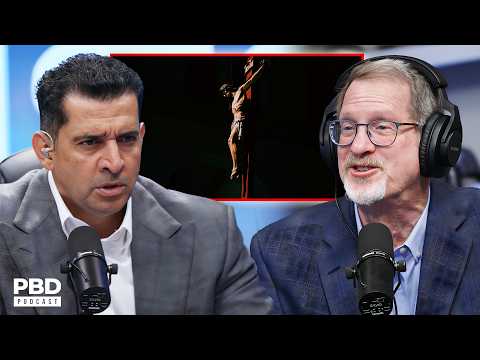
“I Tried To DISPROVE Jesus” - Ex-Atheist REVEALS Resurrection Evidence That Changed His Mind
Summary
Lee Strobel, initially an atheist, embarked on a two-year investigation into the historical evidence surrounding the resurrection of Jesus. His background in journalism and law equipped him to analyze the claims critically, leading him to seek corroborative evidence for the resurrection narrative.
Strobel highlights the significance of the resurrection as a pivotal claim of Christianity, asserting that if proven true, it validates Jesus' identity as the Son of God. His inquiry involved extensive research, including examining ancient texts and interviewing experts, culminating in a personal transformation from skepticism to faith.
He references Sir Lionel Laku, a renowned defense attorney, who similarly investigated the resurrection and concluded that the evidence was overwhelmingly compelling. Laku's findings, along with Strobel's, emphasize the historical credibility of the resurrection narrative, supported by multiple sources and early accounts.
Strobel outlines four key elements of evidence for the resurrection: execution, early accounts, the empty tomb, and eyewitness testimonies. Each element is presented as a critical component that collectively supports the claim of Jesus' resurrection.
Perspectives
Analysis of resurrection evidence and personal transformation.
Pro-Resurrection
- Claims historical evidence supports the resurrection of Jesus
- Highlights the transformation from atheism to faith through investigation
- Cites multiple ancient sources confirming the resurrection narrative
- Emphasizes the significance of eyewitness accounts in validating claims
- Argues that the empty tomb is a widely accepted historical fact
Skeptical of Resurrection Claims
- Questions the reliability of historical evidence to prove miraculous events
- Points out potential biases in historical interpretations
- Challenges the assumption that multiple sources equate to truth
Neutral / Shared
- Acknowledges the existence of various interpretations of the resurrection evidence
- Recognizes the ongoing debate surrounding the historical validity of religious claims
Metrics
trials_won
245 units
number of murder trials won by Serlina Laku
This statistic highlights the importance of thorough evidence evaluation in legal contexts.
he was in the Guinness Book of War records. Why? Because he won 245 murder trials in a role.
sources
five ancient sources outside the Bible confirming his execution sources
historical confirmation of Jesus' execution
Multiple sources strengthen the argument against the survival of Jesus post-crucifixion.
we not only have multiple sources in the documents of their New Testament, we got five ancient sources outside the Bible confirming his execution.
witnesses
500 people at once people
eyewitness accounts of the resurrected Jesus
A large number of witnesses adds credibility to the resurrection claims.
including 500 people at once.
sources
nine ancient sources
the number of sources corroborating the resurrection claims
A higher number of corroborating sources strengthens the argument for the resurrection's authenticity.
there are nine ancient sources inside and outside the New Testament confirming and corroborating the conviction of the disciples
deprivation
lived lives of deprivation and suffering lives
the hardships faced by the disciples
The willingness to endure hardship adds weight to their conviction.
the disciples lived lives of deprivation and suffering as a result of their proclamation that Jesus had risen
Key entities
Timeline highlights
00:00–05:00
Lee Strobel conducted a two-year investigation into the historical evidence of Jesus' resurrection, driven by his initial skepticism as an atheist. His findings led him to conclude that the evidence supported the claims of Christianity.
- Lee Strobel argues that the resurrection of Jesus serves as crucial evidence for Christianity, affirming Jesus divine claims and justifying belief in Him
- Strobel recounts his transition from atheism to faith, initially feeling threatened by his wifes conversion to Christianity, which made him consider divorce
- His goal was to disprove the resurrection to protect his wife from what he viewed as a cult, prompting a deep investigation into the historical evidence
- Using his journalism and legal expertise, Strobel spent two years analyzing evidence, conducting library research, and interviewing experts to seek the truth
- On November 8, 1981, Strobel determined that the evidence he collected necessitated a verdict on the resurrection, emphasizing the role of a juror in making decisions based on evidence
- He cites defense attorney Serlina Laku, whose success in winning 245 murder trials highlights the critical nature of thorough evidence evaluation
05:00–10:00
Sir Lionel Laku, a prominent defense attorney, shifted from skepticism to belief in the resurrection of Jesus after extensive investigation. His conclusion emphasizes the compelling historical evidence supporting the resurrection narrative.
- Sir Lionel Laku, a renowned defense attorney, initially did not believe in the resurrection of Jesus. His skepticism changed when he decided to apply his legal expertise to investigate the historical evidence surrounding it
- After years of research, Laku concluded that the evidence for the resurrection is overwhelmingly compelling. This assertion highlights the strength of the historical data supporting the resurrection claim
- Lakus findings suggest that the resurrection evidence leaves no room for doubt, which is significant given his status as a leading legal mind. His conclusion challenges the common skepticism surrounding the resurrection narrative
- The existence of multiple sources confirming Jesus execution is a critical point in the resurrection argument. This consensus among historians reinforces the claim that Jesus truly died on the cross
- Early reports of the resurrection emerged shortly after Jesus death, countering the idea that the resurrection was a later legend. This rapid dissemination of information supports the authenticity of the resurrection accounts
- The empty tomb is a pivotal piece of evidence, as even Jesus adversaries acknowledged it. Their admission that the disciples stole the body indicates the tombs emptiness was a widely recognized fact
10:00–15:00
The empty tomb is widely acknowledged as a historical fact, prompting discussions on how it became empty. Numerous ancient sources corroborate the disciples' claims of encountering the risen Jesus, reinforcing the narrative's credibility.
- The empty tomb is a critical historical fact, as even Jesus adversaries acknowledged it. This acknowledgment shifts the focus to how the tomb became empty, rather than disputing its emptiness
- The disciples lived lives of hardship and were willing to die for their belief in the resurrection. Their firsthand experiences with the risen Jesus provided them with undeniable conviction
- There is a significant amount of historical evidence supporting the disciples claims of encountering the resurrected Jesus. This evidence includes nine ancient sources that corroborate their experiences, making it a compelling case
- The early accounts of Jesus resurrection were documented shortly after the event, which counters the idea that these stories developed into legends over time. Historians have dated these accounts to within months of Jesus death, reinforcing their credibility
- The transformation of Paul from a persecutor of Christians to a believer in the resurrection is a pivotal point. His encounter with the risen Christ and subsequent preaching adds weight to the argument for the resurrections authenticity
- The writings of early church leaders like Clement and Polycarp further validate the resurrection narrative. Their testimonies, based on teachings from the original apostles, emphasize the significance of the resurrection in shaping early Christian beliefs