Intel / Society Tension
Real-time monitoring of security incidents, escalation signals and threat indicators across global hotspots, focusing on rapid alerts and emerging risk developments. Topic: Society-Tension. Updated briefs and structured summaries from curated sources.
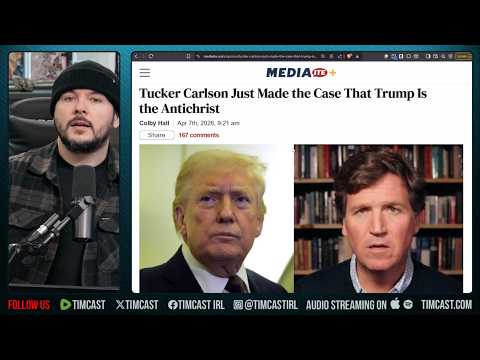
He actually said it...
Summary
Tucker Carlson has suggested that Donald Trump could be perceived as the anti-Christ, reflecting a trend of associating political figures with biblical prophecies during crises. This discussion highlights the intersection of politics and religious beliefs, emphasizing the need to understand these dynamics in contemporary political narratives.
Concerns arise regarding the intertwining of politics and religious beliefs, particularly as Carlson characterizes Trump as embodying anti-Christ traits. The critique of capitalism's alignment with Christianity proposes that true Christian values may align more closely with socialism, challenging conventional political ideologies.
The discussion highlights the tension between Christianity and Islam, particularly in the context of demographic shifts and political narratives. It raises concerns about the implications of these changes for religious identity and societal dynamics.
Tucker Carlson's suggestion that Trump could be perceived as the anti-Christ raises questions about its influence on Christian beliefs. The expresses nostalgia for simpler times, contrasting them with the current political landscape.
Perspectives
Analysis of the intersection of politics and religious beliefs.
Pro-Trump Anti-Christ Allegations
- Claims Trump embodies anti-Christ traits based on biblical prophecies
- Highlights the intersection of politics and religious beliefs
- Questions the implications of political actions on spiritual identity
- Critiques capitalisms alignment with Christianity
Criticism of Anti-Christ Allegations
- Denies the validity of associating Trump with anti-Christ characteristics
- Argues that such claims rely on selective interpretations of religious narratives
- Highlights the complexities of interfaith relations and coexistence
- Questions the motivations behind Carlsons defense of Islam
- Critiques the conflation of political allegiance with spiritual identity
Neutral / Shared
- Notes the rise of Islam and its implications for Christianity
- Observes demographic shifts affecting religious identity
- Mentions the nostalgia for simpler times amidst current political turmoil
Metrics
taxes
between 45 and 55%
percentage of income paid in taxes
This indicates a significant portion of income is allocated to public resources.
the estimates range from between 45 and 55% of all of the money you make will be paid off in some kind of tax
Key entities
Timeline highlights
00:00–05:00
Tucker Carlson has suggested that Donald Trump could be perceived as the anti-Christ, reflecting a trend of associating political figures with biblical prophecies during crises. This discussion highlights the intersection of politics and religious beliefs, emphasizing the need to understand these dynamics in contemporary political narratives.
- Tucker Carlson has suggested that Donald Trump could be perceived as the anti-Christ, reflecting a trend of associating political figures with biblical prophecies during crises
- Claims of a false resurrection following Trumps shooting are interpreted by some as aligning with anti-Christ prophecies, highlighting the intersection of politics and religious beliefs
- Certain characteristics of the anti-Christ, such as an injury to the right side of the head and a withered right arm, are seen by some as paralleling Trumps experiences, indicating how political figures are mythologized
- The discussion suggests that current events may distract from more pressing issues, with media and government potentially amplifying chaos to divert public attention
- Carlsons remarks raise concerns about a spiritual attack on Christianity, suggesting the faith has faced ongoing challenges in the political arena
- These discussions reflect a growing societal polarization regarding faith and politics, emphasizing the need to understand these dynamics in contemporary political narratives
05:00–10:00
Tucker Carlson has characterized Donald Trump as embodying anti-Christ traits, raising concerns about the intertwining of politics and religious beliefs. The discussion critiques capitalism's alignment with Christianity, proposing that true Christian values may align more closely with socialism.
- Tucker Carlson has characterized Donald Trump as embodying anti-Christ traits, raising concerns about the intertwining of politics and religious beliefs. This perspective highlights the potential dangers of viewing political figures through a theological lens
- Carlson suggests that the current political landscape may represent a spiritual struggle against Christianity, indicating that ongoing conflicts could be perceived as efforts to undermine the faith. This view reflects a historical context of challenges faced by Christianity
- The discussion critiques capitalisms alignment with Christianity, proposing that true Christian values may align more closely with socialism. This challenges traditional economic perspectives within religious contexts
- Carlson points to the resilience of early Christian communities that thrived without material wealth, suggesting their model could inform contemporary governance. This adds to doubts about the compatibility of capitalism with Christian teachings
- The segment addresses the issue of mocking other religions, particularly in relation to Trumps remarks about Islam. Such mockery is seen as detrimental to mutual respect among faiths and could heighten religious tensions
- Overall, the narrative warns against the politicization of religious beliefs, emphasizing the risks this poses to societal unity. The fusion of faith and politics may exacerbate divisions in an already polarized society
10:00–15:00
The discussion highlights the tension between Christianity and Islam, particularly in the context of demographic shifts and political narratives. It raises concerns about the implications of these changes for religious identity and societal dynamics.
- The message of faith highlights human limitations, warning against those who act as if they possess divine qualities. This understanding is essential for navigating cultural and political changes
- As political groups rally around figures like Trump, some commentators are increasingly defending Islam, raising questions about their true intentions. This defense contrasts with the historical conflicts between Christianity and Islam
- The influx of Muslims into Western nations coincides with a decline in Christian influence, raising concerns about future religious dynamics. This demographic shift could reshape the landscape of faith in these regions
- Incidents of church burnings often suggest a larger conspiracy, reflecting societal anxieties about the rise of Islam. Such fears can exacerbate divisions and conflicts among different religious communities
- Tucker Carlsons defense of Islam, despite his Christian identity, adds to doubts about his motivations. This behavior may aim to promote peace but complicates the narrative surrounding religious identity
- The growth of Islam in areas traditionally dominated by Christianity may trigger defensive reactions from Christian communities. This response underscores the ongoing struggle for religious identity and influence in a changing environment
15:00–20:00
Tucker Carlson's suggestion that Trump could be perceived as the anti-Christ raises questions about its influence on Christian beliefs. The speaker expresses nostalgia for simpler times, contrasting them with the current political landscape.
- Tucker Carlsons suggestion that Trump could be seen as the anti-Christ raises significant questions about its impact on Christian beliefs. This characterization could influence how followers perceive political figures in a religious context
- The speaker reminisces about simpler times from their youth, contrasting them with todays complex political landscape. This nostalgia reflects a desire to escape the current turmoil
- Frustration with the relentless political discourse suggests a need for a break from constant news updates. The speaker implies that stepping back may be a healthier choice amidst the chaos
- References to pizza and gaming symbolize a longing for less complicated days. This metaphor highlights the speakers dissatisfaction with the present state of affairs
- The speaker urges the audience to engage by liking and sharing the content, indicating a desire to foster a community around shared perspectives. This call to action emphasizes the importance of collective discussion
- The segment ends with a promise of more news ahead, indicating that the political situation will continue to change. This suggests the audience should remain vigilant and informed about future developments