Intel / Society Tension
Understanding the Impending Economic Crisis
Christine Lagarde from the European Central Bank warns that disruptions in the Strait of Hormuz could lead to significant food shortages and inflation, particularly impacting regions reliant on fertilizer for agriculture. The potential for food rationing is underscored as a serious outcome of ongoing energy disruptions, with rising prices contributing to inflation and shortages that threaten economic growth.
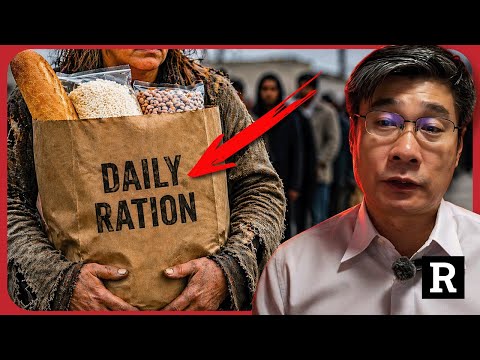
Source material: “Food rationing and lockdowns are here” Prof. Jiang on the DEPRESSION that’s coming | Redacted News
Summary
Christine Lagarde from the European Central Bank warns that disruptions in the Strait of Hormuz could lead to significant food shortages and inflation, particularly impacting regions reliant on fertilizer for agriculture. The potential for food rationing is underscored as a serious outcome of ongoing energy disruptions, with rising prices contributing to inflation and shortages that threaten economic growth.
The just-in-time supply chain model, optimized for efficiency, is identified as a critical vulnerability that could worsen the global food crisis if fertilizer supplies are disrupted. Professor Zhang highlights the fragility of the global economy, noting that reliance on fertilizers enables the sustenance of a population far beyond natural limits, raising concerns about potential starvation without these supplies.
Policymakers are leveraging crises to enhance control over populations, potentially leading to a command economy with digital currency and ID systems. Concerns are rising about food shortages and economic collapse reminiscent of historical events, as the Pentagon encourages American companies to pivot production towards military needs, signaling a shift to a wartime economy.
The destruction of oil refineries globally is linked to war, accidental failures, and possible sabotage, underscoring the vulnerability of energy infrastructure. There are concerns that elites may deliberately engineer economic crises to foster fear and compliance among the public, a tactic known as the strategy of tension.
Perspectives
Analysis of economic control mechanisms and societal implications.
Policymakers and Economic Control
- Leverage crises to enhance control over populations through digital currency and ID systems
- Engineer economic crises to foster fear and compliance among the public
Public Concerns and Resistance
- Fear of a command economy and loss of individual freedoms
- Skepticism regarding the motivations behind military production shifts
Neutral / Shared
- Disruptions in the Strait of Hormuz threaten global food supply chains
- Historical precedents indicate that significant government spending can lead to technological advancements
Metrics
other
$1.5 trillion USD
wartime budget at the Pentagon
This budget reflects the prioritization of military spending over domestic needs
$1.5 trillion wartime budget at the Pentagon under President Trump.
other
$90 billion USD
projected budget for ICE
A significant allocation that suggests a focus on enforcement rather than community support
Their budget is like, I think, I think projected to project to be $90 billion.
other
$500 billion USD
dedicated to building data centers
Indicates a substantial investment in surveillance infrastructure
the government has dedicated $500 billion to building data centers all around America.
Key entities
Timeline highlights
00:00–05:00
Christine Lagarde from the ECB warns that disruptions in the Strait of Hormuz could lead to significant food shortages and inflation. The reliance on fertilizers for agriculture raises concerns about potential starvation and economic catastrophe.
- Christine Lagarde from the European Central Bank warns that disruptions in the Strait of Hormuz could lead to significant food shortages and inflation, particularly impacting regions reliant on fertilizer for agriculture
- The potential for food rationing is underscored as a serious outcome of ongoing energy disruptions, with rising prices contributing to inflation and shortages that threaten economic growth
- The just-in-time supply chain model, optimized for efficiency, is identified as a critical vulnerability that could worsen the global food crisis if fertilizer supplies are disrupted
- Professor Zhang highlights the fragility of the global economy, noting that reliance on fertilizers enables the sustenance of a population far beyond natural limits, raising concerns about potential starvation without these supplies
- The conversation points to an impending economic catastrophe, with policymakers aware of the crisis yet seemingly unprepared to respond effectively
05:00–10:00
Policymakers are leveraging crises to enhance control over populations, potentially leading to a command economy with digital currency and ID systems. Concerns are rising about food shortages and economic collapse reminiscent of historical events.
- Policymakers are using crises to enhance control over populations, potentially leading to a digital currency and ID system linked to food rationing, similar to a command economy
- The Pentagon is encouraging American companies to pivot production towards military needs, signaling a shift to a wartime economy reminiscent of World War II, which may result in food shortages and rationing
- Concerns are rising about a potential economic collapse akin to the 1929 stock market crash, which could trigger a depression and necessitate increased government intervention in the economy
- The U.S. government is heavily investing in data centers and surveillance technologies, indicating a move towards an AI-driven control grid that prioritizes monitoring over individual freedoms
- Current geopolitical tensions, particularly with nations aligned with BRICS, are impacting global oil refinery operations, complicating the energy landscape
10:00–15:00
Disruptions in the Strait of Hormuz are threatening global food supply chains, with significant implications for fertilizer availability. The potential for economic crises to be engineered for control raises concerns about societal stability and governance.
- The destruction of oil refineries globally is linked to war, accidental failures, and possible sabotage, underscoring the vulnerability of energy infrastructure
- There are concerns that elites may deliberately engineer economic crises to foster fear and compliance among the public, a tactic known as the strategy of tension
- Skepticism exists regarding the governments potential use of a staged alien invasion to justify the implementation of an AI surveillance grid, exploiting public anxiety for control
- The allocation of resources to space initiatives is questioned, especially in light of pressing domestic issues like healthcare and national debt, indicating a misalignment of government priorities
- The Pentagons substantial budget for military operations and the creation of a space force with surveillance capabilities reflect a broader strategy aimed at population control
15:00–20:00
Disruptions in the Strait of Hormuz are threatening global food supply chains, particularly fertilizer availability. Experts warn that these challenges could lead to significant economic consequences and societal control mechanisms.
- There is a historical link between significant government spending, such as the Manhattan Project, and technological advancements, raising questions about the lack of breakthroughs since the Apollo moon landing
- Concerns have been expressed regarding the limited scientific progress from NASAs recent projects, indicating a disconnect between government funding and actual advancements in our understanding of the universe
- The discussion includes the potential use of advanced robotics, like Teslas Optimus, as tools for societal control, suggesting that showcasing such technologies could unify the public and distract from economic challenges
- A warning is issued about an impending economic depression, highlighting the need for a shift in mindset among Americans who have not faced significant scarcity, advocating for a focus on community and spirituality over materialism
20:00–25:00
Disruptions in the Strait of Hormuz are threatening global food supply chains, particularly fertilizer availability. Experts warn that these challenges could lead to significant economic consequences and societal control mechanisms.
- A German politicians proposal to raise the enlistment age for reservists to 70 raises concerns about a potential depopulation agenda and a disregard for human life
- There is a belief among some that elites prioritize their wealth and privilege over the welfare of the general population, suggesting a broader agenda of control
- Palantirs recent advocacy for reinstating the draft in the U.S. aligns with plans for automatic registration in the selective service, indicating a shift towards a more militarized society supported by AI surveillance
- The potential for food rationing is viewed as a means to establish a control grid that could enforce compliance and patriotism, particularly among young men in military contexts
- The importance of mental and emotional preparation for future crises, drawing parallels to the unpreparedness experienced during the pandemic