Intel / Military Insight
Real-time monitoring of security incidents, escalation signals and threat indicators across global hotspots, focusing on rapid alerts and emerging risk developments. Topic: Military-Insight. Updated briefs and structured summaries from curated sources.
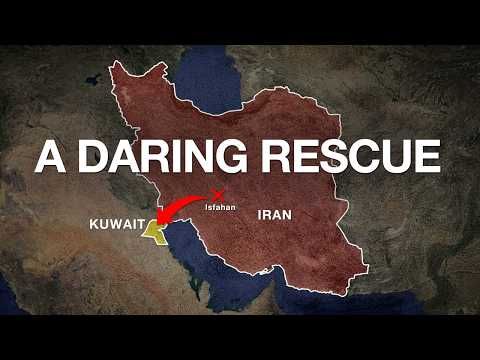
How Washington Averted an Iran Hostage Crisis (War Update)
Summary
A recent U.S. rescue mission successfully retrieved two crew members from a downed F-15E in Iran, averting a potential hostage crisis. The operation involved significant military resources and deception tactics to prevent Iranian forces from gaining a strategic advantage. The U.S. faced challenges during the extraction, including the destruction of the stranded aircraft to prevent technology from falling into Iranian hands.
Despite the successful extraction, tensions escalated as President Trump threatened military strikes against Iran, claiming the capability to decimate key infrastructure within hours. Israeli forces also conducted strikes on Iranian facilities, further heightening the conflict. Iran retaliated with drone and missile attacks against U.S. troops, indicating a rapid escalation of hostilities.
Negotiations for a ceasefire proposed by Pakistan were rejected by Iran, which demanded more comprehensive terms. The U.S. and its allies continue to face challenges in managing the conflict, as Iran's military infrastructure demonstrates resilience and the ability to recover quickly from strikes. Reports indicate that Iran is utilizing satellite imagery to target U.S. and allied forces effectively.
Concerns about the safety of nuclear facilities in Iran have emerged, particularly following strikes near the Bushehr nuclear power plant. The International Atomic Energy Agency confirmed impacts near the facility, raising alarms about potential radiation spread in the region. The situation remains precarious, with the potential for miscalculation leading to unintended consequences.
Perspectives
Analysis of U.S.-Iran conflict and recent military operations.
United States
- Executed a successful rescue mission to retrieve airmen from Iran
- Utilized deception tactics to mislead Iranian forces during the operation
- Claimed overwhelming air dominance over Iranian skies
- Threatened significant military action against Iran to deter further aggression
- Highlighted the high costs of the operation as acceptable under the circumstances
Iran
- Rejected ceasefire proposals, demanding more comprehensive peace terms
- Threatened retaliation against U.S. and Israeli strikes
- Demonstrated resilience in military infrastructure, recovering quickly from attacks
- Utilized drone and missile strikes against U.S. forces in response to escalations
- Maintained skepticism towards negotiations without guarantees against future attacks
Neutral / Shared
- Global shipping firms are altering ship locations in the Strait of Hormuz
- IAEA confirmed strikes near Irans Bushehr nuclear power plant without damage
Metrics
bounty
roughly $66,000 US dollars USD
bounty offered by the Iranian government for the WSO
This significant bounty illustrates the high stakes involved in the rescue operation.
the Iranian government offered a substantial bounty for any person who found the M and alive, roughly $66,000 US dollars.
elevation
roughly 2,100 meters or 7,000 feet meters
elevation of the ridge where the stranded officer was located
The challenging terrain added to the difficulty of the rescue operation.
from his vantage point on a ridge of roughly 2,100 meters elevation or 7,000 feet.
cost
several hundred million dollars USD
cost of the extraction operation
This highlights the financial implications of military operations.
the extraction cost the US several hundred million dollars at a minimum
aircraft_value
over a hundred million dollars per airframe USD
value of the modified C-130 aircraft destroyed
This indicates the high stakes involved in maintaining military assets.
the two modified C-130 aircraft destroyed in Iran were valued at over a hundred million dollars per airframe
injuries
15 units
U.S. troops injured in Iranian attacks
Injuries among U.S. personnel indicate escalating conflict and risks to military operations.
15 U.S. troops were reported injured.
production_time
months
time needed for Iran's steel plants to restart production
Extended downtime could weaken Iran's economic and military capabilities.
They will need months to rebuild and restart production.
staff_evacuated
198 units
staff evacuated from the Bushehr nuclear power plant
This evacuation indicates heightened concerns over safety in the region.
a Russia state nuclear company, Ross Atom, ordered the evacuation of 198 of its staff at the plant
proximity_to_strike
75 meters
distance of the strike from the Bushehr facility
Strikes this close to a nuclear facility pose significant safety risks.
one strike within 75 meters of the facility's perimeter
Key entities
Timeline highlights
00:00–05:00
A US rescue mission successfully retrieved two crew members from a downed F-15E in Iran, highlighting the complexities of modern warfare. The operation involved deception tactics and significant military resources to prevent Iranian forces from gaining a strategic advantage.
- A recent US rescue mission successfully retrieved two crew members from a downed F-15E in Iran, underscoring the dangers of military operations amid rising tensions with Iran
- The US and Iran are evaluating a ceasefire proposal from Pakistan, supported by Russia and China, which could significantly change the conflicts dynamics as President Trump threatens escalation
- After the F-15E was shot down, both crew members ejected, with the pilot rescued quickly while the weapons system officer evaded capture despite injuries, showcasing resilience
- The stranded officer used a signal beacon to communicate his location while avoiding detection, highlighting the complexities of modern warfare during the US rescue operation
- The US military deployed numerous aircraft and special operations personnel for the extraction, reflecting the missions high stakes to prevent Iran from gaining a strategic edge
- Deception tactics were employed to mislead Iranian forces about the officers location, illustrating the detailed planning necessary for such operations and potentially impacting future military engagements
05:00–10:00
The U.S. successfully executed a rescue mission to retrieve two airmen from Iran, averting a potential hostage crisis.
- The U.S. conducted a successful rescue mission to retrieve two airmen from Iran, preventing a potential hostage crisis
- The operation utilized extensive military resources and deception tactics, with costs estimated in the hundreds of millions, justified by the high stakes involved
- Iran dismissed a ceasefire proposal from Pakistan, insisting on more substantial terms, reflecting its reluctance to negotiate without guarantees against future attacks
- President Trump issued a warning of severe military action against Iran if demands regarding the Strait of Hormuz are not met, raising concerns about potential war crimes
- U.S. officials portrayed the rescue as a demonstration of air superiority over Iran, emphasizing military capabilities in the region
- Russia and China are reportedly interested in facilitating a ceasefire, indicating possible shifts in diplomatic relations, though Iran remains skeptical of U.S. intentions
10:00–15:00
Tensions between the U.S. and Iran have escalated, with President Trump threatening significant military action against Iran.
- President Trump has reiterated his threat to incapacitate Iran overnight, highlighting the rising tensions and potential for major military action
- Israeli airstrikes have targeted a key petrochemical facility in Iran, aiming to destabilize its economy and potentially provoking further Iranian retaliation
- Iran has responded with drone and missile strikes against U.S. troops in Kuwait, resulting in injuries among American personnel
- The Israeli militarys operations have significantly damaged Irans steel production capacity, which could impair its military sustainability and response to ongoing assaults
- Reports suggest that Irans missile capabilities remain robust, allowing for rapid restoration of its launch infrastructure after attacks
- Irans use of satellite imagery from a Chinese company to target U.S. and allied forces indicates advanced military coordination
15:00–20:00
Global shipping companies are altering their ship locations or turning off transponders in the Strait of Hormuz, likely with Iranian government consent. The International Atomic Energy Agency confirmed strikes near Iran's Bushehr nuclear power plant, raising significant safety concerns despite no damage to the facility.
- Global shipping companies are reportedly altering their ship locations or turning off transponders in the Strait of Hormuz, likely with Iranian government consent, indicating a more intricate situation in the Persian Gulf
- The International Atomic Energy Agency confirmed strikes near Irans Bushehr nuclear power plant, with one strike occurring dangerously close, raising significant safety concerns despite no damage to the facility
- A Russian state nuclear company evacuated many of its staff from the Bushehr plant in response to the escalating threat, highlighting the seriousness of military actions in the region
- Modeling suggests that a direct attack on the Bushehr facility could result in widespread nuclear contamination across southern Iran and neighboring countries, posing severe health risks
- Neither the U.S. nor Israel has guaranteed to avoid strikes on the Bushehr site, which could escalate tensions and threaten Iranian energy infrastructure
- The situation remains unstable as the Trump administration considers potential strikes against Iranian energy assets, which could further destabilize the region