Intel / Military First Strike
OSINT intel briefs, structured summaries, and trend signals. Topic: Military-First-Strike. Updated briefs and structured summaries from curated sources.

Trump mourns US servicemen killed in action; warns there 'could be more before this ends' | #shorts
Full timeline
0.0–300.0
Three U.S. military service members have been killed in action, leading to a national period of mourning.
- Three U.S. military service members have been killed in action, prompting a national period of mourning for their sacrifice. The speaker emphasizes the importance of continuing the mission for which these service members gave their lives
- There is an acknowledgment that more casualties may occur before the situation is resolved. The speaker expresses a determination to do everything possible to prevent further losses and vows that America will avenge the deaths of the fallen
- A strong message is conveyed regarding the intention to deliver a significant response to the terrorists responsible for these acts. This response is framed as a defense of civilization

STUNNING ADMISSION: Iranian Official Admits Regime Has Lost Control
Full timeline
0.0–300.0
Operation Epic Fury and Operation Moring Lion have intensified, targeting key military assets and leadership in Iran. The Iranian military appears to be operating independently, indicating a significant breakdown in centralized command.
- Operation Epic Fury, initiated by the US, and Operation Moring Lion, led by Israel, have entered their second day, targeting ballistic missile arrays, air defense systems, and the Iranian regimes senior leadership
- Iranian Foreign Minister Abbas Aragghi stated that the military is now operating independently, executing pre-authorized guidance, indicating a collapse of centralized command and control
- The US reportedly conducted over 900 strikes in the first 12 hours of the conflict, while Israel carried out 1200 strikes in the first 24 hours, surpassing the total number of strikes from the previous years 12-day war
- Iranian state media confirmed the death of Supreme Leader Ayatollah Ali Hamani following a targeted strike that destroyed his compound in Tehran
- President Trump remarked on Hamanis death, framing it as justice for the people of Iran, and stated that bombing would continue until American objectives were met
- Israeli officials claim that more than 40 senior Iranian security and regime officials were killed in the initial strikes, including key figures like Irans defense minister
300.0–600.0
The Iranian regime has contingency plans and has shifted significant authority to Ali Larajani, indicating preparation for rapid succession. Iran has launched retaliatory strikes across the Gulf and the broader Middle East, targeting nations hosting US bases, with confirmed US fatalities.
- The Iranian regime has contingency plans in place, with significant authority shifted to Ali Larajani, indicating preparation for rapid succession despite the removal of top leadership
- Iran has launched retaliatory strikes across the Gulf and the broader Middle East, targeting nations hosting US bases, with explosions reported in Riyadh, Saudi Arabia
- The Islamic Republic is projecting defiance despite significant losses, with the elite Revolutionary Guard declaring that their most ferocious offensive operation has yet to begin
- The US Central Command has confirmed the first fatalities of the conflict, reporting that three US service members were killed and five others seriously wounded

US, Israel strike Iran's top leaders in Operation Roaring Lion
Full timeline
0.0–300.0
Israel and the US conducted a significant joint strike on Iran, targeting high-ranking political and military figures. In response, Iran launched at least 40 ballistic missiles towards Israel and neighboring countries, though the intensity of the retaliation was lower than in previous conflicts.
- Israel and the US launched a major joint strike on Iran, targeting key political and military leaders, including Supreme Leader Ali Khamenei and President Masoud Pezeshkian. The operation has been months in the making, with significant damage reported to Khameneis compound
- Iran has retaliated with at least 40 ballistic missiles launched towards Israel and its neighbors, although this response is less intensive compared to previous conflicts. The military has targeted hundreds of Iranian military sites, successfully neutralizing several missile launches before they could be fired
300.0–600.0
Medical centers in Israel have transitioned to emergency mode, relocating critical patients to underground facilities. The military has mobilized an additional 20,000 reservists, anticipating potential escalations along its borders.
- Medical centers across Israel have switched to emergency mode, relocating critical patients and operations to underground complexes. Schools have been canceled, affecting children nationwide
- Israel has closed its airspace to all civilian flights, which is expected to remain in effect for the coming days due to the ongoing conflict. The military has called up an additional 20,000 reservists, adding to the 50,000 already on duty
- The Israeli army has deployed forces around the country, particularly along borders with Lebanon, Syria, and Gaza, in anticipation of potential escalations. Assessments suggest Iran may instruct its proxy groups to join the conflict
- Iran has reportedly instructed its proxies in Iraq to be on standby, indicating a desire to activate these groups against Israel and U.S. interests in the region. However, no threats or missile launches from Iraq have been observed at this time
600.0–900.0
Schools and workplaces across Israel are closed due to the ongoing conflict, with only essential sectors allowed to operate. An Israeli official indicated that the conflict is expected to last several days at least, with the IDF stating it will operate as long as necessary.
- Schools and workplaces across Israel are closed due to the ongoing conflict, with only essential sectors allowed to operate. The home front command has issued restrictions on gatherings, effectively canceling Purim celebrations
- An Israeli official indicated that the conflict is expected to last several days at least, with the IDF stating it will operate as long as necessary. The situation remains fluid with no clear timeline for resolution

The Wire - February 28, 2026 - Priority
Full timeline
0.0–300.0
War has commenced between American and Israeli forces and Iran, marked by extensive bombings in major cities. In retaliation, Iranian forces have targeted American bases in the region, escalating the conflict significantly.
- War has officially begun with Iran as American and Israeli forces launch preemptive strikes across the country. Major bombings are reported in key cities, dramatically escalating the conflict
- In retaliation, Iranian forces have targeted American bases in Jordan, Qatar, Kuwait, and the UAE with missile strikes. Significant damage has been observed at multiple air bases and the headquarters of the 5th Fleet
- The Qatib-Hezbollah al-Nujawov group in Iraq has declared its intent to initiate insurgent attacks against American forces. This includes targeting American civilians at oil facilities, complicating the regional security landscape
- President Trump has released an 8-minute video on his Truth Social page, outlining the rationale for the war. He has called for Iranian forces to surrender and urged civilians to remain indoors during the bombings
- Trumps message also encourages Iranian civilians to rise against their government, indicating a push for regime change amid ongoing military operations. The overall objectives of this conflict remain unclear as bombings continue
- An additional address from President Trump is anticipated later today, suggesting that the administration is preparing to communicate further developments. The urgency of the situation is palpable as the conflict unfolds

The hour of your freedom is at hand: Trump to Iranians | #shorts #iran #trump #usa
Full timeline
0.0–300.0
The speaker calls for the Iranian people to remain indoors due to imminent danger from bombings. They assert that a unique opportunity to reclaim their government will arise once the situation stabilizes.
- The speaker emphasizes that the hour of freedom is at hand for the proud people of Iran, urging them to stay sheltered indoors due to the dangerous situation outside. Bombs are expected to drop everywhere, posing an immediate threat to their safety. Once the situation stabilizes, the speaker encourages the Iranian people to take over their government, as this opportunity may be their only chance for generations

“Iran will never have a nuclear weapon” | #shorts #trump #usa #iran
Full timeline
0.0–300.0
The United States military has commenced major combat operations in Iran to eliminate threats from the Iranian regime. The operation aims to prevent Iran from obtaining nuclear weapons and destabilizing the region.
- The United States military has initiated major combat operations in Iran to eliminate threats posed by the Iranian regime. The objective is to defend American citizens from this dangerous group
- It has been a consistent policy of the United States, particularly during this administration, that Iran must never possess a nuclear weapon. This message has been reiterated multiple times
- Efforts were made to negotiate a deal with Iran, but the regime repeatedly rejected opportunities to abandon its nuclear ambitions. Their refusal has persisted for decades
- Iran has attempted to rebuild its nuclear program and develop long-range missiles that threaten American allies in Europe and U.S. troops stationed abroad. This escalation poses a risk to American homeland security
- The military operation aims to dismantle Irans missile capabilities and destroy its navy. The goal is to prevent Irans terrorist proxies from destabilizing the region and the world
- The mission is framed as a noble cause, despite the potential loss of American lives. The focus is on securing a safer future for the United States and its allies

What to expect from new F1 season
Full timeline
0.0–300.0
Cadillac enters Formula 1 as the 11th team with drivers Sergio Perez and Valtteri Bottas. The 2026 season introduces significant changes in car design, power balance, and race regulations.
- Cadillac officially enters Formula 1 as the 11th team, with Sergio Perez and Valtteri Bottas as their drivers for the new season
- The new cars are shorter, narrower, and lighter. They feature flatter floors and simplified wings that reduce downforce and increase ride height
- The power balance shifts dramatically this season. There is a 50% split between internal combustion and electric power, using 100% advanced sustainable fuel
- The traditional DRS system is replaced by overtake mode. This allows drivers to unlock additional electrical power when they are within one second of the car ahead
- Active aerodynamics are introduced this season. Both front and rear wings can adjust in designated zones to enhance straight-line speed and reduce drag
- Spain will host two races this season. A new Madrid circuit is scheduled for September, adding unpredictability to the championship
- Racing Bulls welcomes rookie Arvid Lindblad. This marks a significant change as the 2026 season represents a complete reboot for Formula 1
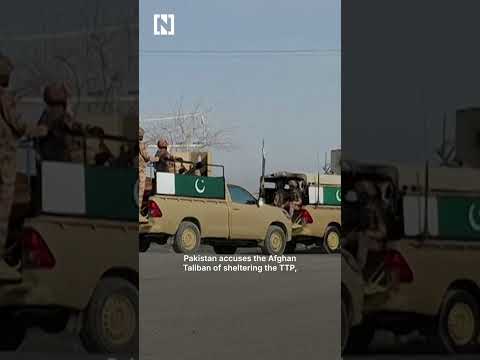
Pakistan declares ‘open war’ on Afghanistan
Full timeline
0.0–300.0
Pakistan's defense minister has declared an open war with Afghanistan following a bombing in Kabul by the Pakistani Air Force. The conflict is primarily driven by the militant group Tehrik-i-Taliban Pakistan, which has been accused by Pakistan of receiving support from the Afghan Taliban.
- Pakistans defense minister has declared an open war with Afghanistan following the bombing of Kabul by the Pakistani Air Force
- Both countries have exchanged fire across their shared border, resulting in many reported casualties
- The conflict centers around the militant group known as Tehrik-i-Taliban Pakistan, which has conducted numerous attacks in Pakistan over the past year
- Pakistan accuses the Afghan Taliban of providing shelter to Tehrik-i-Taliban Pakistan, a claim that the Afghan Taliban denies
- The porous border between Afghanistan and Pakistan complicates control, as tribal networks often hold more influence than the central governments
- Despite denying any strategic relationship, the Afghan Taliban and Tehrik-i-Taliban Pakistan share political and ideological sympathies, particularly regarding colonial-era borders

REPORT: Iran’s Supreme Leader Prepares For 'Assassination Scenario’
Full timeline
0.0–300.0
Iran's Supreme Leader is implementing a succession plan amid fears of potential U.S. military strikes, delegating authority to ensure regime continuity.
- Irans Supreme Leader is preparing for an assassination scenario by naming multiple layers of successors and restructuring command authority. This planning comes as Tehran braces for potential U.S. military strikes
- Ayatollah Ali Khamenei has instructed his closest associates to develop contingency plans to ensure the Islamic Republics survival in case of his death. His preparations reflect a heightened sense of urgency amid escalating tensions
- Ali Larijani, a veteran insider and Secretary of Irans Supreme National Security Council, has seen his authority expand significantly. He is now overseeing crisis management and coordinating responses to both internal unrest and external threats
- Khamenei has ordered senior leaders to designate multiple replacements for key military and government positions. This redundancy aims to maintain decision-making capabilities if communications are disrupted or if he is killed
- Irans military is on high alert, with missile launchers repositioned along its borders. Airspace closures for missile testing have become routine, and the regime is preparing to secure major cities to prevent unrest during potential conflict
- Internal discussions have focused on who could govern if Khamenei and other senior leaders are removed. Larijani is considered a key figure for maintaining regime continuity, despite not being a senior Shiite cleric
300.0–600.0
Iran is preparing for institutional survival amid potential military strikes while also engaging in diplomatic efforts. The foreign minister has indicated that a draft nuclear counter-proposal will be ready soon following talks with U.S.
- Iran is preparing for institutional survival amid potential military strikes while also engaging in diplomatic efforts. The foreign minister has indicated that a draft nuclear counter-proposal will be ready soon following talks with U.S. envoys
- The President has set a deadline of 10 to 15 days for Tehran to resolve ongoing disputes. This pressure coincides with military planning that includes options for limited strikes and targeting individuals
- The simultaneous unfolding of military preparations and diplomatic negotiations creates a volatile situation. Iran is restructuring its leadership for potential assassination scenarios while negotiating over uranium enrichment and sanctions relief
- The Iranian regime insists on keeping discussions focused solely on its nuclear program. It refuses to compromise on its ballistic missile program or support for terrorist proxies, complicating the diplomatic landscape
- As the U.S. refines its military options, it continues to keep diplomatic channels open. If negotiations yield a breakthrough, military posturing may be seen as leverage; if not, escalation could follow
- The Supreme Court recently ruled against the Presidents authority to impose tariffs unilaterally. This decision could reshape trade policy and shift leverage to another country amid ongoing economic tensions
600.0–900.0
China's President benefits from a Supreme Court ruling that limits the U.S. ability to impose tariffs under emergency authority, reducing immediate leverage in trade negotiations.
- Chinas President is likely pleased with the Supreme Courts ruling against the tariff strategy. The ruling removes the ability to impose tariffs under emergency authority, which had provided Washington with immediate leverage
- The courts decision means that Washington can no longer escalate tariffs rapidly. This change may reduce the urgency for Chinese negotiators to honor past purchase commitments
- The former president described the ruling as life or death for the U.S. He emphasized the central role tariffs play in his economic strategy. Despite the setback, the White House quickly announced a new 10% global tariff under Section 122 of the Trade Act
- Tariff collections surged significantly since the former presidents return to office. They jumped from over $9 billion in March to nearly $24 billion in May. For fiscal 2025, collections reached $215 billion, indicating the administrations ongoing reliance on tariffs
- As the fourth anniversary of the invasion of Ukraine approaches, Russia launched one of its heaviest aerial assaults of the year. Moscow fired 297 drones and nearly 50 missiles, targeting critical infrastructure and civilian life
- The Ukrainian President reported that a significant proportion of the munitions were intercepted. However, the attacks left over half a million people in the capital without power during extremely cold temperatures
- The Kremlins renewed pressure campaign coincides with stalled cease-fire negotiations. Moscow continues to demand that Ukraine cede large portions of the eastern region, a request that Ukraine has consistently rejected
900.0–1200.0
Hungary and Slovakia are threatening to cut emergency electricity supplies to Ukraine due to disrupted Russian oil deliveries. A deadly explosion in Lviv has resulted in one police officer dead and 25 others injured, with authorities investigating it as a potential act of terrorism ordered by Russia.
- Hungary and Slovakia are threatening to halt emergency electricity supplies to Ukraine due to disrupted Russian oil deliveries through the Druzhba pipeline
- Ukraines pro-Russian government, led by a senior official, has indicated that Budapest could withhold support for Kyiv unless oil shipments resume
- The Prime Minister of Slovakia accused President Zelensky of behaving maliciously. He warned that power supplies could be cut to Ukraine if repairs are not completed
- The European Union is preparing to finalize its 20th sanctions package against Russia. This package aims to align with the anniversary of the invasion
- In Lviv, a deadly explosion killed a police officer and injured 25 others. Authorities are investigating the incident as a potential act of terrorism ordered by Russia
- Ukrainian officials reported that a bomb detonated at a store. A second blast targeted first responders, leading to several arrests
1200.0–1500.0
Pakistan's military conducted airstrikes in Afghanistan, claiming to target militants and resulting in at least 70 deaths. Afghan officials countered that the strikes hit civilian areas, escalating tensions between the two nations.
- Pakistans military conducted cross-border airstrikes targeting militant hideouts in Afghanistan, claiming to have killed at least 70 militants. Afghan officials, however, assert that the strikes hit civilian areas, resulting in numerous casualties
- Islamabad framed the airstrikes as a necessary counterterrorism operation aimed at militants responsible for attacks inside Pakistan. In contrast, Kabul emphasized the violation of its sovereignty and warned of consequences
- Recent violence in Pakistan has been attributed to a surge in attacks, including a suicide bombing that killed two soldiers. Pakistani officials have accused militants based in Afghanistan of orchestrating these attacks, deepening tensions between the two nations
- The Taliban government in Afghanistan rejected Pakistans casualty claims, insisting that the victims were civilians, including women and children. Local tribal leaders supported this narrative, stating that those killed were not affiliated with any militant groups
- The ongoing conflict along the Pakistan-Afghanistan border has seen a pattern of accusations and retaliations, complicating the security situation. Despite a ceasefire agreement brokered last year, mistrust remains high between the two governments
- Pakistans information minister presented what he called conclusive evidence linking recent attacks to Afghan militants. This assertion has been met with skepticism from Afghan officials, who deny the presence of such militants on their territory

How Ukraine Invented Drone Warfare
Full timeline
0.0–300.0
Ukraine has developed a new form of drone warfare, utilizing inexpensive drones for repeated strikes on targets. This evolution in military tactics suggests a shift in how future conflicts may be conducted.
- Ukraine has effectively invented true drone warfare, utilizing inexpensive drones to strike targets repeatedly. This approach marks a significant evolution in military tactics, suggesting that future conflicts may increasingly rely on similar strategies
- The ability of Ukraine to stand up against Russia without relying on large missiles indicates a shift in warfare dynamics. The emphasis on building basic drones and training personnel reflects a resourceful adaptation to the challenges faced on the battlefield
- The ingenuity displayed by the Ukrainians raises questions about the future of military engagements. It may lead to a reevaluation of how wars are fought, particularly in terms of technology and resource allocation