Intel / Markets Fear
Track market fear, risk sentiment, crisis reaction and stress signals linked to geopolitical and strategic developments.
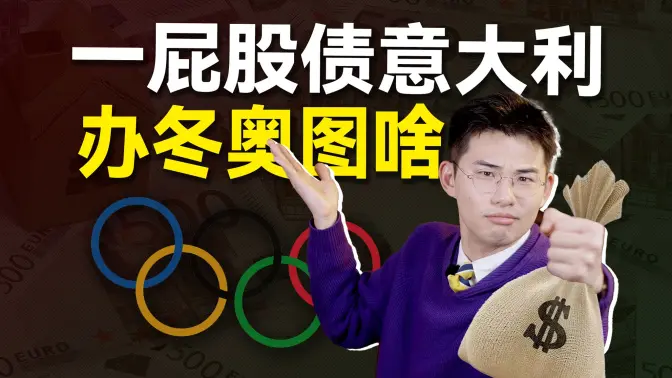
After 16 Years of Economic Struggles, How Does Italy Have the Courage to Host the Winter Olympics?
Summary
Italy prepares for the 2026 Winter Olympics amid economic difficulties and a substantial debt burden.
The government plans to use the Olympics to boost local economies through infrastructure projects and tourism.
Concerns exist regarding the financial strain and organized crime risks associated with the event.
Political fragmentation complicates the implementation of necessary reforms.
Perspectives
The material discusses Italy's economic situation and the implications of hosting the Winter Olympics.
Support for Hosting the Olympics
- Leverage the Olympics to stimulate local economies
- Invest in infrastructure improvements to enhance transportation
- Create a lasting legacy by converting Olympic facilities into community housing
Concerns About Economic Viability
- High debt-to-GDP ratio limits fiscal stimulus options
- Historical financial burdens from past Olympics raise doubts
Neutral / Shared
- Political pressure exists to deliver results quickly due to international deadlines
Metrics
debt
0.0 EUR
Italy's national debt situation
High debt levels can limit economic growth and stability.
Italy, a European country with high debt
business_density
99.9 %
Percentage of small and medium-sized enterprises in Italy
A high density of small businesses indicates potential economic fragility.
Accounts for 99.9% of businesses
employment
80.0 %
Percentage of employment provided by small businesses
Reliance on small businesses for employment can lead to vulnerabilities.
Provides 80% of employment
GDP
0.0
Economic performance trend
Declining GDP indicates worsening economic conditions.
Italy's GDP is starting to collapse
budget
5200000000.0 EUR
total budget for the Olympics
This significant investment reflects Italy's commitment to hosting the event despite economic challenges.
The total budget Italy allocated for the Olympics is 5.2 billion euros.
infrastructure_spending
3500000000.0 EUR
funds allocated for infrastructure
Investment in infrastructure is crucial for the success of the Olympics and local economic stimulation.
Approximately 3.5 billion is spent on infrastructure.
operational_costs
1700000000.0 EUR
costs for event organization and services
Operational costs are essential for ensuring the smooth execution of the Olympics.
About 1.7 billion is for event organization, operations, and related services.
new_trains
513.0 units
ordered to enhance transportation capacity
This order indicates a substantial investment in infrastructure to support the Olympics.
Key entities
Timeline highlights
00:00–05:00
Italy is preparing to host the Winter Olympics in 2026 amidst ongoing economic challenges and a significant debt burden. The event raises concerns about financial stability and the country's ability to manage the costs associated with such a large international gathering.
- Italy is set to host the Winter Olympics in 2026 despite 16 years of economic struggles and a high debt burden, raising questions about financial stability
- The event will attract athletes to Italy, providing a platform for talent showcase, but hosting such a large international event is costly and poses financial risks
- Italys economy has structural issues, with a high density of small and medium-sized enterprises making up 99.9% of all businesses, yet they struggle to produce world-class companies for global competitiveness
- The political landscape in Italy is fragmented, with numerous parties and a lack of strong organizations, leading to instability and corruption that complicate governance
- The introduction of the euro in 1999 limited Italys ability to use monetary policy tools for economic stimulation, while Silvio Berlusconis leadership significantly increased national debt, contributing to economic challenges
- Recent geopolitical tensions, particularly the conflict in Ukraine, have exacerbated energy prices in Europe, impacting Italys economy and highlighting vulnerabilities in relying on external energy sources
05:00–10:00
Italy's economy is grappling with a high debt-to-GDP ratio of 104%, which hampers its ability to implement effective stimulus measures. The upcoming Winter Olympics in 2026 is viewed as a potential opportunity for economic revitalization amidst these challenges.
- Italys economy faces significant challenges, including a high debt-to-GDP ratio of 104%, limiting its ability to implement nationwide stimulus measures like in the 1990s
- The political landscape is fragmented, with a coalition of eight parties making it difficult to push through structural reforms due to high political costs
- Italys industrial base consists of small and medium-sized enterprises, which account for 99.9% of all businesses, but struggle to compete globally without larger organizations to support innovation
- The rise in gold prices has provided Italy with a financial buffer, as it holds the third-largest gold reserves in the world, valued at approximately $440 billion, which can be leveraged for short-term funding
- Despite economic difficulties, Italy forecasts a slight GDP growth of 0.7% in 2024, contrasting with the more severe challenges faced by other European nations
- The upcoming Winter Olympics in 2026 is seen as a gamble for Italy, aiming to leverage the event for economic revitalization while navigating EU fiscal constraints
10:00–15:00
Italy is preparing for the 2026 Winter Olympics with 98 intervention projects aimed at enhancing sports facilities and transportation infrastructure. The government is under pressure to deliver results quickly due to international deadlines and the potential economic benefits of the event.
- The political landscape in Italy shows that right-wing parties, like Melonis Brothers of Italy, are competing against other right-wing factions as well as left-wing parties, with Melonis personal approval rating reaching 43%
- Meloni faces pressure to deliver quick results due to international deadlines, particularly with the upcoming Winter Olympics, which allows her to expedite projects that would typically take years to complete
- The Italian government has outlined 98 intervention projects for the Winter Olympics, focusing on sports facilities and transportation infrastructure to stimulate local economies and create jobs
- Italys strategy for attracting high-net-worth individuals includes tax incentives for wealthy residents, aiming to draw affluent individuals who can significantly contribute to the economy
- Despite the potential benefits of hosting the Olympics, Italy faces challenges such as high public debt and the substantial political costs of necessary structural reforms
- The risk of organized crime infiltrating large public works projects complicates the execution of major infrastructure projects needed for the Olympics
15:00–20:00
Italy's Olympic budget totals 5.2 billion euros, with significant allocations for infrastructure and event organization. The government aims to leverage the Olympics to stimulate local economies while facing challenges from organized crime and financial scrutiny.
- In 2015, during the Milan Expo, organized crime was discovered in construction sites, leading to increased scrutiny and pressure on the government to ensure transparency in Olympic projects
- The Italian government has committed to updating the public on Olympic contracts every 45 days, detailing who received contracts and the progress of projects, although only limited information is made available online
- Italys Olympic budget totals 5.2 billion euros, with approximately 3.5 billion allocated for infrastructure and 1.7 billion for event organization, reflecting a significant investment despite concerns over debt
- The government aims to leverage the Olympics to stimulate local economies, sharing financial benefits across various sectors, including transportation and tourism
- Challenges remain, including the risk of organized crime infiltrating large public works, which has historically threatened the integrity and progress of major projects
- The International Olympic Committee has reformed its approach, focusing on adapting the Olympics to existing urban conditions to reduce costs and political risks
20:00–25:00
Milan has ordered 513 new trains to improve transportation capacity around the Olympic Village, with the S19 line expected to enhance commuting efficiency. The Olympic Village will be converted into student apartments and social housing post-games, reflecting a strategy to manage costs while creating a lasting legacy.
- Milan has ordered 513 new trains to enhance transportation capacity around the Olympic Village, with the new S19 line expected to improve commuting efficiency significantly
- The Olympic Village will be transformed into student apartments and social housing after the games, demonstrating a strategy to control costs while leaving a lasting legacy
- Despite economic challenges, hosting the Olympics is seen as a viable solution, with the potential for global exposure and sponsorship opportunities that attract significant investment
- The Olympics and World Cup remain the premier international events, providing a platform for global media and advertisers to focus attention, which is difficult to achieve in other contexts
- Cultural isolation in todays world contrasts with the unifying spirit of the Olympics, where athletes from diverse backgrounds compete, offering a rare opportunity for global solidarity